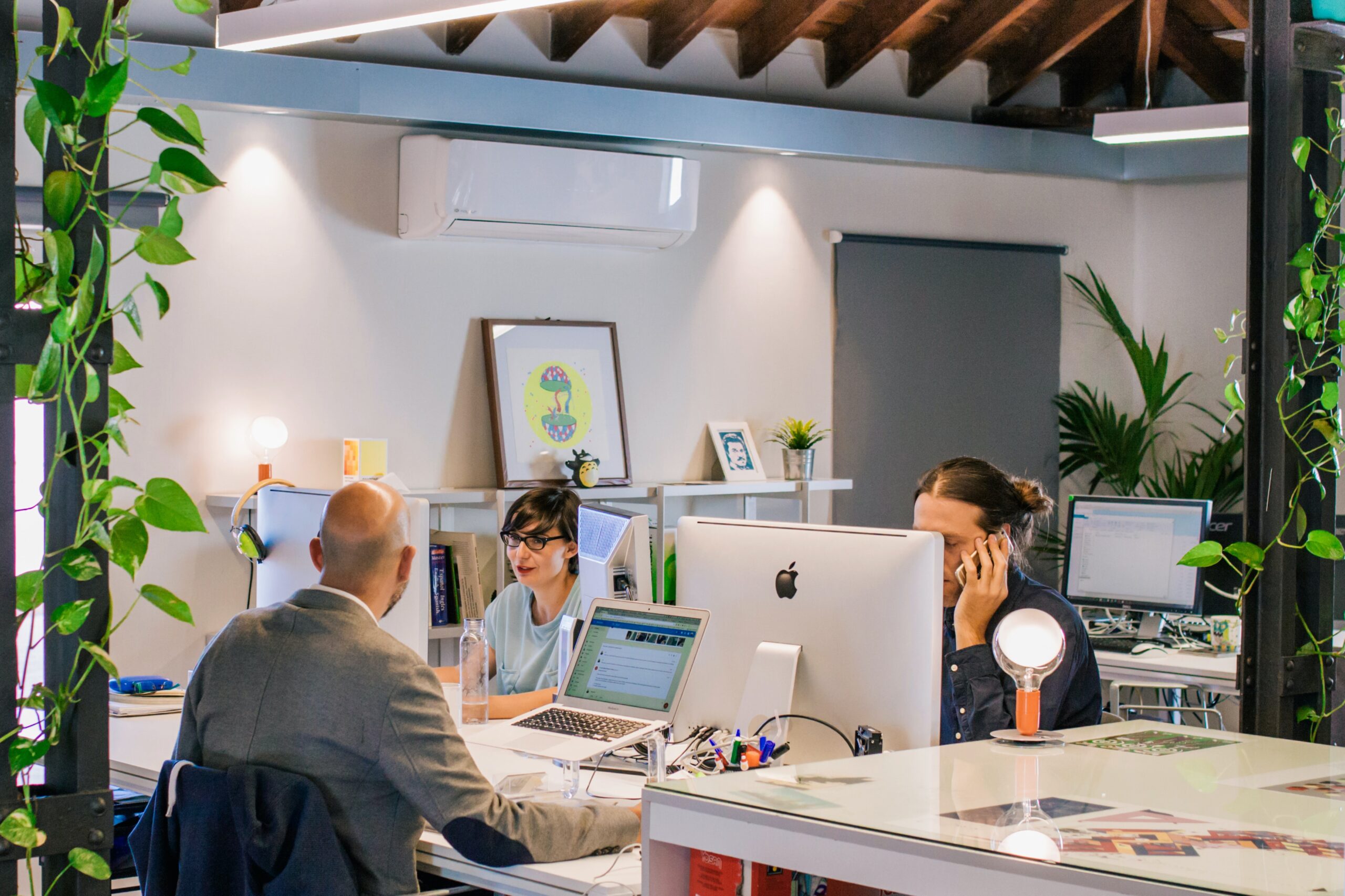
To understand how to organise an office and how to behave in an office we must first establish certain facts about what an office is:
An office is a place where we are judged – by our juniors, our peers and our bosses. If we do well, if we fit in, if we become prized members of staff, we may look forward to promotion.
If we do not fit in comfortably with office culture, then we may be the first to go when cuts have to be made. We may be great at our job, but we have also to be decent, civilised, polite human beings, producing office-appropriate behaviour at our place of work.
Pre-eminently, this is a place where there are seniors and juniors, employers and employees, those who make the rules and those who have to follow them. It doesn’t take much for things to go very wrong. A manager’s thoughtless or high-handed remark can result in a previously conscientious worker deciding that he or she is never again going to put the company first. A failure to greet a visitor promptly with due politeness will tarnish the company’s image – perhaps with disastrous results. Once things start going wrong, they have a habit of getting worse. Every institution can become a breeding place for bad feelings, can develop a bad atmosphere, and its employees can slip into bad habits.
Some institutions try to limit damage by having elaborate systems of rules covering behaviour. Few offices go this far, but most rely on an unwritten code of conduct – and mutual understanding as to how we should behave towards each other. This is the foundation of business etiquette.

Offices were traditionally physical spaces that were minutely calibrated on hierarchical principles. The higher-status workers were allocated their own offices, with doors that could be shut, walls that were opaque and even, if they were lucky, windows with views of the outside world.
Lower-status workers were relegated to a communal space, possibly with some degree of internal division to create semi-private cubicles.
Privacy thus came at a premium; it was a higher status privilege, easily attainable by those who had their own offices, not afforded to the workers in the communal areas.
In the 21st century, office spaces have become much more fluid, and in some cases, more democratic. Managers may share the same physical space as their team members, without any obvious physical division. In some offices, desks are not even assigned; the practice of ‘hot desking’ means that employees select and use desks on an ad hoc basis.
It is theorised that, if employees work together in a shared open-plan space, they will be able to behave spontaneously; asking colleagues questions, convening impromptu meetings, picking up on other strands of the business and how it is conducted.
However, a shared workspace offers no privacy. Every conversation is subject to eavesdropping, and distractions are endless. A solution is to provide a number of ‘break-out’ meeting rooms, but workers will be aware that withdrawing to these rooms with other colleagues sends out a strong message about asserting privacy, and will certainly indicate that confidential information is being discussed.
There are many offices that fall between these two ends of the spectrum, and a number of factors will be taken into account when planning office space:
The practice of ‘hot desking’, when desks are not assigned to individual employees and are allocated on a first-come, first-served basis has evolved because it gives offices a great deal of flexibility when it comes to managing their office space.
However, before you decide to introduce this system, be aware that there are a number of disadvantages:
If your company has a very limited number of employees, then a small office becomes a useful communal space, and loosely-structured seating is not a disadvantage.
If you find yourself assigned a hot desk, a little bit of consideration will make the experience more tolerable for those that follow you. Nobody wants to become a notorious abuser of the hot desk syndrome:
•Leave everything as you found it – eg put the chair back under the desk, line up the computer so that it faces the chair etc.
•If you are sharing a computer as well as a desk. do your successor the courtesy of giving the computer keyboard and screen a quick wipe.
•Similarly, ensure that you have not left coffee mug rings or food debris in any nooks and crannies that might be overlooked by cleaners.
•Ensure that all your personal possessions have been removed.
•Before leaving, check to make sure that you haven’t taken vital supplies (eg pens and post-it notes) with you.

While working from home has many advantages, both for the employer and employee, there are many factors to be taken into consideration. If you are thinking about making home working available for your employees, consider the following:
When the right conditions are met, home-working can be highly effective. It gives employees flexibility and independence, and they may find themselves much more efficient and productive in a quiet home study than in a noisy office.
If you are sure that you can run a home-working operation on a laptop balanced on your knees while you’re lounging on your bed, think again. You need to think seriously about a dedicated workspace, no matter how modest, where you can shut a door, leave out papers and files, hold private conversations. You will also need to ensure that the rest of your household, or family, understand and respect these parameters.
What you need in your home office at the bare minimum:
•A desk, or sturdy table
•A chair, preferably an ergonomic office chair, to ensure you don’t end up with back problems
•An anglepoise light, which will help you to avoid eye strain
•A shelf, or drawer in which you can store papers or files
•Most importantly of all, a reliable WiFi connection, which works in your office (if your hub is several rooms away, and especially if your house has thick walls, invest in a signal booster)
Remember that, in these days of video calls, you may well be observed in your home office, so ensure that you have an acceptable backdrop. A bare wall is the safest choice of all; if you have bookshelves, ensure that they are neat and tidy. Try to avoid too much personal clutter – the people you work with will be distracted by your possessions, and will enjoy speculating about what they say about your private life.