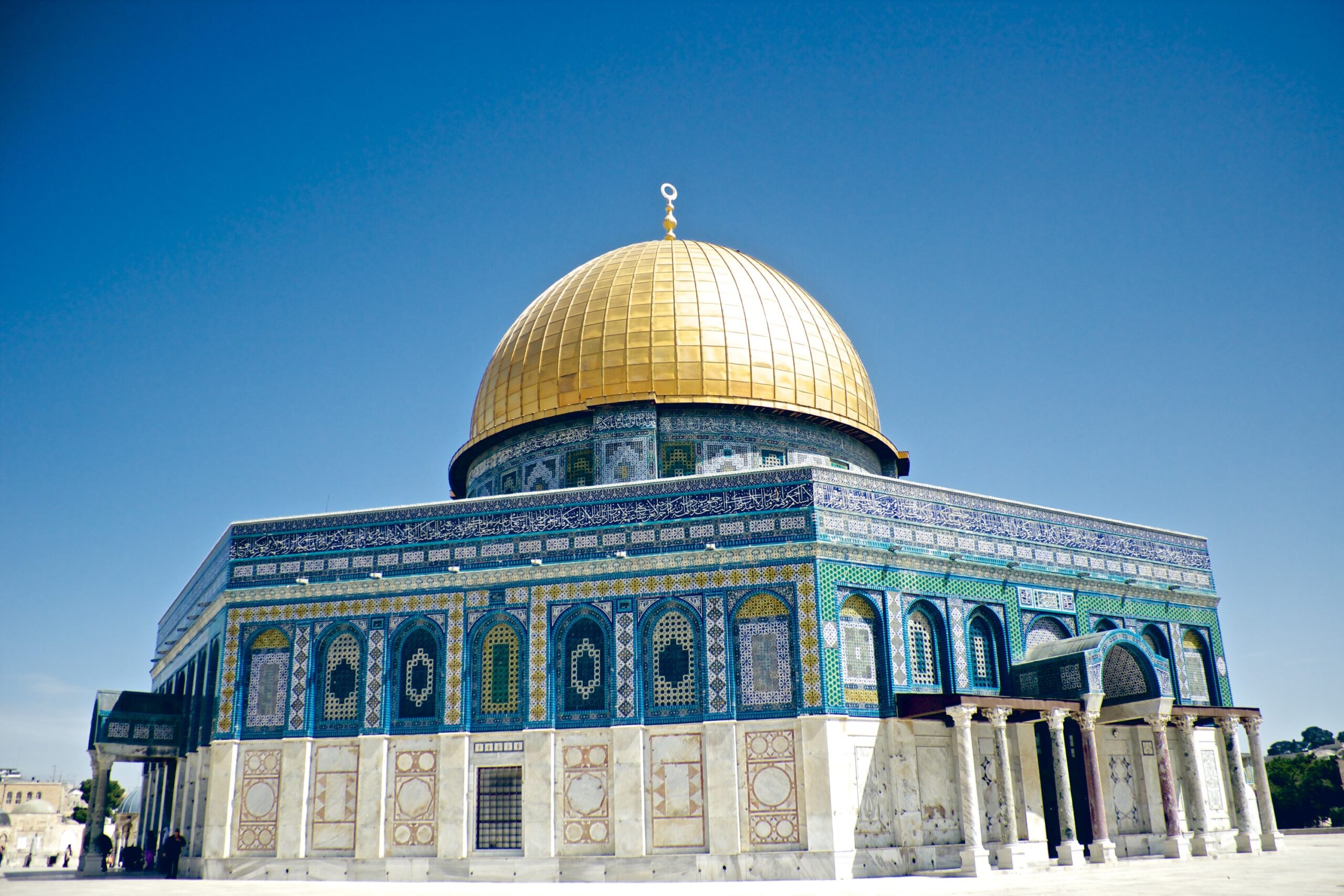
According to Muslims, God sent a number of prophets to earth to teach mankind how to live according to His laws. Jesus, Moses and Abraham are all respected by Muslims as God’s prophets, but the final prophet was Muhammad.
Muhammad was born in c.570 in the city of Mecca (Makkah) in Saudi Arabia. He never claimed to be other than a messenger chosen by God to interpret and reveal His word. These revelations were collated and collected in the Koran (Qur’an), the sacred book of Islam, which serves as a basis of law and social morality and well as a devotional text.
Islam is divided between Sunnis and Shias. The Sunnis are followers of the elected Caliphs, who succeeded the Prophet Muhammad after his death in 632. The Shias believe that after the Prophet’s death his leadership should pass to his son-in-law, Ali, and his descendants. Sunnis form the vast majority of Muslims – some 90 per cent. There are significant populations of Shias in Iran and Iraq. Although they share the main articles of Islamic belief, Shia Muslims often venerate the Imams (leaders) as saints and make pilgrimages to their tombs and shrines in the hopes of divine intercession. Some of their holiest sites are at Samarra, Karbala and Najaf in Iraq, and Qom, Mashad and Shiraz in Iran.
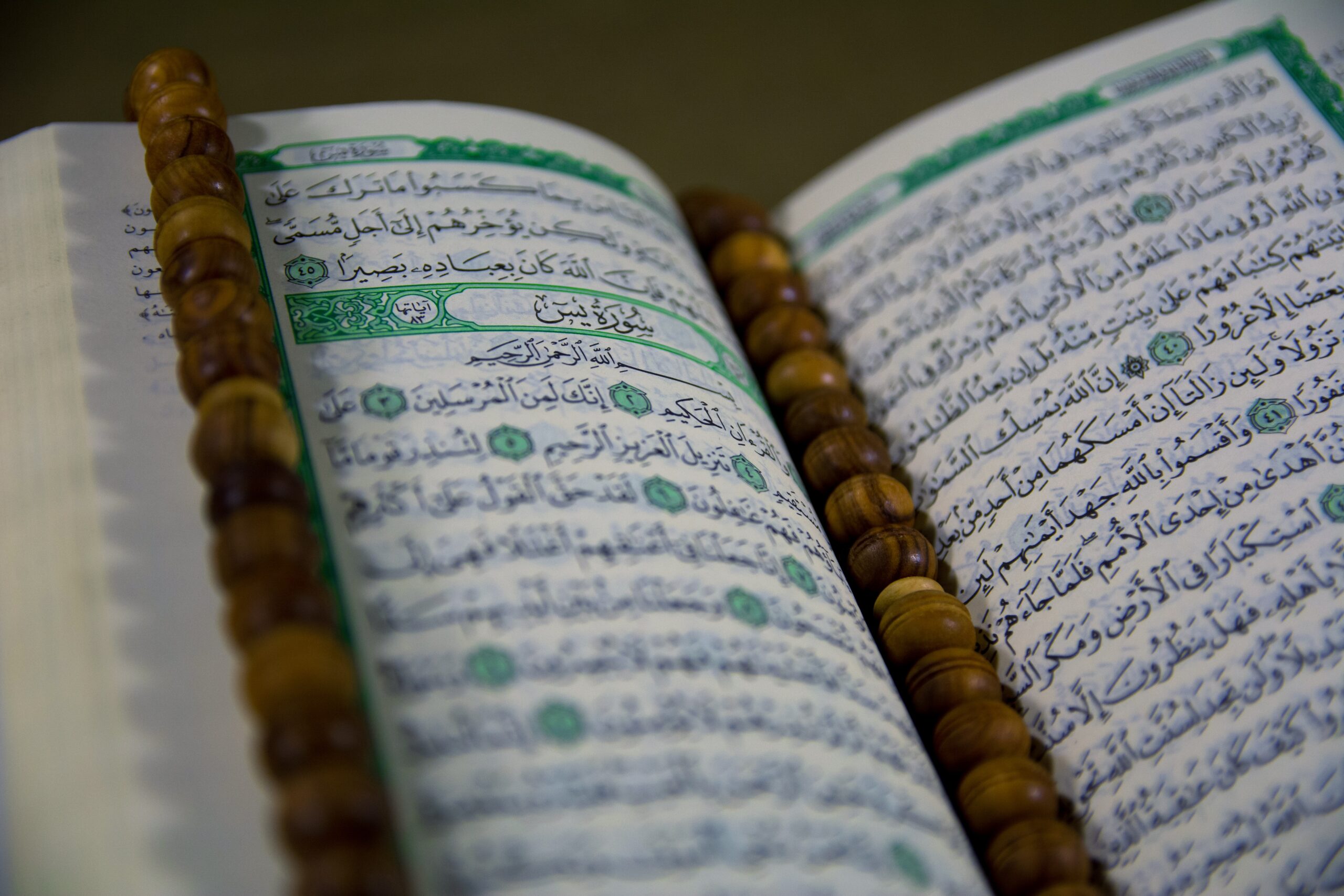
All aspects of a Muslim’s life are governed by Sharia, the sacred law of Islam. Sharia law comes from a combination of sources including the Qur’an (also Quran or Koran), the sayings of the Prophet and the rulings of Islamic scholars. Sharia not only denotes an Islamic way of life but is also a religious code for living, in the same way that the Bible offers a moral system for Christians. Sharia is implemented to varying degrees in different Islamic countries – from the beheadings of Saudi Arabia and the recent case of a woman stoned for adultery in Afghanistan, to the relatively liberal social mores of Malaysia. In the majority of Muslim countries, traditional Sharia law is applied selectively, and European-style common and civil law predominates.
Sharia includes the Pillars of Islam. These pillars are the five obligations that all Muslims must fulfil in order to live a good and responsible life:
Shahada: They must declare their faith by reciting the twofold creed: ‘There is no god but Allah’, and ‘Muhammad is the messenger of Allah’’.
Salat: They must pray five times a day. The haunting call to prayer, delivered five times a day from the mosque’s minaret by an official of the mosque, or muezzin, is one of the most distinctive features of any Islamic town or village. Praying in a mosque is not essential: even in the desert, miles from civilisation, you will see Muslims obey the call. Often they carry a small prayer rug, which they align with the holy city of Mecca before kneeling to pray. (Some rugs even have a small compass sewn into them to make it easy to locate Mecca.)
Zakat: They must give a proportion of their wealth to charity. Visitors should try to reflect this charitable behaviour by treating beggars with kindness.
Sawm: They must fast during daylight throughout the month of Ramadan. Visitors should be aware that, during Ramadan, it is sometimes difficult to find food during the day in some Islamic countries.
Hajj: If financially and physically able to do so, once in their lifetime they must undertake the hajj, the pilgrimage to the Ka’aba at Mecca. During the hajj, all pilgrims wear the same simple white clothes to show that they stand equal before God.
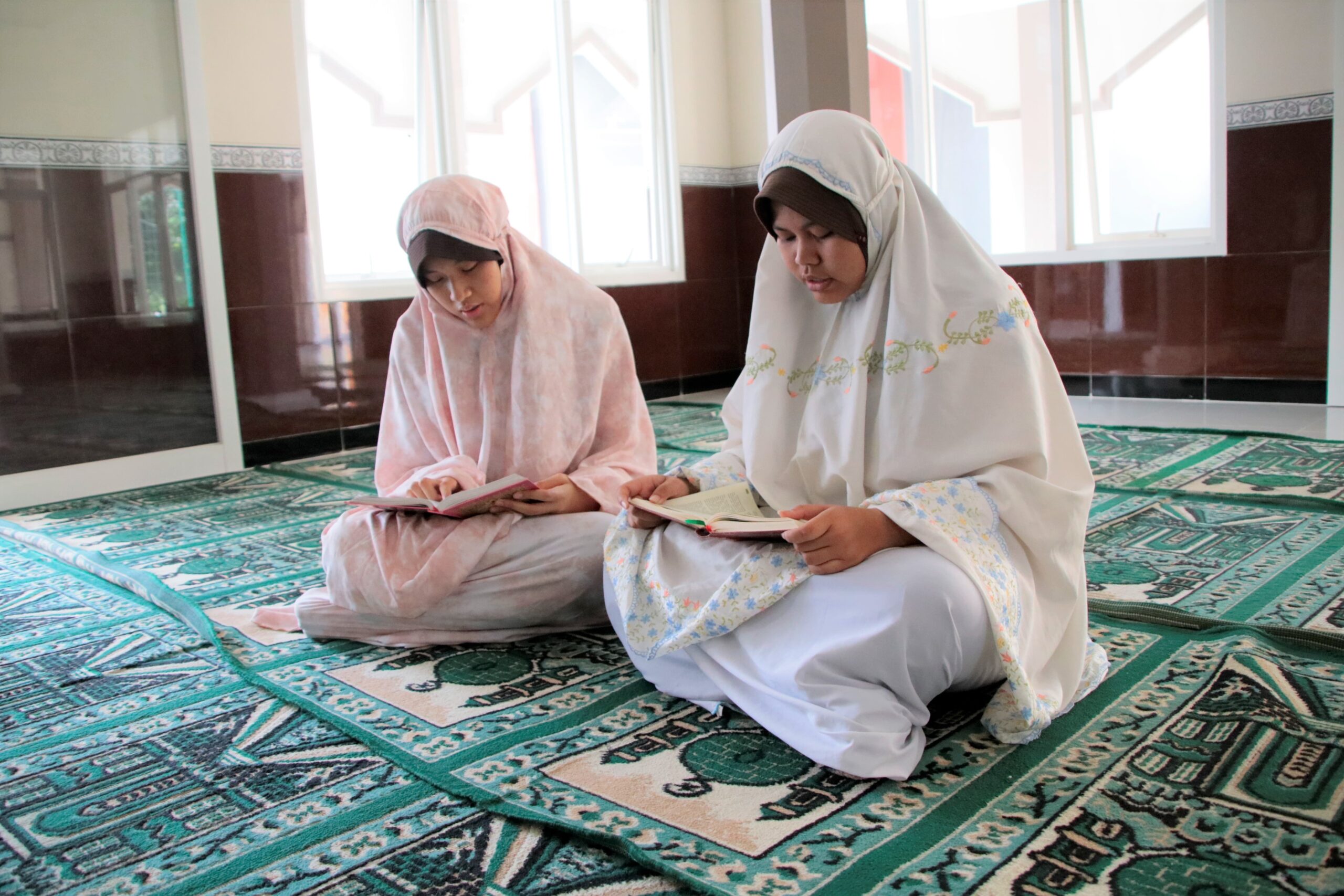
There are two holidays in the Muslim calendar. Eid ul-Fitr marks the end of Ramadan, the 30-day fast undertaken by all Muslims as one of the five Pillars of Islam. Everyone dresses in their best clothes and all go to the mosque to pray together. Eid is a joyous occasion, when everyone comes together to celebrate the end of the fast, and give thanks for the pious self-control they have exerted during the preceding month. People visit the homes of friends and relatives and gifts are exchanged.
The second major holiday is Eid-ul-Adha, the three-day celebration that marks the close of the hajj, the annual pilgrimage to Mecca. This festival is celebrated with feasting, prayers, an exchange of gifts, and charitable donations
Family life is the basis of an Islamic community and marriage is the basis for family life. Arranged marriages are common. Although a Muslim man is allowed to have up to four wives, today more than one wife is rare.
Muslims follow strict rules on food and drink. They always wash and pray before meals. Anything made from pigs is forbidden, and meat must be lawfully slaughtered (halal). Smoking and all forms of alcohol are also forbidden. Visitors should be very aware of this attitude towards alcohol and should curb their behaviour accordingly. Among Muslims, the left hand is reserved for bodily hygiene and considered unclean. Thus, the right hand should always be used for eating.
Men meet each other in cafés or meeting places, while the women meet together in their homes. It is rare for men and women to meet together in public. Women are also separated from men in the prayer halls of mosques.
Holding hands among men is common and does not carry the same connotations as it does in the West. Public displays of affection between people of opposite gender – including hand-holding – may be frowned upon.
Hijab (the Arabic word for ‘cover’) is the principle of modesty in Islam and includes behaviour as well as dress for both men and women. In some countries, Muslim women wear a long, flowing, loose overgarment called a burqa in public. The hair and neck is then covered by a scarf (hijab), or a niqab, which covers the head completely, with a veil for the face – a slit is left for the eyes, or they are also covered by a transparent material.
Today, many western Muslim women no longer wear the burqa but still wear a scarf. Visitors should ensure that they follow this example by covering their bodies as much as possible, especially in towns, and they should be aware that in some areas it would be appropriate to wear a headscarf.
Dress appropriately when visiting mosques. Men should wear loose-fitting trousers and shirts, and avoid shorts and t-shirts. Women should wear loose-fitting trousers or long skirts (at least to the knee), and long-sleeved tops. Some mosques require that non-Muslim women cover their heads, so it is best to bring a headscarf.
Shoes must always be removed at the entrance to the mosque – racks for shoes are often provided. Inside the mosque there are no pews or benches, and most worshippers sit on the floor. It is considered offensive to sit with your legs stretched out and the soles of your feet facing towards Mecca, so it is best to sit cross-legged. Take special care not to walk in front of anyone who is engaged in prayer.
The Islamic calendar dates from 622, the date of Muhammad's ‘migration’, hijra, from Mecca to Medina. Its 12 months are lunar, and therefore consistently shorter than a solar year; visitors should be aware that it shifts with respect to the Christian calendar. As a result, the holy month of Ramadan changes from year to year.


