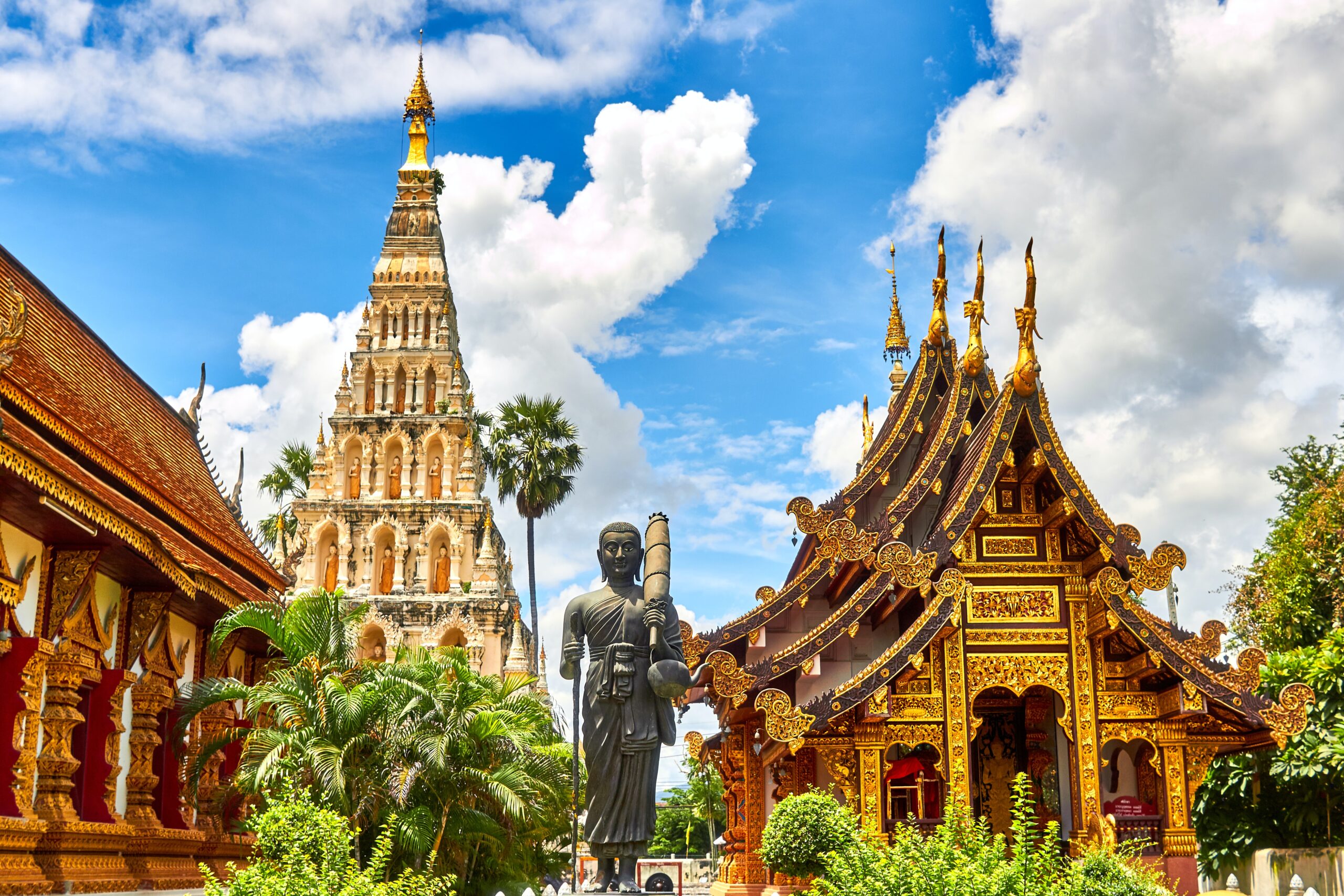
Because of the complexity of customs in this region, err on the safe side by waiting for your hosts to make the first move and then following their lead. Thus, when meeting people for the first time, allow your host to introduce you as this gives them a chance to assess how you fit into their social hierarchy.
For Thais this is particularly important as they need time to gauge how low to bow when performing the wai. The wai is used to say both hello and goodbye, or as a sign of respect to older or more senior people. To make a wai, press your palms together as if in prayer and bow slightly. The higher your hands, the greater the respect, but be careful not to raise them above eye level. At the same time, say sa-wat dee (pronounced ‘sabadi’).
The wai should be used sparingly. For instance, it is generally incorrect to return wai with children, servants or people of a lower status than yourself. The same applies in Cambodia if you are greeted with their version of the wai – the sompiah. In Vietnam you may receive a slight bow, but with hands clasped together above the waist. If greeting indigenous peoples (the Orang Asli) in Malaysia, bow your head. Traditional greetings like these may not be performed in the cities, but an attempt to offer or return them will always be appreciated.
Throughout the region, shaking hands between members of the same sex is both expected and acceptable. Malays may grasp you with both hands and hold them for up to ten seconds, or they may greet you with a salaam. This entails touching the other person lightly, then withdrawing the hand and resting it over the heart. In Vietnam, handshakes can also be two-handed, but with the left hand on top of the right wrist. These handshakes are gentle, not firm.
Rules for shaking hands with the opposite sex may differ.
Although it is acceptable to shake hands with a woman in Thailand, in Malaysia the namaste (see India) is a safe alternative. If meeting a Malaysian woman, wait for her to make the first move, especially if she is a Muslim or non-westernised Hindu, as traditionally there is no physical contact between the sexes. The same applies in Singapore. There, if you are a western woman, prepare for the Malay salaam; if a western man, shake hands. If a woman fails to extend her hand, use the salaam. Younger Singaporeans tend to shake hands.
In Thailand, Buddhist teachings dictate the reception you receive. Namchai, meaning ‘water of the heart’, is a concept involving spontaneous warmth and compassion, and strangers visiting a village will be welcomed, offered food and sometimes even a bed. The threshold is considered by traditional Thais to be the home of spirits, so step over it rather than on it. When passing in front of an elderly or senior person, slightly lower the upper body as physical inferiority or superiority are manifestations of status.
You will encounter intrusive questions in all societies. Being asked how much you earn or why you have no children is not intended to be rude but is often their way of making conversation or trying to assess your social status in order to treat you appropriately. Answer as simply as possible, or smile and change the subject. In Singapore, pausing before answering a question reveals a considerate and thoughtful character, qualities which are highly prized. In Malaysia, greetings may be phrased in the form of a question, but they are rhetorical and only require a stock answer. For instance, Malay Chinese may ask if you have eaten, in which case always answer ‘yes’.
Throughout Southeast Asia you will encounter the ‘enigmatic smile’, but it has far more complex meanings there than in the West. In Thailand – portrayed as the ‘Land of Smiles’ – people are very friendly, but Thais will smile in a huge range of circumstances: from genuine friendliness; trying to stop you feeling embarrassed if you fall over in the street (a yim yair-yair); expressing apology if they have lost your luggage (yim hairng); or attempting to mask feelings of sadness (yim sao). Laughing is often used to cover embarrassment; if an acquaintance starts laughing for no apparent reason it is because they are embarrassed, so change the subject.
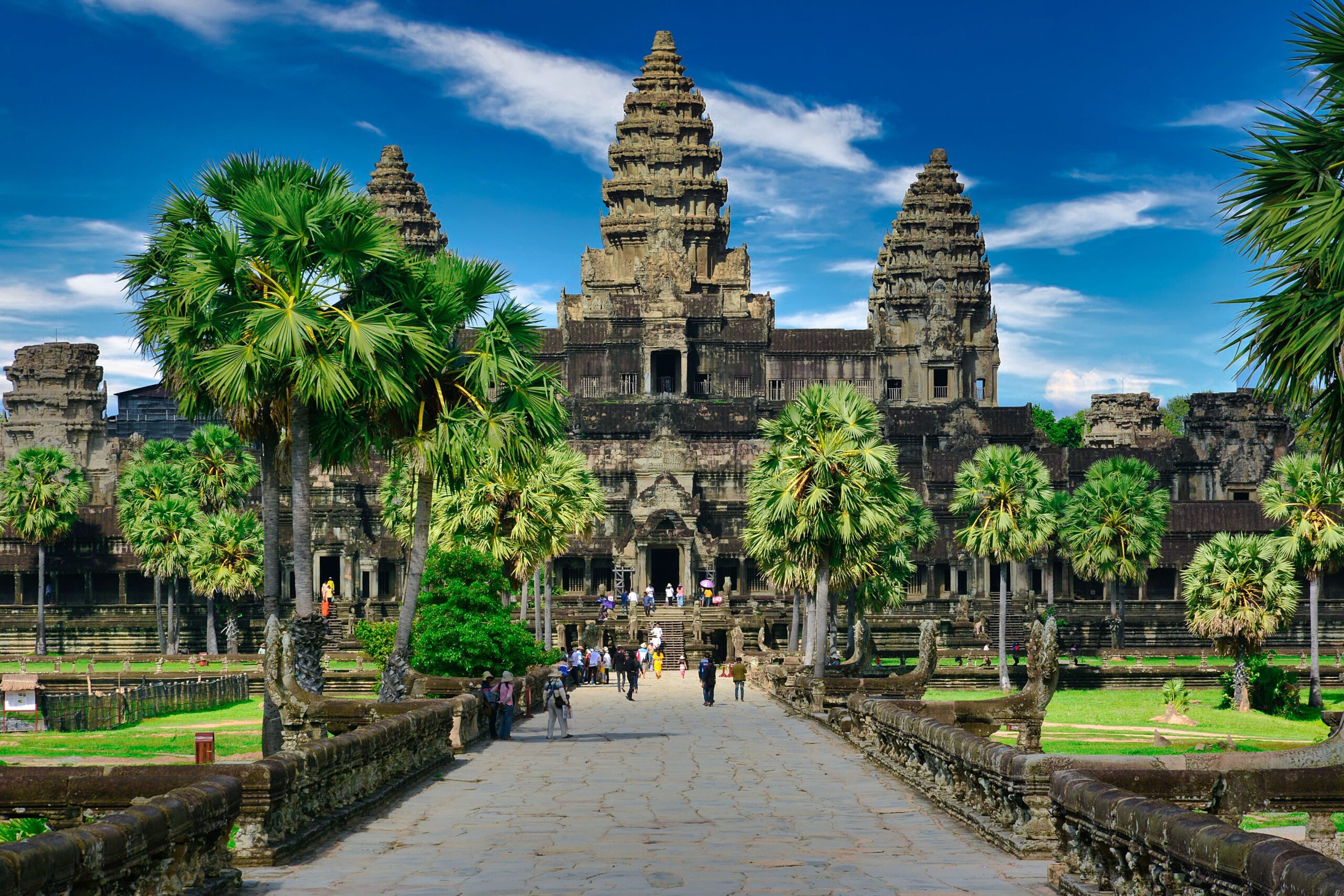
As in all Asian countries, take care how you address people. Ask, if you are unsure, or use their title followed by the surname. If addressing the Chinese in Thailand, ensure that you have their correct title as they are sensitive to status. The surname comes first, then middle name, then given name. Use standard titles or official ones – like ‘General’, ‘Engineer’ – where appropriate.
Ethnic Thai names follow the western convention: given name followed by surname. ‘Khun’ is used as an all-purpose form of address and can be used for both men and women. However, use their given name rather than surname. Thus Sawang Charoenpala will be Khun Sawang. In turn, you may be called Khun David or Khun Sarah.
In Cambodia you will probably be called Lok (male) or Lok Srey (female) plus your given name, or both given name and surname.
Avoid personal conflict at all costs. Never, ever lose your temper as anger will be seen as a sign of ignorance and immaturity and has a great bearing on the concept of ‘face’. This concept is particularly strong in the region and visitors must be aware of how it works in order to avoid causing anyone to lose face. Therefore do not criticise, embarrass or challenge anyone in public. Even refusing a drink may cause a loss of face. Conversely, complimenting someone will give them ‘big face’.
Throughout Southeast Asia it is vital not to point with your feet, or to show the soles of your shoes. When sitting in a chair, avoid crossing your legs. If sitting on the floor, men should cross their legs and women sit with their legs tucked beneath them. And never rest your feet on anything except the ground.
In many Southeast Asian countries no touching is allowed between the sexes in public and you should follow suit. Also never touch anyone on the head, even children, as it is considered the seat of the soul. For the same reason, avoid touching someone on the shoulder or passing anything over their head. Because of French cultural influence and the impact of America during the Vietnam War, the Vietnamese may seem more tactile in public. And while they tolerate homosexuality, it should not be flaunted.
Wherever you are, always ask permission before taking photographs. Some Thai and Indonesian tribes believe that a fragment of their soul dies with every click of the shutter.
Traditional Thai women never smoke in public but this does not preclude western women from doing so, especially after dinner when most people smoke. In Vietnam smoking is largely restricted to men.
Because of the different ethnic groups in Southeast Asia, presenting gifts is a highly complex affair. Only two rules apply throughout the region: gifts are not opened when received and elaborate wrapping is imperative.
If giving a gift to a Chinese person, you may find it is refused three times before it is accepted as this demonstrates that the recipient is not greedy. Keep insisting, however, until it is accepted. Do not give them scissors, knives or other cutting utensils as they indicate that you wish to sever the relationship. Clocks, handkerchiefs or straw sandals are taboo as they are associated with death and funerals. Wrap the gift in red, pink, or yellow paper, not in white, blue or black as they are mourning colours. Never wrap a gift for a baby. Do not give money in odd numbers as they are considered unlucky. If invited to a formal dinner party, do not bring food as it implies that you think the host will stint on the hospitality. Instead, bring a small gift of fruit, sweets or cakes and say it is for the children. Flowers are inappropriate as they are given to the sick and used at funerals.
If presenting a gift to an ethnic Malay or Muslim, never give alcohol or anything made of pigskin. Do not give toy dogs to children as they are considered unclean. Avoid white wrapping paper as it symbolises death and mourning; instead use red or green paper. If you give food, make sure it is halal. Gifts should be presented with the right hand only or both hands if the item is heavy.
For the rest of the region, play safe by giving something neutral and easy to wrap. For example, sweets and pencils for children; perfume or attractive stationery for women (but avoid images of dogs); a fine cotton shirt or a pen for men. In Thailand, wrap the gift in gold, yellow or orange paper.
In Vietnam it is respectful to receive gifts with both hands if that is how they are offered. Both hands should also be used to give and receive gifts in Cambodia. Suitable gifts are fruit, sweets, pastries or flowers, but note that Cambodians do not celebrate birthdays so birthday gifts are inappropriate.
Southeast Asians dislike saying ‘no’ and will often remain silent rather than give you an answer you might not wish to hear. Vague answers like ‘I’ll try’ or ‘I’ll see what I can do’ probably mean no. So avoid direct questions like ‘do you recommend this dish?’, and ask instead which one they would choose. Equally, avoid saying ‘no’ to them as they find it hard to accept negative answers.
Throughout the region there are a number of gestures that are taboo. Putting your hands on your hips is considered an angry stance. Putting your hands in your pockets when talking to someone is thought to be rude, as is beckoning by waggling your finger. Instead, extend your hand, palm downwards, and make a scooping motion with your fingers. In Malaysia, use the thumb to point, never the index finger.
Crossing your fingers may be a good luck symbol in Britain, but in Vietnam it is considered obscene. You will also cause offence if you cross your arms over your chest. Both the Vietnamese and Singaporeans dislike direct eye contact as they regard it as aggressive. Throwing something in Thailand is considered impolite.
While Thais are extremely polite, they may make comments about how thin or fat you are. This is not intended to be insulting, simply their way of showing concern for your health. Plump is good! When visiting a Thai person’s house, refrain from admiring an object too much as they may feel obliged to give it to you.
Using the right hand for everything and removing your shoes when entering any religious site or someone’s home is essential everywhere. In some villages in Malaysia a pail of water will be provided for you to wash your feet.
In Singapore, a form of English (sometimes called Singlish) is widely spoken, but it is unique to Singaporeans and may be confusing. Facial expression is important, so be aware of what your face is revealing, especially if you are saying one thing and meaning another.
Avoid talking about religion, politics, sex, gender roles or your personal achievements, as modesty is highly regarded. Instead, talk about travel and food, or pay people compliments about their country.
To turn away street sellers in Vietnam, avoid making eye contact and with a flat hand at waist height make quick cutting motions.
Thailand, Cambodia and Malaysia all have royal families. Criticism of Thailand’s royalty has led to jail sentences for Thais, and although visitors do not risk imprisonment, making fun of royalty (in Cambodia too) will give grave offence. If the King’s Anthem is played when you are present – in a public square or cinema – show respect by standing up. In Malaysia it is disrespectful to cross your legs if royalty is present. As there are nine royal houses, the chances of running into a member of this huge family are surprisingly high.
To protect its people from the ‘corrupt’ foreign media, the Malaysian government operates some of the strictest censorship laws in the world. You will not find programmes like Sex and the City on television and modest, discreet behaviour is expected.
Singapore is a highly regulated society and you should be aware that laws apply to visitors as well as to Singaporeans. Avoid dropping litter, jaywalking, spitting and smoking in public places. Chewing gum is allowed but it is illegal to buy, sell or dispose of it in an improper manner. Visitors can bring gum with them, but it is best to avoid it altogether. However, failing to flush a lavatory is illegal, although most public toilets flush automatically so it is difficult to break this particular law. If caught urinating in public, not only will you receive a large fine but you will have your face splashed across a national newspaper. Avoid standing naked at your hotel window as this is classified as pornography. It is a civil duty to report transgressions so you run the real risk of being reported.
While some ignorance on the part of visitors will be forgiven in everyday life, inappropriate behaviour in any religious context is absolutely unforgivable throughout Southeast Asia. When visiting a religious building, treat all sacred images with respect. Remove your shoes. Shoulders, arms and legs should be covered, but the head can be left bare. (If you forget to wear long trousers they can be hired from nearby shops.) In Thailand, however, some royal temples refuse entry to women wearing trousers, so check in advance.
In Vietnam it is wise to know the difference between a temple and a pagoda. Pagodas are dedicated to Buddha and often to various Hindu gods. Temples are built to memorialise historical figures such as kings and victorious generals, and are frequently built next to, or inside, a pagoda. Prayers and incense are offered at pagodas but not at temples.
Most Vietnamese practise ancestor worship and many homes, offices and restaurants contain small altars.
In general, western dress is acceptable throughout the region, but it should always be neat and conservative. Wearing jeans is fine, but women should cover their upper arms and, if wearing a skirt, the longer the better. In these hot and humid conditions, you may find it cooler to adopt the local dress: collarless silk shirts for men – very common in Thailand – or open-necked batik shirts as worn in Malaysia. Because of the humidity, suits may be dispensed with for formal occasions.
In Vietnam, dress with modesty, avoiding tight, revealing clothes, shorts and sleeveless shirts. Pale skin is revered so you will see women sheltering under umbrellas on sunny days. You may also see women bicycling in gloves. This is in order to avoid getting a suntan, which is a sign of poverty and manual labour outdoors. So avoid complimenting anyone on their suntan as they are unlikely to be proud of it. These rules also apply to Singapore, except that trousers for women are more acceptable than skirts.
On the beach western swimwear is acceptable – if not too skimpy – but take a sarong with you in case you need to cover up. Nudity is generally frowned upon throughout the region. Malay women usually swim fully clothed while Thais and Cambodians often swim in jeans and a t-shirt.
Women should not wear black during the day in Thailand, particularly for business meetings. If you wear black at an evening event, liven it up with colourful accessories.
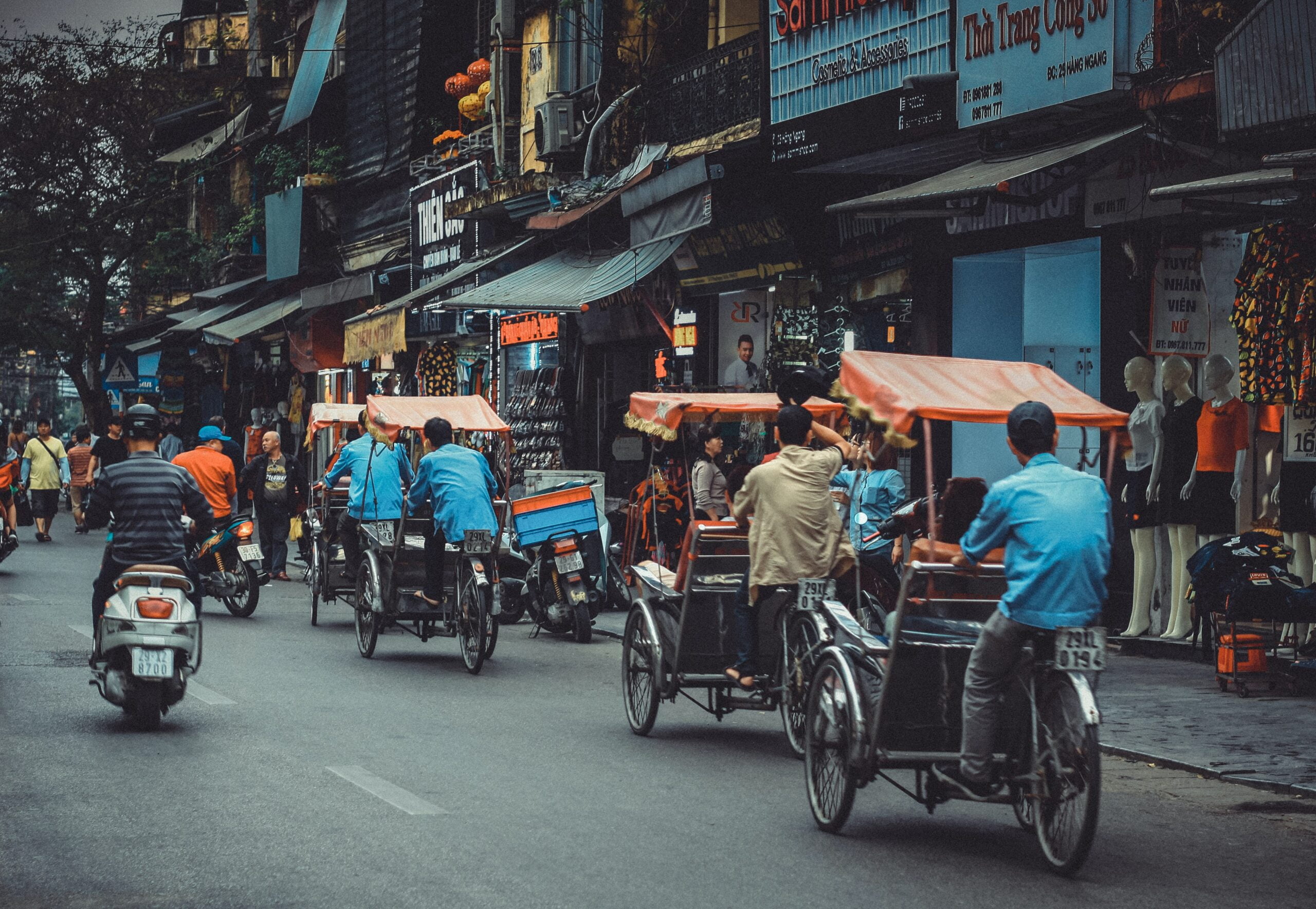
There are very few situations in Thailand where it is considered inappropriate to answer your phone – indeed, Thais have been known to pick up calls during business meetings and job interviews. As a result callers will hang on indefinitely, and keep re-dialling, waiting for people to pick up. Much of this etiquette has evolved because of the strong emphasis Thai culture places on the family: to ignore a call from one’s parents, spouse or siblings would be unthinkable. Do not be offended if your conversation is interrupted by a phone call – remember it’s nothing personal.
Much the same situation exists in Vietnam, where mobiles are never put on silent, ringtones are cacophonous, and private conversations are held in unexpected places, such as business meetings. It is also disconcertingly common to see Vietnamese motorbike riders talking and texting on their phones.
Rank and position are very important throughout the region so wait to be seated at a business meeting. To help business associates to establish your rank before you arrive, send your credentials in advance, together with those of any colleagues attending the meeting. Bear in mind that Southeast Asians will not be interested in meeting low-ranking members of your company, so it may be worthwhile adjusting your title to give it more kudos (always assuming your boss is in agreement!).
Face is one of the most important aspects of Southeast Asian business culture, so it is vitally important never to criticise directly, or to lose your temper. Negotiations are based on trust; long meetings are the norm, and business entertaining is to be expected. Throughout the region, remember that it is uncommon to hear ‘no’ to anything. You need to be subtle, and approach questions indirectly; answers may need careful interpretation.
Business attire should be conservative. Men should not wear shorts and should ensure their shoes are polished as appearance matters, particularly in Thailand. The Vietnamese have a very strong work ethic, starting work early and conducting business in a formal manner. But Tet (New Year), which takes place in late January or early February, is an important festival and you are unlikely to get any business done for one to three weeks.
Business cards should have one side translated into the relevant language. In Cambodia, present or receive cards with both hands as it shows respect. For Malaysians, exchanging business cards is a formal affair. Give one to everyone present, either with both hands or just the right, and with the text facing the recipient. Receive a card with both hands and put it in your pocket. Avoid writing on them. In Thailand present the card to the most senior person first. If doing business in Vietnam, take plenty of cards as they are an important part of even the most minor transaction. Study them carefully and respectfully. Never bend or deface a business card and take time to read it. These courtesies indicate the way you intend doing business.
In Malaysia punctuality is important to the Chinese and Indians, but Malays have a more relaxed attitude to time. Never give a gift to a Malaysian businessman you have not met before as under their strict anti-corruption laws this could be interpreted as a bribe.
Business etiquette in Singapore is much more formal than elsewhere in the region. Strict hierarchies require the eldest or most senior person present to be treated with respect. To disagree or criticise someone senior to you can cause both parties to lose face and could damage the entire relationship. These relationships take time to develop and you should not try to rush business transactions. Remain calm, never raise your voice, and try to read body language.
Table manners tend to be formal throughout the region. Hierarchy is important, so wait to be seated and then for the eldest person present to start eating. In general, you will eat with a fork and spoon.
In Vietnam, however, you will be given chopsticks, a bowl and a flat spoon. You can hold the bowl close to your face when using chopsticks. Finish everything on your plate, then place the chopsticks on top of the bowl. Hold the spoon in your left hand if drinking soup. Dog meat (thit cho), which comes from dog raised specifically for their meat, is widely available. Since it is an expensive delicacy you need not fear being given it as a substitute for more usual meats. Don’t hesitate to show your appreciation of your food by making slurping sounds – it’s quite acceptable.
Because of its three ethnic groups, Malaysia’s eating etiquette varies. You might be given a spoon and fork (Malay), chopsticks (Chinese) or nothing at all (Indian). When handing something to a Malay person, use your right hand, supporting it gently at the wrist with your left hand. To attract a waiter’s attention, raise your hand, keeping your fingers together. Pointing, clicking your fingers or shouting are taboo. If you need to blow your nose or clear your throat, retire to the lavatory; never do it at the table.
Thai eating protocol is different again. You will be given a fork and spoon: fork in the left hand, spoon in the right. Cut with the side of the spoon, not the fork. Use the fork to push food on to the spoon. Begin eating as soon as you are served. If you clean your plate it will be taken to mean that you are still hungry, but never leave rice as it is considered wasteful. Avoid taking the last bit of food from a serving bowl, but if offered it, politely decline. If offered it again, accept, as it is a great honour to be given the last of the food.
In some parts of Southeast Asia, tipping is a virtually non-existent practice, except in five-star hotels, but in situations where it feels right to tip, either round up the bill or leave a few coins. Although tipping in Vietnam is not customary, there is now an expectation that foreigners will tip. Taxi drivers will not expect one but nor will they expect you to ask for change. Tipping is not usual but will be appreciated in Malaysia. In Thailand there is no definite rule for tipping but if you want to acknowledge excellent service, round up to the nearest ten.
However, giving baksheesh – effectively tipping in order to get things done – is widespread and acceptable (with the exception of Singapore). Although basically a mild form of bribery, it will open doors that at first seem tightly closed to you. In Singapore bribery and corruption are heavily monitored, and even the smallest offering could land you in trouble. For instance, if you tip taxi drivers they will just return it.


