Peter Mandelson has resigned his seat in the House of Lords, yet retains his title. Debrett's Peerage expert Hugo Strachwitz explains why the removal of a title is not quite as simple as just retiring from the House of Lords and runs through the options that are open to the Government.
Why does retirement, resignation or suspension from the House of Lords not deprive someone of their peerage or title?
It is a question that has resurfaced repeatedly in recent years, usually prompted by controversy, proposed reforms, or a general sense that the rules governing titles and honours are more flexible than they really are.
In short, retirement, resignation or suspension from the House of Lords does not deprive someone of their peerage title.
In the case of Life Peerages—those conferred for an individual’s lifetime rather than inherited from a family member—the peerage grants the right to be summoned to the House of Lords, but it is not extinguished if that right ceases.
There are several ways in which a peer may be prevented from attending the House of Lords. A peer may take a formal Leave of Absence, may be temporarily suspended (usually for breaches of parliamentary standards), or may be disqualified for persistent non-attendance.
Peers may also retire or resign from the House altogether, a relatively recent innovation dating from the House of Lords Reform Act 2014. In all these circumstances, the individual ceases to be a member of the House of Lords but retains their title, along with the associated privilege of being styled The Right Honourable and addressed as Lord or Lady X. This distinction between membership of the House and possession of a title can be surprising, but it is fundamental.
Depriving a peer of their peerage—and therefore of their title—is a far more complex constitutional problem.
When peerages were purely hereditary, removal was an extreme sanction. Peers were not merely royal favourites or honoured politicians, but powerful regional magnates whose allegiance could shift with each reign. As Parliament emerged as the dominant legislative authority in England, and later Great Britain, the Monarch’s ability to create and remove peerages at will came to be seen as something requiring restraint.
One route was the Bill of Attainder. Parliament could pass legislation declaring a (usually treasonous) peer guilty, depriving them not only of their title but also of their property and civil rights, and often their life. While swift, this mechanism was inherently vulnerable to political abuse. The last such Bill was proposed—though not enacted—in 1820.
A more limited alternative was the use of a specific Act of Parliament to deprive named individuals of their peerages. This approach was adopted at the end of the Great War, most notably through the Titles Deprivation Act 1917, to remove the peerages of those serving in the armed forces of Imperial Germany and Austria-Hungary. Even then, it affected only four individuals, all holders of hereditary peerages.
At present, there is no mechanism by which a life peer may disclaim, surrender or return their peerage title. Nor does the Monarch possess a general power to remove a life peerage once conferred, in the way other honours may be withdrawn. Parliament is currently considering proposals that would change this position, either by allowing voluntary disclaimer or by empowering the Monarch to deprive a life peerage in defined circumstances. Until such reforms are enacted, however, a life peer who leaves the House of Lords remains, in law and in style, a peer.
Image Credit: World Economic Forum on Flickr, CC BY-SA 2.0 https://creativecommons.org/licenses/by-sa/2.0, via Wikimedia Commons
Debrett’s is the recognised authority on the British peerage. For over 250 years we have chronicled the nation’s titled families. Subscribe now for £9.99 a month or £99 annually to access our renowned Peerage database - the definitive record of the aristocracy.
Written by Liz Wyse
Weddings are changing, reflecting the ways in which society is becoming less convention-bound, and much more relaxed and culturally eclectic. For generations, we have adhered to the strict notion that – as with so many other social rituals – there is a right way and a wrong way to get married. These certainties have filtered down from the upper echelons of society, often transmitted through the medium of royal weddings. These stately ceremonies, with their feverish build-up and huge television audiences, are minutely dissected and discussed, with microscopic scrutiny of every detail – from the dress and flowers to the cake and going-away outfit. They have become cultural phenomena, which have influenced generations of couples, who seek to emulate the royal precedent and do everything ‘properly’.

Much of this tendency started with the wedding of Queen Victoria and Prince Albert in 1840. She followed tradition by seeking a relatively private wedding in St James’s Palace, but crowds were fascinated by a genuine royal romance and her white wedding dress set the standard for Victorian, and subsequent, brides – up to that point, white was not a conventional colour for weddings. From the myrtle in the wedding bouquet, to the details of the wedding breakfast and the 300-lb cake, the general public were fascinated, and the ‘Victorian’ wedding was born.
Subsequent royal weddings were cultural milestones: Princess Elizabeth provided a glamorous antidote to wartime austerity; Princess Margaret was the first member of the royal family to enjoy a televised wedding, which drew a worldwide audience; Prince Charles and Lady Diana Spencer delighted waiting crowds with another first, a kiss on the royal balcony; the marriage of Prince William and Catherine Middleton in 2011 unleashed a wave of patriotic celebration and attracted an estimated global television audience of two billion, making it one of the most watched events in history.
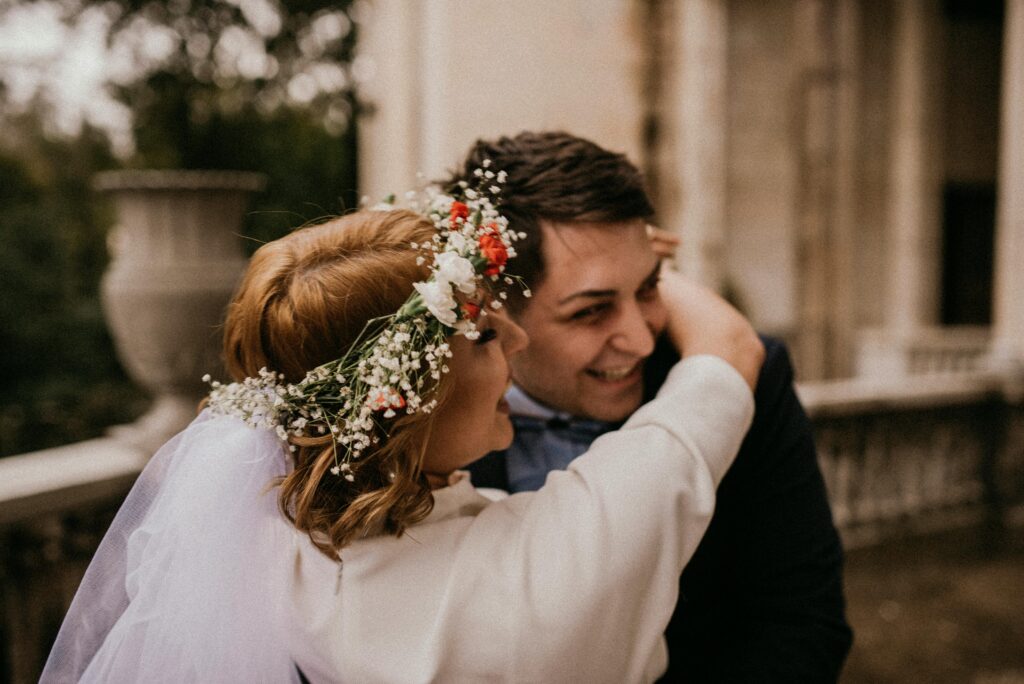
It is scarcely surprising therefore that the traditional British wedding, with its royal credentials and precedents, seemed to present an entrenched cultural norm. But increasingly, since the turn of the 21st century, the ritual has been adapted and transformed. It is now no longer simply a fossilised relic of a bygone era but a celebration that truly reflects an increasingly secular and multi-ethnic society, changing relationships and complex family dynamics.
It is no longer expected that a wedding will follow pre-ordained traditions: of course, that option is still open for couples who seek a more conventional approach. However, it is more and more an option for couples to pick and choose which traditions, if any, they want to retain. Legal changes have reinforced this tendency, with the advent of same-sex marriages and the introduction of opposite-sex, as well as same-sex civil partnerships, which give couples the opportunity to eschew all the trappings of marriage, yet still celebrate and consolidate their union.
The liberalisation of laws relating to approved venues has also had a huge impact on weddings, freeing couples from the restricted offering of religious buildings and civil ceremonies in registry offices and opening up a plethora of possibilities – from hotels, beaches, vineyards and gardens to theatres, stately homes, museums and even football clubs.
Many of the couples who come to Debrett’s for advice and inspiration are seeking information and reassurance about very contemporary conundrums and we aim to offer solutions to these common social dilemmas. How much say should parents have over the guest list and what happens if the couple are paying for themselves? Is it acceptable not to invite children? What is the best approach to the vexed question of plus-ones? How can divorced parents or first wives or husbands be accommodated? With well-informed preparation and forethought, the comfort of guests, good relations between family friends, and the happiness and peace of mind of the marrying couple can remain priorities on the big day.
The advent of the digital age has also had a major impact on weddings, and we examine the ways in which the online world can facilitate the wedding planning process. From bridal blogs, wedding hashtags and Pinterest boards to wedding websites, photo-upload sites and guest list apps, weddings have been transformed by digital technology. We explore the ways in which these benefits can be maximised, but we also discuss the perils of over-posting, social media overkill and poor mobile phone etiquette on the big day – nobody wants their wedding ceremony to be eclipsed by a horde of compulsive, phone-wielding photographers or side-lined by distracted phone-users who are intent on posting about their experience.
When it comes to weddings, there is a world of choice, and it can all seem overwhelming. Our aim in the latest updated and revised version of the Wedding Guide, first published in 2007, is to assist marrying couples plan their big day, while reflecting the many options that are now available.
We set out, as clearly as possible, the long-established rites and customs that characterise a traditional British wedding – a church service, followed by a sit-down reception. At each stage, we look at all the possible permutations and deviations from this customary ritual and explain how certain traditions – from dress codes and wedding vows to venues and seating plans – can be discarded or adapted. The conventional roles of best man, chief bridesmaid, bridesmaids and ushers are now all interchangeable and can apply to either gender. There is no longer a ‘correct’ approach. Indeed, many of the most memorable and successful celebrations will deviate from the traditional formula discussed in the pages of the Guide in imaginative and thoughtful ways.
Whatever the style of wedding that is being contemplated, Debrett’s Wedding Guide will prompt consideration of the finer details of the day. Above all, the priority is to always ensure tht the choices made on the wedding day – from dress, flowers, music and readings to the venue, menu and after-party – are all personal and meaningful to the couple who are taking centre stage.
For many people, their wedding is the biggest event that they will plan in their lifetime, and it can feel like a daunting prospect. We aim to provide inspiration, reassurance, and pragmatic guidance on this most significant of days.
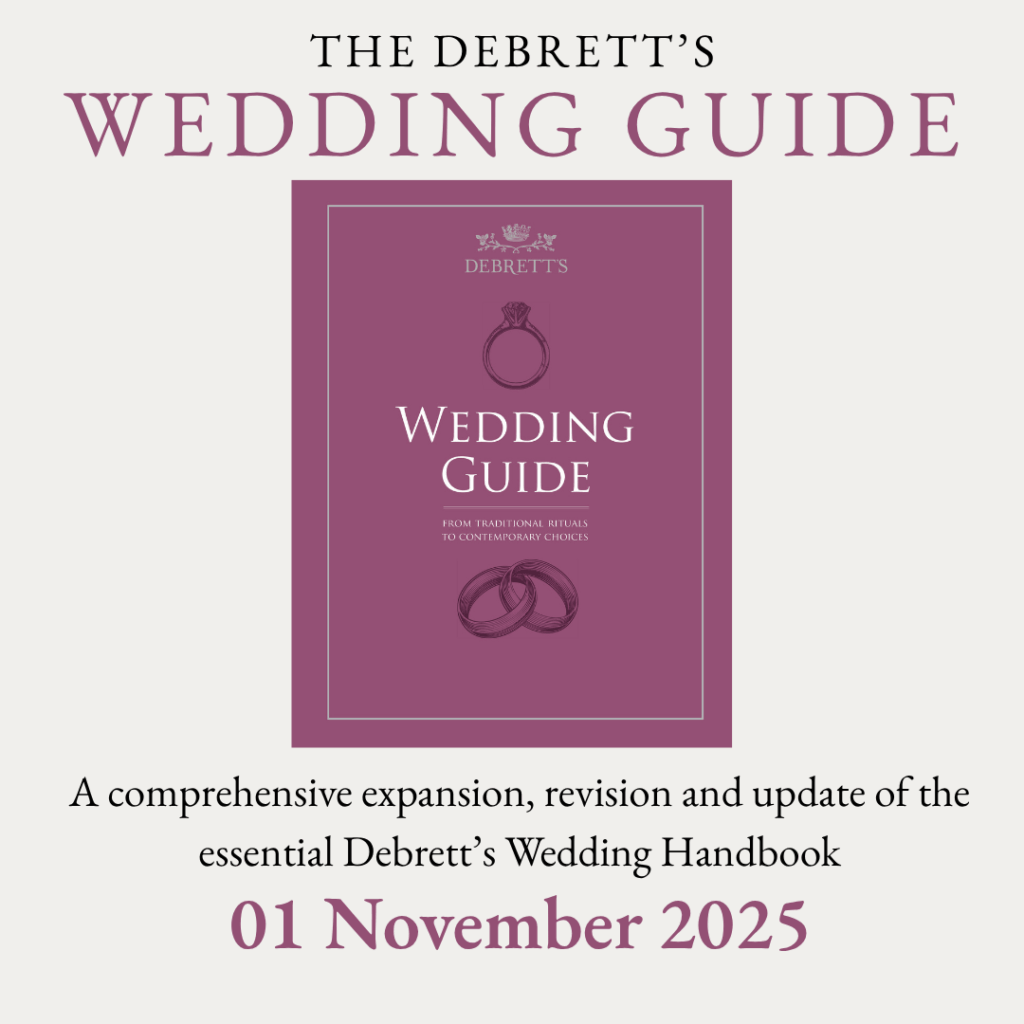
Debrett’s Wedding Guide • Debretts
Are you anxious about shaking hands? Do you approach the people you meet with a slight feeling of trepidation and hesitation, wondering whether your outstretched hand will be rejected in favour of an awkward hug, a handshake/hug hybrid, or kisses on the cheek?
Increasing informality, exposure to different cultures and traditions and post-Covid hygiene anxieties have all contributed to a growing greetings muddle in the United Kingdom. There is no doubt that, in most formal or business situations, the handshake still prevails as the greeting of choice, especially for men, but there are lots of contexts where the situation is much less clear.
Handshaking is a natural human behaviour with a long pedigree. Studies of chimpanzees and bonobos show them shaking hands in the aftermath of a conflict (rather like two exhausted tennis players, shaking hands over the net at Wimbledon), in a slightly sheepish attempt to smoothe over hostilities and restore harmony. Uncontacted tribes who were discovered, and studied, by anthropologists in the Amazon and Southeast Asia, were completely unfazed by proffered handshakes, and reciprocated. In recorded history, they are first depicted in Mesopotamia, as a way of sealing alliances and agreements. In Ancient Greece and Rome, they were seen as gestures of respect and equality. They evolved in the Middle Ages as a way of establishing that neither party was armed.
In 18th-century Britain, greetings were a courtly dance of bows, bobs, nods, curtsies and hat-doffing. This deferential behaviour was gradually replaced in the 19th century by the much more egalitarian handshake, where the clasped hands signified that the two individuals were meeting on open and equal terms. Handshakes between men and women, however, continued to be a sign of intimacy, to be reserved for close relationships, rather than strangers.
At around this time the handshake took on a new role, as a physical symbol of a pledge or trustworthy agreement. Thus, in commercial relationships, a handshake was used to seal a deal, or to signify a ‘gentleman’s agreement’. It was tantamount to a pledge of commitment, and reneging on a deal that had been sealed by a handshake was seen as particularly heinous.
The handshake gradually became the most common greeting in the world, and has become widely accepted in most countries, although it is still not a universal way of greeting. In some countries, for instance, in India, the usual way of greeting is through joining palms in “Namaste”. Similarly, in Arab countries, it is common to place the right hand on the heart as a greeting gesture. Finely calibrated bowing is still the norm in Japan, and handshakes between men and women are frowned upon in Muslim countries.
Despite its nearly universal recognition, the traditional firm handshake is being increasingly undermined and eroded. The fear of physical contact during the Covid epidemic meant handshakes were perceived as potentially toxic, leading people to experiment with other, short-lived, forms of greeting such as the elbow or fist bump. Once the fear had passed, the handshake was left looking somewhat unrecognisable.
In some circles, especially where creativity and informality prevails, the stiff formality of the gesture has been mitigated by combining it with a pull-in and one-armed half-embrace, the so-called ‘bro hug’. This probably originated in America, has been adopted in the UK, but has been somewhat mangled in the process – all too often it turns into a strange gesture, which combines a hug, a handshake and a kiss on the check. Many men now approach a handshake with some trepidation, wondering if they’re going to be hauled into a half-embrace (sometimes accompanied by amiable back-slapping or arm-grabbing) and not at all sure of the protocol. Women have an easier decision as they can always default to a light hug and a single or double kiss.
Hugs and kisses on the cheek are becoming much more universal amongst younger generations, who extend this form of greeting to older people, sometimes ill advisedly. It’s all a matter of sensitivity and observation, but some older people will recoil from a greeting that they find over intimate and awkward and would much prefer a handshake. In these transitional times, it really is difficult to know which greeting to choose, and judgement will need to be exercised. Whatever option you choose, step into the greeting with a smile on your face and act decisively – dithering indecisively will make for some awkward encounters. Advancing with your right hand extended is a gesture that will be universally interpreted as an invitation to shake hands.
•The Presidential
Everyone will recognise the politicians’ special handshake – the hand of your opposite number is grasped and held in your right hand and you extend your left hand and place it over the clasped hands in a ‘warm’, protective embrace. Much used by world leaders, senior politicians and anyone whose job is to look sincere and reassuring, it can also be regarded with distrust, as a sign of sleaziness and insincerity.
•The Long-Life Handshake
This is the handshake that goes on for an unconscionable length of time, which probably makes the person whose hand is being shaken feel trapped and uncomfortable. Again, it is much used by politicians, probably because they are intent on prolonging photo opportunities and maximising coverage of their genial gesture.
•The Wet Fish
In the West we respect a firm handshake, fearing that a limp handshake looks tentative or unengaged; in Asia a limp handshake is considered much more desirable. But above all, we aim for a dry handshake; sweaty palms or hands that have been inadequately dried after a visit to the bathroom are unpleasant to grasp and carry disturbing messages of nervousness or tension.
•The Bonecrusher
The desire to boast a firm handshake can lead to a machismo-demonstrating iron grip that can leave the victim in actual pain and discomfort. This is particularly true of women wearing rings or anyone suffering from arthritis.
•The Traditional
This is the optimal handshake, which combines a dry palm, a firm grip, a short pumping action and eye contact. It conveys confidence, reliability and trustworthiness.
•Make eye contact and maintain it throughout.
•Extend your right hand, even if you are left-handed.
•Grip the palm, not the fingers.
•Pump up and down a couple of times, no more, then release the hand.
Good manners are paramount in all walks of life, and are especially important in difficult circumstances, where they can be used to acknowledge and assuage feelings of anxiety, impatience and frustration. An obvious aspect of this is the interactions, whether they are in a GP’s surgery or a hospital, between doctors and patients. The ability of a good doctor to soothe, reassure and placate an anxious patient is referred to as his/her ‘bedside manner’.
Good bedside manners are not explicitly taught in our medical educational system, but it is to be hoped that they are effectively modelled by senior doctors. Our health service is under increasing pressure, however, and it would not be surprising if the strains of operating within it, coping with an ever-increasing workload and navigating a creaking bureaucracy all conspire to erode day-to-day social niceties. When harassed doctors are wrangling life and death issues, they might feel that good manners are the least of their concerns.
But we would argue that a keen sense of empathy, an ability to recognise the anxieties and concerns of the patient, and a respect for each patient as a unique individual – the cornerstone of good manners – are all attributes of excellent and effective doctors. There are several ways in which good manners and good healthcare can intersect for the benefit of both patients and doctors:
When patients are feeling ill at ease, consultations can be normalised by small talk. It goes without saying that patients should always be greeted politely with a ‘Good morning’, ‘Good afternoon’ and, if necessary, an introduction. They should be politely offered a seat. These minimal formalities should never by rushed or overlooked.
Engaging with a patient for a few minutes on general topics demonstrates an interest in the individual and helps them relax. It makes the whole experience feel less transactional and will build feelings of trust and confidence. Mutual observations are a good place to start and the most obvious topic, especially in Britain, is the weather. It might seem like a clichéd subject, but most people will enjoy chatting about torrential downpours, droughts, cold snaps and heat waves. Alternatively, comments about the general surroundings (eg “What do you think of the new hospital building?”), or asking someone how they travelled to their appointment, are other ways of relating to people, as well as finding out more about them.
Every encounter with a doctor is of vital importance to the patient and they will be sifting a battery of first impressions, seeking reassurance. Negative body language – putting hands in pockets, fiddling with hair or beard, lolling, yawning, eye-rubbing, face-stroking – can be extremely off-putting. They radiate feelings of exhaustion, boredom, preoccupation, non-engagement. Above all they project a lack of focus, which every patient craves.
Doctors should make a conscious effort to project positive body language: sitting up straight, maintaining good eye contact (but not staring), leaning in towards the patient rather than lolling backwards, nodding affirmatively to demonstrate interest. Above all, in this digital age, doctors should resist the compulsion to stare, transfixed, at their screen, rather than looking at the patient.
‘Talking down’ to other people from a position of perceived authority or presuming to ‘explain’ when no explanation is needed or sought, can make patients and their carers feel that they are not worthy of respect.
Telltale signs of being patronising include: feeling an irresistible urge to correct people perceived to be wrong, whatever the circumstances; being an inveterate interrupter, who interjects with their opinions and tends to take over the conversation; a tendency to bombard people with obscure facts and nuggets of information in order to appear knowledgeable and well-informed; a tendency to make the assumption that most people are less intelligent than oneself.
Any behaviour that focuses on highlighting other people’s perceived inferiority is the antithesis of good manners. Instead, doctors should focus on nurturing and encouraging the people who are seeking treatment and making them feel good about themselves, rather than demeaned. A good starting point is to really listen to what people are saying and curb any tendency to make belittling assumptions about people’s experience, capacity and expertise. It is always rude to assume that people are fundamentally ignorant, and it is recommended that doctors make it a rule to ask, “Do you know about X?” before launching into an unnecessary explanation.
Inevitably, there will be times during the process of hospitalisation or medical care that patients experience oversights or mistakes, such as lost notes, misdiagnoses and failed procedures. Given that this is inevitable, it is essential that the medical profession learns the art of a genuine apology.
When a mistake or oversight that affects the patient has been made, it is the duty of the doctor to honestly admit the error and apologise, even if the offence is not the personal responsibility of that doctor. The important thing is to acknowledge the inconvenience (or worse) that the patient has suffered; even if the offence cannot be mitigated, the patient will always feel better if it is recognised.
When it comes to saying sorry, the most common mistake is to apologise ‘if’ the patient has suffered offence or upset; the use of the word ‘if’ clearly implies that the person who is making the apology does not recognise the legitimacy of the offence and assumes that the patient who feels wronged is insisting on feeling mistreated or disregarded. This attitude can compound, rather than alleviate, negative feelings towards the medical profession.
A genuine apology fully recognises the nature of the offence, acknowledges the pain or discomfort that has been caused and seeks forgiveness from the person who feels wronged: (“I am so sorry we had to cancel this procedure at such short notice. I do realise this must have been very difficult for you, and we will do everything we can to move your treatment forward promptly”).
The NHS Ten-Year Plan emphasises the key importance of digital healthcare in the coming years, encompassing AI technology, robotics and enhancing the NHS app.
While the benefits of these new ways of communicating may seem obvious, some people still regard new technology with fear and suspicion and when they are breezily advised to “just pop in your details online” or told “it’s really easy to sign up online”, their feelings of anxiety and disenfranchisement will be increased. While most of the population now owns a smartphone, a significant proportion of people aged over 65 (27 per cent) do not have a smartphone or internet access in their homes. So it is inconsiderate, on the part of the medical profession, to make assumptions about people’s access or comfort with online resources, or their willingness to engage online or through their phones.
In a digital world, it is always important to remember that there are still many people who live their lives in an analogue way. They may have problems receiving or reading texts from the doctors’ surgery on the phone (eyesight problems or difficulty mastering the technology) and may certainly find invitations to “go online for a telephone appointment” daunting. It is always advisable not to make assumptions about their digital literacy, and to make polite and tentative enquiries about their technical competence at the outset (“Are you comfortable receiving texts?” or “Are you happy using the internet?”). The important thing is to make them feel that you are recognising their preference, not patronising them or making them feel inadequate.
The image of the august consultant, who patrols the wards with an entourage of eager and sycophantic acolytes, discusses his patient’s symptoms with arrogant disdain and never deigning to interact with them as individuals, is a comedy cliché. But it has emerged from the widely held perception that many doctors lack basic communication skills, which makes them incapable of interacting effectively with their patients or alleviating their anxiety.
Every encounter between a doctor and a patient involves myriad nuances of behaviour. Patients who are already anxious and concerned about their health may well have experienced frustrating delays and difficulties in gaining access to a doctor and will therefore be more than usually sensitive to language, gestures, facial expressions and demeanour. They may well fear that they are going to be patronised or condescended to by medical professionals and will require reassurance.
Good bedside manners are an effective way of alleviating all these concerns. If a doctor is polite and courteous, able to make relaxing and distracting small talk, capable of listening attentively to what they are being told and wary of making assumptions about their patients, the whole experience is likely to be much more positive.
Above all, doctors must be encouraged to see their patients as individuals, with their own experience, eccentricities, characters and life stories. All too often, patients complain of being objectified, or being seen as a collection of symptoms rather than a human being. In a digitalised world, where patient consultations are moving online and face-to-face encounters are diminishing, the vital social skills that doctors need to demonstrate their humanity, are being eroded or sidelined. It is to be hoped that a renewed emphasis will be place on training medical professionals in the social skills and common courtesies that should enhance every consultation.
The way in which we write online has spawned many grammatical travesties, from abbreviated text speak to stream of consciousness sentences that completely lack punctuation. But none is more controversial than the intermittent use of capitalised words in texts, posts and emails.
Apologists might plead that capitalising a word gives it added emphasis, but most of us recoil from this typographic phenomenon because we know full well that it is a capital offence: it looks like shouting, and we associate raising our voices with anger and threatening behaviour.
We all know that shouting, in most circumstances, is considered rude. It generally signals a breakdown in communication, a desire to browbeat and harangue, an inability to curb feelings of rage and aggression. Why should we react any differently to it when it is conveyed through typography?
All-caps text dates back to the Romans, who inscribed their military achievements and trumpeted their supremacy in monumental stone letters. Lower-case letters were used for more mundane communications. While the Romans were certainly not conveying rage on their monumental arches and columns, they were certainly asserting authority.
Over time, as printing technology developed, capitals were consigned to their present-day status – used as the initial letters of proper names, to mark the beginning of a sentence, or for titles. Emphasis was added through more subtle means, for example italics, or simply by a discerning choice of words by the writer.
But with the advent of typewriters, complete with their alluring ‘Caps Lock’ key, we all became our own typographers. The strict adherence to rules that distinguished professional printers was discarded in favour of our own creative ‘typesetting’.
The computer keyboard and the smartphone, along with the internet, has placed typography at everyone’s fingertips. We spend much of our lives looking at screens and tapping at keyboards, and have become hooked on the instantaneous communication they provide.
In the process, our writing has undergone some profound changes. Speed is of the essence. We discard punctuation that we regard as extraneous, we abbreviate words, we use emojis as a visual shorthand, or sometimes to signal an emotion, such as puzzlement, irritation, boredom, frustration, which we can’t be bothered to articulate verbally.
Capital letters are physically larger than lower case and they occupy more space. They jostle meeker lower-case words out of the way and demand attention. As a reader, you feel that you have been sharply prodded or grabbed by the scruff of your neck and shaken. They are without nuance or irony.
Because using capital letters in this way is a blunt instrument, and liable to be taken amiss or resented by the recipient, it is advisable to curb this tendency, especially when you are writing in a professional context. Your colleagues and clients will not want to feel that their heads are being banged against the wall; it is much better to use words to convey emphasis, even it if takes a little longer. Consider for example the difference between the following phrases:
“As you know, TIME IS RUNNING OUT. Next month’s report MUST be on my desk IMMEDIATELY.”
“As you know, we are up against a deadline, so I must emphasise that I need to have next month’s report as soon as possible.”
Phrase like “I must emphasise”, “I should stress”, “it is very important that”, “we really should prioritise” and so on, are useful ways of conveying urgency or pressure politely. Recipients will not feel bullied or browbeaten and will be more likely to cooperate.
Socially, you should be aware that the use of capital letters can cause offence, though it’s all about context. You might feel tempted to use capital letters to convey a positive message, eg “thanks for dinner last night, it was DELICIOUS!”. But this has the effect of making you look deranged and over-excited, when using an additional word, such as “absolutely delicious” conveys your meaning much more subtly.
In general, using capital letters about an incontrovertible fact rather than a feeling is more acceptable. Consider the following:
“I’m sorry I’m running late. The train is delayed AGAIN – it’s so frustrating!”
“I’m sorry I’m running late. The train is delayed again – it’s SO FRUSTRATING!”
The first phrase conveys that the train is disappointingly unreliable, but sounds calm and rational; the second phrase communicates alarmingly strong emotions and the likelihood that bad temper will be the order of the day.
Of course, there will be times when you want to convey anger or emphasis, or when you want to shout at the recipient or rage about frustration and disappointment, and there is no reason why you should not use capital letters. But first, consider using words alone to convey your feelings, and do not make a habit of relapsing into capital letters whenever strong emotions are afoot.
Always bear in mind that the recipient of a text that uses capitals will understand that you are expressing a strong emotion, usually a negative one, and may find your message threatening or alarming. Capital letters are a blunt instrument, they do not convey subtlety and, even if you are using them ironically, sarcastically or humorously, you cannot guarantee that your message will be interpreted correctly. Why not meet the challenge of conveying these more nuanced emotions with a few well-chosen words?
It’s holiday season and we’re beset by a barrage of tourist horror stories, all of which show a depressing lack of respect: defacing the Colosseum with graffiti; crashing into and damaging a 300-year-old painting in the Uffizi in search of a meme; sitting on an invaluable chair displayed in a museum and destroying it; driving down the Spanish Step in Rome and getting stuck; harassing geishas in Kyoto – the dismal list goes on and on…
All over the world authorities are enacting policies to mitigate this behaviour, from hefty fines and vigilant policing to clever advertising campaigns and tourist ‘ambassadors’. But we still need to understand why tourists are behaving so badly.
Advertising campaigns for summer holidays create an alluring picture of fun-packed days (sun, sea, water-sports) and sizzling summer nights (drinking, clubbing, partying). These hermetic visions of a tourist heaven omit one obvious factor – the local population, who are consigned to the background as they go about their usual business, working, shopping, cooking, cleaning, taking their kids to school, and so on. Even if your preferred holiday is a tourist ‘ghetto’ – an all-inclusive pleasure resort that supplies all your holiday needs – it is still being serviced by local workers, who live outside the hallowed precincts.
Many tourists embark on holidays feeling that they deserve a break. The holiday is a reward for all their hard work, an antidote to the mundane concerns of daily life. They are going to let their hair down, pursue pleasure with disinhibition, revel in being somewhere where nobody knows them and will disapprove of their behaviour.
Seduced by the promise of pleasure, they never stop to think about the fact that they are visiting a real place inhabited by ordinary people. This is often a failure of the imagination. If you live somewhere relentlessly grim, grey and urban it is hard to imagine that mundane lives are lived in paradisiacal places, which seem to be created for pleasure. But it is important to remind yourself that your pleasure palace is somebody else’s home, and they are entitled to some respect and consideration. Just remind yourself, how would you feel if tourists treated your own home in a disrespectful way?
A lack of respect for cultural heritage is one of the most shocking symptoms of bad tourist syndrome. Would the offenders behave with such contemptuous disregard in the museums and historic buildings in their native land? While undoubtedly there are vandals in every society, it does appear that cultural disrespect is much more likely to be displayed by visitors.
Again, this seems to be a failure of the imagination, or in some instances a contempt for otherness. Once the hedonistic mindset has been engaged, there is a temptation to see an entire tourist destination as a playground, where cultural norms are no longer applicable.
This tendency becomes particularly troubling when it extends to a contempt for sacred or revered places. These may well be culturally alien to visitors, who refuse to engage with their hosts’ beliefs, expectations or prohibitions, or even accept that these beliefs should be honoured, and choose to behave disrespectfully.
Undoubtedly bad tourist syndrome has been greatly exacerbated by social media. The urge to chronicle holiday exploits on social media platforms sets a ball in motion. Followers want to visit the same places and do the same things and post about them in turn. This is a way of consolidating ties within a social group, but it can also be a way of perpetuating undesirable behaviour.
The urge to ‘create memories’, to document the tourist experience and to disseminate it to other people can mean that tourists are putting considerably more effort into creating content than they are expending on looking at the world around them, understanding local customs, or interacting with the local inhabitants. Their preoccupation blinds them to the local environment, and an obsessive quest for a killer image can mean that they act inconsiderately – from trespassing to invading home-owners' privacy.
Inevitably, the quest for the perfect social media image, which is endlessly replicated, leads to a ‘bucket list’ mentality. Certain sights and locations are swamped by hordes of image-seekers, which can have a severe impact on residents.
•Find out More
Whenever you travel, accept that you are not visiting a theme park, but a place where people live and work. Try and do a little research about your destination before you set off and try and understand economic conditions, cultural norms and prohibitions from the outset. No matter how you feel about different cultures, you should at least respect what they value and hold dear and the everyday pressures they must confront.
•Ditch the Phone
Putting the phone to one side may be too big an ask for most of us, but at least make an effort to moderate phone-related activities. Accept that actually experiencing a place, and not mediating that experience through your phone, is a much more intense, unforgettable and vivid experience. Once you look up from the screen and really take in the world around you, you will find that you feel more engaged with the local inhabitants, which will add a whole new depth to your experience.
•Model Good Behaviour
If you find the urge to post irresistible, then use social media as a way to disseminate positive messages about travelling. Instead of following the herd, break free. Explore little-known byways, obscure monuments and quirky sights. Make friends with locals and post pictures of them (with their consent). Dig out great shops, market stalls and fantastic local restaurants. Demonstrate that the best tourists have an open and enquiring mind, and a respectful demeanour. It will reap unforgettable rewards.
Hot weather can play havoc with dress codes. The advent of warm sunny days has a peculiar effect on the British, who are alarmingly eager to discard their normal clothes and garb themselves in summer holiday beachwear, sometimes in very unlikely locations.
Dress codes have certainly got increasingly less formal, and a relaxed, casual look is acceptable in many more situations. But summer is also the peak of the British Season and there are still a number of events that insist on certain standards, no matter how hot the day. Summer weddings may also pose a challenge when the temperature rises: if the bride and groom have opted for a highly traditional wedding, they will expect their guests to conform.
We have put together a guide to hot-weather dressing:
Shorts have never been more popular and are seen everywhere; mid-thigh shorts for men are now the height of fashion. But the question is how acceptable are they in certain contexts?
If you work in a conventional office, you will need to read the runes and proceed with caution. If your colleagues appear in shorts, then you may well have a carte blanche to do the same. But be aware that leading the charge and tossing discretion (and trousers) to the wind, might have embarrassing consequences – nobody wants a ‘talking to’ about their dress choices.
For some bosses, extremely casual dressing is a kind of power play – they are asserting that, with their status and authority, they are free to dress as they please. But this dispensation might not extend to the worker bees, so beware…
If shorts are acceptable in your workplace, it is recommended that you proceed with caution. Tailored shorts that end just above the knee are a good option for both men and women: they show that you are acknowledging that you are at work, not on holiday, and have adjusted your style accordingly. They also have the advantage of not revealing acres of bare flesh, which may be disconcerting for professional colleagues. Teaming them up with loafers or boat shoes, rather than sandals, makes them look more professional.
When you are socialising, you will have to make discerning judgements. If there is no dress code and an event is casual or impromptu, such as a barbecue in the garden, you can wear whatever you want. If there is a ‘smart casual’ dress code, you could probably get away with shorts, but of the knee-length, tailored office variety rather than floppy beach shorts. If in doubt, ask the host, or consult with fellow guests.
If the dress code is more formal, eg ‘Lounge Suits’, it means what it says. Men should wear a suit (a linen suit is ideal in hot weather), and women should wear dresses (flowing day dresses or cocktail attire, dependent on the time of day), loose palazzo trousers, or tailored trousers.
It is increasingly acceptable not to wear a tie in the workplace and most British people do not do so. Even politicians have adopted the suit and open-necked shirt look because they know that it makes them look less authoritarian and more approachable.
The result of this trend is that ties, when they are worn, are something of a statement. If a person wants to be taken seriously, in a television interview for example, they might choose to wear a tie. An important meeting, where you are mixing with high status individuals, might call for a tie. You might feel that a tie is a mark of respect, for example at an interview or during a court or tribunal hearing. A tie is a short-hand way of showing that you have respect for an occasion or person; it is also an effective way of asserting your authority.
If you do choose to discard your tie when wearing a suit, be mindful of your shirt collar, and ensure that only one or two buttons are open – you do not want to reveal too much chest. Choose a peak, rather than a rounded collar, and ensure that it is covered by the jacket lapels. Alternatively, you could wear a shirt with a mandarin collar.
Although everyone agrees that ties are dispensable in many contexts, there are still places and situations where a tie is de rigueur. Gentleman’s clubs will insist on their patrons wearing a tie; Season events that operate a dress code (for example the Stewards’ Enclosure at Henley Royal Regatta or the Queen Anne Enclosure at Royal Ascot) will also not countenance entry without a tie. Always check individual event’s websites for dress codes, which will be clearly explained.
If you are invited to an event with a ‘Lounge Suits’ dress code, for example a wedding or a party, you should certainly wear a tie. If you are invited to a ‘Smart casual’ event, you are generally not expected to wear a tie (you should just look as if you’ve made an effort).
If in doubt in any circumstance always err on the side of the tie-wearing. A tie can easily be taken off, rolled off and pocketed; feeling embarrassingly over-casual in a tieless state is less easily remedied.
There is a sliding scale of acceptable hot-weather footwear. Many of us will love the comfort of flip-flops when we are on holiday. They are easy to slip on and off and waterproof, which makes them ideal for poolside and beachfront locations. But take them into another, less sybaritic, context and they begin to pose problems; they are noisy, making an audible flapping sound with every footstep, which inevitably conjures seaside promenades, not city pavements. They are also very revealing – only a couple of thin thongs away from barefoot.
For these reasons, they do not conjure up an air of dynamism or professionalism and they certainly do not advertise the ability to distinguish between the world of work, routine and obligation and the heady freedom of a summer holiday.
Sandals with straps and buckles are generally considered acceptable wear for women in most contexts, especially when coupled with well-tended feet. Nail varnish will enhance the look, but it needs to be neatly applied and well-tended (no chips or ‘grown-out’ colour that is badly in need of renewal). If you are not prepared to go for a regular pedicure or up to maintaining your nail varnish yourself, it is best to go without.
Men can also wear sandals, preferably brown (black can make your feet look pasty and over-exposed), with jeans, shorts or lightweight, coloured trousers, when the temperature rises. It is important to ensure that nails are short and tidy, and feet are impeccably clean. Wearing sandals with socks is not a good look. If, however, you are trying to ‘dress up’ your summer outfit, loafers or boat shoes, with or without socks, are a smarter alternative.
Playground bullying is a childhood hazard that many parents must negotiate, but it would be foolish to dismiss this behaviour as a sign of immaturity. Bullying is a pervasive phenomenon in the adult world, especially now that bullies have found fertile new ground on social media for their offensive behaviour.
There are many reasons posited for adult bullying: insecurity; feelings of powerlessness; feelings of inadequacy; a desire for control; a complete lack of empathy. Bullies may have grown up in households where they learnt this behaviour, or they may have been victims of bullying themselves. They may even be using bullying as a way of deflecting attention from their own inadequacy and incompetence. Whatever the reason, this exquisite form of social torture needs to be identified and called out.
Adult bullies have an advantage over their childhood counterparts: they are much more sophisticated and subtle in the ways in which their behaviour manifests. Look out for the following:
•Carpet Bombing
This is the most easily identifiable bullying technique, which is used by people who are unapologetically aggressive verbal bullies and have no inhibition about using hostile language, insulting nicknames, racist or homophobic epithets, or being openly critical and negative. If these people happen to wield power over their victims (eg a boss and an employee), their barrage of negativity and insults can have a really detrimental impact.
•Power Play
People who occupy powerful positions (boss, leader, manager), or possess all the material trappings of success (wealth, social status, fame) can use their status to belittle and humiliate people who they see as beneath them or who challenge them in some way – perhaps because they possess charm, talent, originality or creativity.
The bullies often have resources (financial, legal, political), or even access to confidential information, which they can use in their campaign of belittlement and may feel brazenly confident that their victims have little comeback. Unfortunately, this toxic behaviour is often applauded as a display of strength and dominance, and not seen as an abusive form of subjugation.
•Insidious Insults
By far the most common form of adult bullying is passive-aggressive. The perpetrator is excellent at appearing to be a well-adjusted social animal, but under this smooth surface they are subtly toying with their unfortunate victims. The ways in which they can do this are legion: scurrilous gossip; indiscreet remarks; subtle put-downs; sarcasm; needling comments; hostile ‘teasing’; eye-rolling and whispering; silent treatment; social exclusion; sabotaging the victim’s reputation with well-planted jibes.
•Cyber-Bullies
Unfortunately, the advent of social media has given bullies an extraordinarily effective new platform. Whether they are openly hostile or insidiously undermining, they have excellent opportunities to torment their victims and can use anonymity to mask their worst excesses. Bullying morphs into trolling – posting provocative comments online, baiting victims, deliberately stirring up conflict – and when attacks are personal, they can tip into online ‘hate’, which targets people because of their appearance, gender, sexuality, race, culture, ethnicity and so on.
•Bystanders Alert
The best way to beat bullying is for a bystander to intervene; while bullies thrive on attention, they are cowards at heart, and a public or concerted intervention will effectively turn the tables. The more backup you can bring to the problem, the better, so alert other people to your concern that your friend is being bullied and enlist their support. Sometimes simply saying, with a suitable degree of outrage, “Don’t be such a bully!” is enough to close this behaviour down.
If bullying is taking place in a professional context and, because of your own status your feel unable to intervene directly, note down the occurrences of bullying you have observed and take the matter to a higher authority – in most cases, the human resources department.
•Keep clear
Some people who are bullied may feel that the best option is to put a healthy distance between themselves and their antagonist, wherever possible avoiding contact or interaction with the bully. If the attacks are happening online, they might be able to dial up the privacy settings on their social media accounts. This option is ideal for people who shy away from confrontation and showdowns but should only be adopted if the avoidance strategy is not detrimental: for example, if keeping away from a bully means refusing an excellent opportunity at work, you might want to think again.
•Don’t play ball
Showing a bully that their behaviour is upsetting you is playing directly into their hand. They feed off your distress. Instead, demonstrate that their jibes and putdowns are water off a duck’s back. Learn to laugh along when jokes are made at your expense. Pretend to take sarcasm literally, rather than reacting to it as a passive-aggressive weapon. Blithely ignore insults and rude remarks and if your bully enjoys harping on about your past mistakes and transgressions, just say “I don’t care about that anymore – I’ve moved on”.
When a bully’s attacks fall on stony ground, they are humiliated, not you. By refusing to ‘feed’ them, you can effectively shut them down.
•Call the bully out
This is a strategy that most likely comes into play when the preceding strategies have not worked, and the bully is persistent and dogged in their attacks. Standing your ground means starting by pointing out that their behaviour is bullying. You can then go on to question what purpose they think bullying serves. If you are calm and implacable, you might put the bully on the defensive, or embarrass them, which in some cases is enough to halt the behaviour.
•Seek help
Sometimes you have no choice but to look for assistance. At one extreme end of the spectrum, bullying behaviour can turn into violence, harassment, stalking, and so on, and if this is the case, you will clearly need to go to the police. For most of us, however, bullying is a much more pervasive everyday affair. If you are encountering it at work, you should certainly seek help from your managers or human resources team. If you feel you are being bullied by a so-called friend, then you may do well to enlist the help and support of other people within your social circle.
•Remember, it's not your fault
Above all, do not allow yourself to lapse into a victim mentality. The bully has not singled you out because you are pathetic or vulnerable, and it is not your fault that you are being bullied. Often bullies target people who have qualities that they admire, and their resentment stems from their own feelings of psychological inadequacy. You should never take responsibility for being bullied and should focus instead on constructive ways of ensuring this poisonous behaviour stops.
We’ve all experienced the slightly queasy feeling that comes when watching too many lifestyle shows or reading too many lavish ‘at home’ features in the glossy magazines. Will our own more modest, and possibly messy, homes live up to the highest standards? Are we succumbing to hosting pressure?
Most of the time we accept that they don’t and we’re quite happy to muddle along but having visitors, especially if they are staying for a night or two, can bring all these anxieties to the fore. Realistically, how much effort should we be making to accommodate our guests? And how can guests alleviate hosting pressure?
Most of us would agree that inviting guests to a house that is undergoing renovation, where they will have to pick their way around paint pots and ladders, is inadvisable (unless you know them really well). But nobody expects perfection: the most that you can ask of yourself is that your home fulfils the following expectations:
•Is it clean?
Squalor, especially in bathrooms and the kitchen, is never going to be popular with guests, so at the very least ensure that communal spaces are dusted, hoovered, mopped or wiped down.
•Is it tidy?
This does not mean that your home must be a model of pristine organisation – simply that surface clutter should be tidied away, or at least moved out of the way and organised or stacked. You do not want your guests to feel that they are picking their way through the accumulated detritus of family life; apart from the sense of chaos it generates, it will make them feel that you have made absolutely no preparations for their arrival.
•Is it comfortable?
This is the very nub of good hosting and will require a bit of thought and experimentation. Sit in each of your dining or kitchen chairs, and if they’re unforgivably hard, provide cushions or backrests. In the same spirit of inquiry, test out your sofa and ensure that tables are within easy reach for snacks and drinks. If your guests are staying over, test the bed and bedside light, and ensure that there is somewhere for them to stow their bags and hang their clothes.
•Is it warm?
This is a consideration in the winter, when it is vital to ensure that your guests are warm enough. Don’t stint on heating in the living rooms, especially if you have older guests who feel the cold. Check out drafts in the dining room and use draft excluders and curtains to reduce cold air. Provide extra blankets or bedcovers and ensure that your duvet is an adequate weight for winter. Putting a hot-water bottle in a guest’s bed to take the chill off icy sheets is always a kind gesture.
•Is it welcoming?
This is the elusive quality all hosts seek and, as long as the requirements listed above are fulfilled, much of the welcome will come down to the hosts’ behaviour, first and foremost. Of course, guests will appreciate small gestures, like flowers in the bedroom, a wrapped tablet of scented guest soap, an array of alluring creams and lotions, a pristine bottle of mineral water and an intriguing selection of reading matter beside the bed.
But there really is no need to go overboard: it is all too easy to pile on the hosting touches until your home begins to look like a hotel and your guests begin to feel overwhelmed by your exacting sense of hospitality. It is much more effective to concentrate on a warm welcome, a generous provision of drinks and delicious food, and a relaxed acceptance of your guests’ quirks and foibles.
If you become too focused on the ‘perfection’ of your home you are liable to come across as a controlling host, someone who over-organises their hospitality and sticks rigidly to their meticulous plans, unable to accommodate unexpected requests, setbacks or eccentricities.
The best guests are appreciative and undemanding. They do not arrive in your home with a list of demands or expectations and are happy to go along with the host’s plans – in other words, they are willing to put themselves in the host’s hands. Here are some examples of the ways in which guests can hinder hosting aspirations:
•Making demands before the event
It is helpful for guests who are vegetarian or vegan, or who suffer from serious food intolerances or allergies, to give their hosts adequate warning. However, hosts should not be expected to cater for special weight-loss regimes or quirky diets. If possible, guests should eat as much as they can of the food provided and leave it at that. If they feel that they cannot do without certain ingredients (eg oat milk or gluten-free bread), then it might be a good idea to bring these items with them, apologise to the host and explain that they don’t want to add to the host’s burden.
•Making home-improvement suggestions
We all know, when we are shown around someone’s house, that the expected response is admiration and appreciation. Even if you find their home dank, dark and dreary, you must find something positive to say. It is never a good idea to weigh in with your inventive ideas for bringing more light into the kitchen, or knocking through the sitting and dining room, or fitting an extra shower room in the utility space. If your host is anxious for your home-improvement expertise, you can be sure they will solicit your opinion, and if they do not do so, it is recommended you keep your mouth shut.
•Arriving with random leftovers
A good guest will, of course, arrive with suitable hospitality gifts – wine, flowers, chocolate are always a safe bet. A guest might feel moved to bring something more substantial, for example a platter of artisan cheeses or a side of smoked salmon. These are undoubtedly generous gifts, but tread carefully because you do not want to look as if you are supplementing inadequate provisions from your host. If in doubt, you could always ask your host beforehand.
Worst of all are the guests who arrive for the weekend, or even for dinner, bearing a strange selection of items from their fridge because they “do not want them to go to waste”. While that desire is laudable, most hosts will feel insulted, and very possibly inconvenienced, by these offerings, because they will have already put a great deal of thought and planning into the food they are going to provide.
If you do make a mistake when it comes to offering hospitality gifts, and your contribution to the host remains undrunk or untasted, do not reclaim it when you leave. That is adding insult to injury and overlooks the possibility that the hosts are looking forward to indulging in your gift when everybody has gone home.
•Having their own agenda
If you’re staying with friends, you’re effectively putting yourself in their hands, so it is rude and inconsiderate to arrive at their house with a bucket list of places you want to visit. Your hosts will no doubt have planned activities for the weekend and will not appreciate your input – if they want your opinion about the day’s plans you can be sure they will ask you for it. Suggesting that you all go and visit your old friends who live nearby, or inviting them to your host’s house, might well be perceived as an act of treachery, so tread carefully.
•Taking “make yourself at home” too literally
This is a cliché that is often misinterpreted. What the host actually means is that you should relax, sit comfortably and comply with their wishes. They do not mean that you should lie down on the sofa, messing with the tv remote when everyone is talking, fiddle with your laptop while eating breakfast, help yourself to food from the fridge or drinks from the cabinet. Recognise the limitations of this request and do not interpret it literally.
•Inviting the dog
Not all hosts are dog-owners or dog-lovers, so if you’re devoted to your pooch think carefully when you are invited to someone’s home. If in doubt, ask politely, and take no for an answer – never try to wheedle an invitation for your dog from an unwilling host.
If you do bring your dog for an overnight stay, make sure you come equipped with adequate supplies of food, dog bowls, dog biscuits, dog toys and a basket. If you let your dog sleep on your bed at home, bear in mind that many people will not approve, so clarify sleeping arrangements beforehand and never make assumptions that your host will be as tolerant of your dog as you are. If you detect any discomfort about the whole dog question, whether you are bringing the dog for a meal or a weekend, it might be better to make alternative arrangements.
Jamie Dimon, the chief executive of JP Morgan, has been in the news recently decreeing that his employees should stop answering their emails when other people are talking in business meetings.
It has certainly become apparent that the old rigid rules and hierarchies of formal business meetings are beginning to break down. This may be attributable to the advent of hybrid working and online meetings, which has brought a whole host of behavioural changes, but it also connected with the increasing informality of the workplace. This has led to a drive towards democracy, a resistance to hierarchies and traditional notions of respect and deference. The belief is that a more relaxed and informal atmosphere will encourage junior members of staff to contribute to discussions and will foster an atmosphere where new ideas are encouraged, and nobody feels too cowed to speak.
But how relaxed can a business meeting ever be? If people sitting around the table are not attending, or multitasking, or reading their emails, is that acceptable? Many more junior staff members will never have experienced a formal, or semi-formal, business meeting, so will take comparative informality as a starting point.
We all have shorter attention spans these days: reflexively, we tend to reach for our phones when we are not fully engaged. Meetings inevitably involve a great deal of listening to other people talking; obvious signs of inattention are inevitably undermining and frustrating.
What is the bare minimum we can expect from attendants at work meetings? Many of us don’t like meetings, seeing them as tedious and time-wasting, but if we’re required to attend them, we should focus on making meetings count and ensuring that they’re no longer than absolutely necessary. We’ve put together the following guides to basic business meeting survival, both in real life and online:
•Dress for the meeting
Depending on your workplace, this may not mean formal business attire, but at least accept that certain types of clothing will just make you look as if you’re not taking the meeting seriously. These include cycling gear; running gear; beachwear (short shorts, flip flops in particular). All of these clothes will send a simple message: you’d rather be out and about than sitting in a meeting. This certainly may reflect what you feel, but it is not what you should be communicating to your colleagues and bosses.
Even if you’re online, pay attention to your dress. People will be alert to signs that you are not fully committed to your work and are in fact exploiting the skiving opportunities that working from home provides. Don’t give them extra fodder for suspicion.
•Control small talk
Inevitably, there will be some small talk at the beginning of meetings, especially if you enjoy friendly relations with your colleagues, but it is important to ensure that this does not get out of hand, as it is difficult to bring everyone back to the matter in hand and focus is lost.
So, keep your opening remarks to the “how are you?” variety, rather than more in-depth “how was your holiday?” type enquiries. If you find yourself confronted by garrulous colleagues, who see meetings as a great opportunity for endless chit-chat, try and shut this tendency down, by giving concise answers and, if necessary, saying something like “should we get started?”. As long as you are friendly and communicative with people outside the context of a meeting, this shouldn’t be taken amiss.
•Streamline your meeting
The whole point about meetings is that you come together as a group to communicate with each other. If people who are invited to meetings who have little perspective on what is being discussed, or who are relevant only to part of the discussions, it is inevitable that they will become bored and restless and might start fiddling with their phones and answering their emails.
Think carefully about who you invite to meetings; or consider inviting relevant team members for certain discussions only. Do everything in your power to ensure that the group who are gathered together are tight-knit and focused, and that everyone has something to contribute to the discussion. Flabby, over-populated meetings, with loose agendas and no sense of direction inevitably lead to feelings of ennui and distraction.
•Practise your listening skills
You’re in a meeting to interact with other people and that means listening to what they have to say. We’ve all experienced the tedium of a meeting that is going nowhere, or a speaker who has very little to say. But it is imperative that you sit up straight and look attentive and interested. This means focusing on the speaker, mirroring their facial expressions (eg smile when they say something amusing) and laughing occasionally.
Do not slouch in your chair, fiddle with your hair or face, doodle, exchange grimaces with your neighbour, or toy with your phone. This is particularly important when you’re online, as it easy to forget the unforgiving scrutiny of the camera when you’re comfortably lolling around at home.
•No eating!
It is fine to have a cup of tea or coffee or a glass of water. It isn’t acceptable (unless it is a so-called ‘working lunch’) to bring food into the meeting and eat it while other people are talking – everyone will become transfixed by the contents of your sandwich. This is particularly true on-screen, where chewing looks comically exaggerated.
•Put phones away
The simplest policy is to put your phone away or turn it off when you’re called upon to interact with colleagues at a meeting. That way, you will not find yourself tempted to glance at the screen or respond to notifications.
Some people would argue that answering their work emails at a meeting is an excellent use of time, allowing them to maximise ‘down-time’, when people are talking about subjects that are not their concern. But if you streamline your meetings policy, this really shouldn’t happen. And it is a fine line between productive work-related emailing and catching up (however briefly) with text messages or social media.
Above all, it is deeply off-putting for a person who is putting their all into making a presentation, arguing a point, pitching an idea to glance round and see a sea of bowed heads as people pore over their phones. Don’t delude yourself that this doesn’t happen online – any kind of distraction, from glancing at your phone to reading your emails or looking at your on-screen notifications – is completely discernible, and the screen magnifies your lack of engagement.
•Beware your self-view camera
This is an obvious trap for people who are attending online meetings: if you’re narcissistic, there is a tendency to use your camera as a mirror substitute, and if you’re not careful you’ll be caught preening and pouting on screen, much to your colleagues’ dismay. If you’re insecure or self-conscious, you might be given to anxiously checking your image, which will greatly increase your discomfort. If you feel vulnerable to either of these traps, turn off your camera.
•Give meetings a chance
We probably have all suffered from times when we feel that we are being overwhelmed by meetings and would dearly love to be left alone to get on with our work. But a well-targeted, focused, tightly run meeting can be an excellent way of progressing and making key decisions and, most importantly of all, it is a highly effective way of building bonds and relationships between colleagues.