The Queen has sat for countless formal portraits and photographs, and her image is world-famous. However, most people’s familiarity with her image is rooted in the portrait heads that bedeck British coins, banknotes and stamps. These mundane and indispensable items have been to used create an evocative narrative of the seven decades of her long reign.
The Queen’s successive jubilees have been the pretext for the launch of a plethora of collectible and commemorative items bearing her image, ranging from exquisite bone china tea sets to garish tea towels. The British are currently on a Jubilee shopping spree and the Queen’s image is ubiquitous.
The Queen’s head has adorned British and Commonwealth money and stamps since her coronation. From British shillings and pence to Canadian cents and Australian dollars, her profile has literally been in the pockets of millions of people. And her face or silhouette has traversed the globe on the stamps of countless letters and parcels.
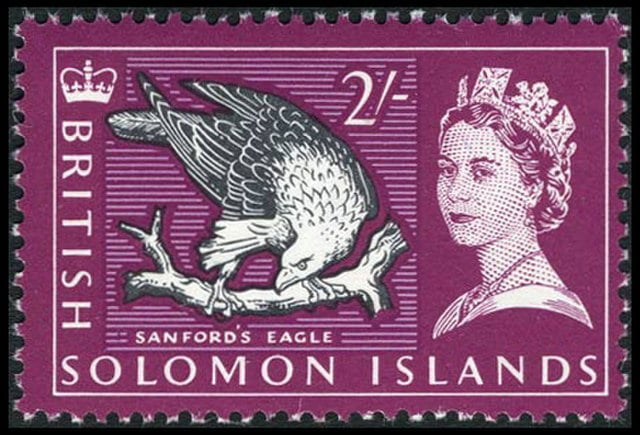
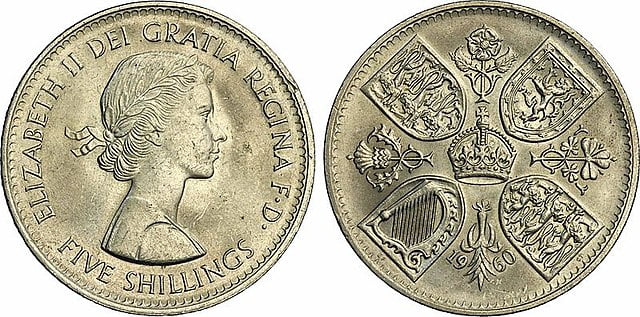
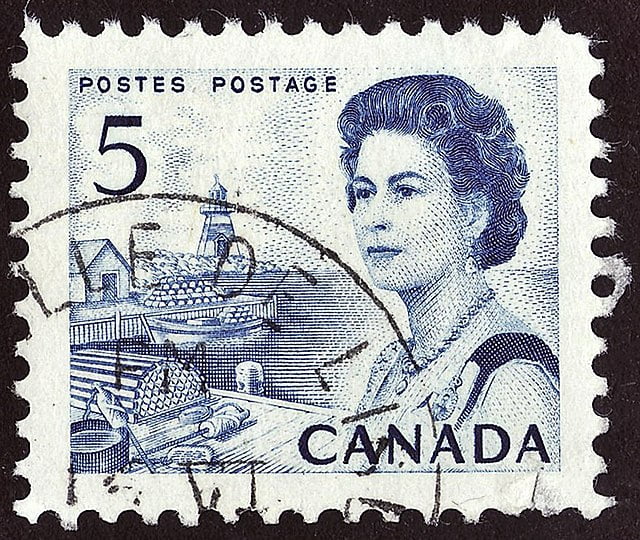
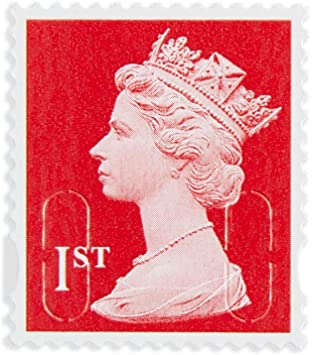
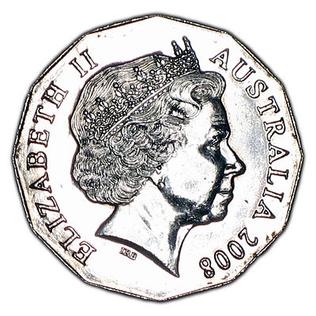
The history of monarchs’ heads appearing on coins in England goes back to Anglo-Saxon times and the likes of King Offa of Mercia and Alfred the Great. Since the 17th century the sovereign’s head has been shown in profile, and the direction it faces traditionally alternates with each successive reign. The Queen’s head always faces to the right and her successor’s will face the left.
When British coins received a complete facelift with the decimalisation of the currency in 1971, the Queen’s image appeared in a new design by the sculptor Arnold Machin. Updated depictions of her were introduced in 1985, 1998, 2007 and 2012. The coins carry a Latin inscription: ‘Elizabeth II Dei Gratia Regina Fidei Defensor’, which means ‘Elizabeth II, by the grace of God, Queen and Defender of the Faith.’
The Queen’s image can be found on banknotes too – there have been five different depictions of her during her reign. A one pound note, designed by Robert Austin and issued on 17 March 1960, was the first note to carry a portrait of the Queen. On banknotes the Queen’s head always faces left, but with a hidden watermark showing her looking to the right.
The Queen’s head also appears on British stamps – a tradition that started in 1840 when Queen Victoria’s head appeared on the Penny Black. The first image of Queen Elizabeth to appear on the corners of British letters was based on a photograph by Dorothy Wilding. The image lasted from 1952 to 1967, when a new profile created by Arnold Machin and usually set on a single colour, was introduced. The Machin series, as it is known, is still in use, and on its 40th anniversary in 2007, the Post Office issued a stamp featuring a photograph of Machin himself.
Eight stamps have been issued by the Royal Mail to celebrate the Queen’s 70-year reign. They feature photographs from each of the decades of her reign, portraying a hard-working monarch who smiles her way through state visits, walkabouts and Trooping the Colour.
Throughout her reign the Queen has inspired a veritable industry in memorabilia bearing her image. From mugs, plates, spoons and medals to figurines, tins and T-shirts, her face has launched a thousand souvenirs, especially during her jubilee years.
The production of royal souvenirs dates back to the 17th century, but manufacturers were allowed to use the monarch’s image on their products only after the coronation of George II in 1727. Memorabilia of the Queen herself began in earnest in 1953, when many local councils marked her coronation by commissioning potteries to make commemorative mugs to give away to local children. A wide range of items bearing the Queen’s image were mass-produced in the coronation year, ranging from tins of biscuits and tea caddies to handkerchiefs and flags.
In the same year, Wedgwood produced an elegant mug showing the Queen’s profile in blue relief on a white background, while Royal Doulton created a fine bone-china tankard with a photographic portrait of the Queen, semi-framed by an oak branch. This was the last commemorative item to come out of the Doulton factory in Lambeth, London, and has become a valuable collector’s item.
Producers of memorabilia were given another major shot in the arm with the Silver Jubilee in 1977. At the high end of the market, Royal Worcester produced a formal blue plate decorated in the centre by the royal coat of arms in gold on a white background. At the more commercial end, Cadbury’s brought out a handsome Milk Tray chocolates tin, with the portraits of the Queen and Prince Philip appearing on a rich mauve background. Carr’s sold an Assorted Biscuits tin, adorned with a photograph of a smiling Queen sitting on a gold-covered chair.
The Golden Jubilee in 2002 proved no different as a souvenir-spawner, and there was the usual range of goods. Royalists could eat their toast from a classic gold-and-blue Spode plate with a portrait of the Queen, or nibble on Walkers shortbread biscuits from a tin decorated with an image of the Queen superimposed on a gold-coloured map of the world and ringed with flags of the Commonwealth countries. They could pour their Earl Grey from a James Sadler teapot with its gold silhouette of the Queen, and stir in the milk with a Royal Mint silver teaspoon.
To celebrate the Queen’s diamond jubilee in 2012 ardent royalists could buy a tote bag from the National Portrait Gallery, bearing an image of the Queen by Chris Levine, as well as the usual range of mugs, china and biscuit tins bearing the Queen’s image. A solar-powered waving Queen figurine was certainly at the kitsch end of the spectrum. Fortunately Queen Elizabeth is said to have a good sense of humour!
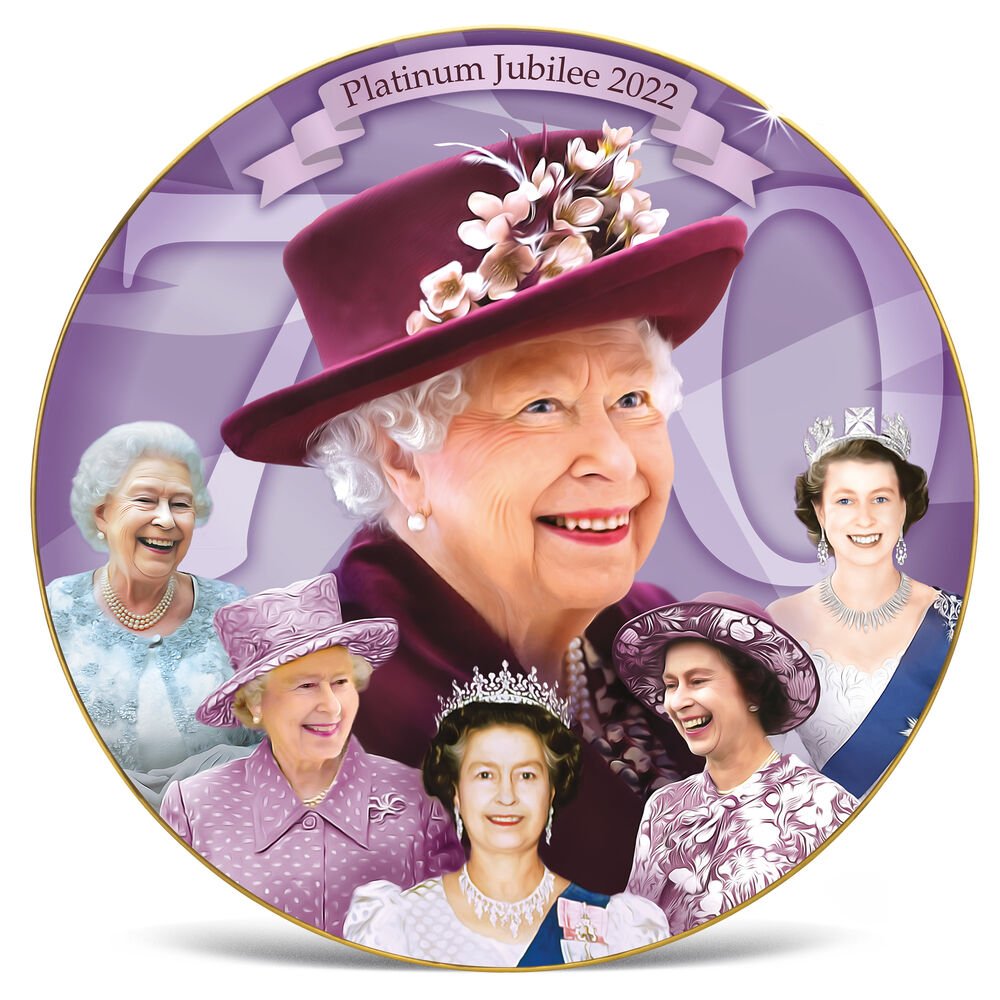
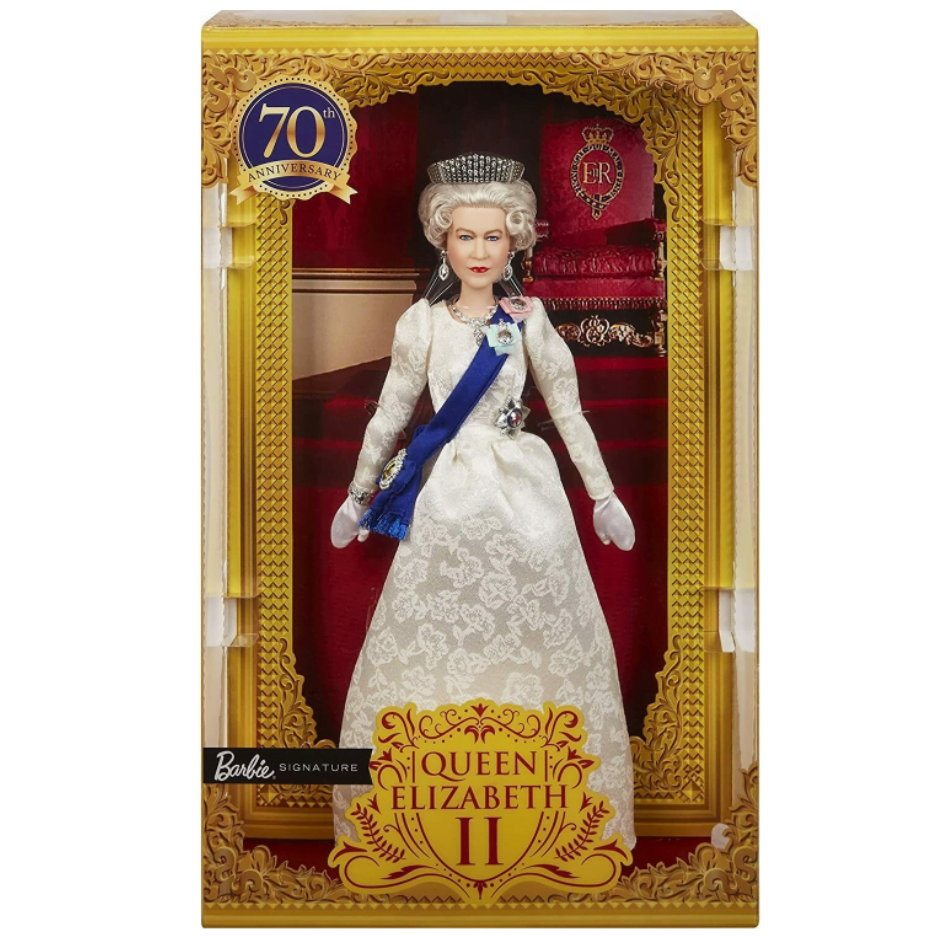
Unsurprisingly, 70 years on the throne is being marked with an unprecedented array of merchandise. At the conventional end of the spectrum, mugs, plate and bone china proudly displaying the Queen’s image are a popular choice. Elegant silk scarves, decorated with heraldic devices and national flowers, are a nod to the Queen’s own personal style. Themed biscuit tins and teapots cater to the British love of afternoon tea while paying tribute to the Queen. Picnic hampers and cool bags, decorated with a royal theme, are widely available, and will no doubt be in use at Jubilee picnics. The Queen’s famous corgis have even made their way on to cushions, tea towels and aprons. Sadly, a specially created Queen Barbie doll, released in April 2022, has sold out, and resold Barbies are now the most sought-after Platinum Jubilee memento.
The Queen’s Platinum Jubilee celebrations are looming this weekend and the entire country is en fête. Our streets are bedecked with bunting, street parties are planned and the supermarkets are overflowing with Jubilee-themed treats.
But what do you do if the prospect leaves you cold? While millions of us will be embracing the celebrations with enthusiasm, millions will feel daunted, disgruntled or excluded by the proceedings. We have to accept that not everyone is an enthusiast, who eagerly embraces high days and holidays, dons fancy dress costumes at the drop of a hat, enjoys nothing more than festooning the house with themed decorations and cooking celebratory dishes.
People who do not enjoy joining in these exuberant celebrations are often dismissed as ‘party poopers’, sour-faced non-participants who lurk on the periphery at festivities, spoiling the day for the rest of us. But this characterisation is obviously unfair. We all have different ways of socialising and celebrating, and some of us are self-contained introverts, who find mass partying intimidating and depressing.
There should be room for everybody to behave on these occasions as they choose; it just takes good manners and a spirit of tolerance and acceptance:
• It’s quite possible that you will find yourself surrounded by people who love events like the Jubilee. If that is the case, and you feel your non-participation would really hurt the feelings of people you care about, then you must accept that you need to make a conscious effort for their sake, and join in the celebrations with good grace.
• If you do find yourself unwillingly participating, then you will have to be very careful to moderate your behaviour. Don’t spend the day in a quiet corner, looking at your mobile phone or your watch. Make a conscious effort to eat heartily, chat convivially, participate in the party games and thank your hosts effusively. It might feel like a strain, but you will be able to congratulate yourself on the fact that you have not let people down.
• If you feel that toeing the line is beyond you, act decisively and don’t attend – a non-show is far preferable to putting in a moody and dispiriting appearance. Politely decline the invitation, and if it at all possible, explain the reason why. If you actually admit that you’re not comfortable at parties, that you find them a great strain, or that you find organised public events overwhelming, then you are taking the burden of your non-appearance on yourself, and your host will not feel hurt or rejected. This is the polite thing to do.
• If you are an enthusiastic party-goer or host and you’re confronted with an unwilling participant, accept their stance graciously – remember an unwillingness to wear a hat, wave a flag, knock up a dish of coronation chicken and join in a sack race, does not indicate that a person has a questionable character. It just demonstrates that this is not their thing and everybody is different.
• Don’t force conviviality on refuseniks. If you’re aware that somebody is making a big effort to attend a party, remember that they may find the more gregarious antics daunting. Allow them to navigate the celebrations on their own terms, and don’t turn into a manic cheerleader, who’s always propelling them into the social fray. If they want some time out, or they’re enjoying a quiet one-to-one conversation, leave them be. Part of being a good host is embracing the idiosyncrasies and foibles of all your guests.
• If a refusenik turns down your invitation, with or without an explanation, accept it. Don’t hector or harangue them, just acknowledge that not everybody is as sociable as you are, and don’t take it personally. If you concede that some people are simply happier having a quiet drink with a couple of friends, you will be able to enjoy your own celebrations, free from any anxiety that other people are missing out.
There are few countries in the world that have embraced the concept of the music festival as readily as the British. Come sun, wind, or rain and mud, thousands of people across the land can be found spending their summer weekends under canvas by night and in front of stacks of speakers by day.
The reason for such behaviour? Simply the extraordinary choice of music festivals on offer across the UK. There are the big guns, drawing music’s most famous names, such as Glastonbury, Reading and Leeds and the Isle of Wight and the more bijou gatherings such as Bestival, Latitude and Secret Garden. All of which means there is something for everyone – whether a jazz lover, rock ‘n’ roller or devotee of Polynesian nose flute music.
Maybe it’s a curious quirk of the British spirit that such a quantity and diversity of events exist in a country whose weather is so ill-suited to staging them. But perhaps it’s for that very reason that music festivals in the British Isles have an atmosphere of fun, spontaneity and excitement unrivalled anywhere else.
Each festival has its own unique flavour and feel, but the universal expectation is that the punters are faced with a few days and nights in a field, though this can range from glamping in a well-appointed yurt to toughing it out in a flimsy portable tent.
Whatever the expectations, the best festival-goers are those who can maintain a carefree, sunny spirit, no matter how deep the mud. But spontaneity, when confronted by crowds, queues and adverse weather, is greatly aided by strategic planning. It helps to be well organised:
• Plan ahead and if you are going in a group make sure that each party-member has an allocated list of contributions (eg water supplies, drink, folding chairs, gazebo). It helps if one person is appointed the group organiser, and they can coordinate everyone else.
• A trolley or wheelbarrow will be invaluable when it comes to transporting kit from the carpark to the campsite. Many festivals hire out trolleys, but these can be expensive and elusive.
• Choose where to pitch your tent with care. Avoid sites at the bottom of hills (rainwater run-off and mudslides can be a real hazard) or near communal taps, where there will be heavy foot traffic. Make sure you’re not on the main route to the festival arena and avoid sites downwind of the loos at all costs.
• Use picnic rugs, folding chairs or even a lightweight gazebo to create a communal space outside the tent /s – an ideal relaxing spot for weary festival-goers who are satiated with the music and severely sleep-deprived after several days camping.
• Navigating your way back to the tent late at night, when all you’ve got is a torch and your own befuddled recollections, can be a nightmare. Take a short cut by fixing a flag or pennant to the top of your tent so you can recognise amongst it the hundreds of others, which all look disturbingly similar.
• Don’t leave valuables in your tent. Make sure you’ve got plenty of cash as well as cards as you never know what the policy of bars, food stalls and refreshment facilities will be.
• Your mobile will be invaluable: it will help you round up lost members of your party, organise meeting points, liaise over dinner choices. It will also double up as a torch and camera. Most festivals offer phone charging facilities (at a price).
• Take plenty of water. It’s useful for teeth-cleaning and washing, and it’s also vital to keep well-hydrated. You will be able to refill large containers at communal taps.
• Festivals are notorious for wet weather challenges but they can also be hot and sunny and if you are outdoors all day you will be very exposed – pack a hat and plenty of sun cream and apply it regularly. Always be ready to share your sun cream with less organised festival-goers.
• Everyone is at a festival for a fun time and you’ll need to get into the party atmosphere. But if you find yourself in a particularly quiet section of the campsite, late-night antics and loud, boozy conversation won’t go down too well with your sleeping neighbours. Assess the prevailing atmosphere and act considerately.
• Clear up after yourself and be meticulous about using all the recycling facilities that are provided. You should leave your camping site pristine, with no trace of your occupancy.
• Be open to strangers, share your stuff, help out if they’re lost or disorientated. You will find that all the usual social barriers disappear at music festivals, which creates a uniquely friendly and convivial atmosphere.
The diamond is sparkling on your finger and the date is set. You're about – unless you’re very careful – to undergo the transition from ordinary woman to bridal fury. Be afraid. In the flurry of champagne moments and warm-hearted celebrations that follow the announcement of an engagement, it’s all too easy to become convinced of your own importance. You may become strident in defence of your right to have a perfect wedding, and ruthless in your treatment of anyone who (according to you) stands in your way.
Take a step back and breathe deeply. A wedding is a team effort, requiring vast reserves of tact and diplomacy. Parents must be placated, in-laws must feel included, friends must be consulted, and – above all – your future spouse must feel that it is their big day too.
Here are some ways to avoid becoming a bridezilla:
• Remember that your upcoming wedding is not a unique and monolithic event on the social calendar. Other people will be getting on with their lives and will have plenty of crises and celebrations of their own to contend with.
• Conduct a reality check. You may have dreamt of your perfect wedding day for many years, but fantasies are not always fulfilled and everyday constraints – like budget, family relationships, availability of venues – will inevitably intervene.
• Remember it takes two to get married. Your own dreams and agenda will now have to be shared and negotiated with your future spouse, which may well be a tough test of your relationship. Grandiose plans may be shattered when you are confronted by an obstinate desire for an understated wedding.
• Listen to your family (and give your future in-laws equal attention). Weddings tend to be family events, and you may find your dream guest-list is curtailed by family considerations and complex relationship dynamics. While you should not allow yourself to be railroaded by family priorities, you must also consider them very carefully and, if expedient, make concessions.
• Listen to your friends. You may well have already enlisted your best friends as bridesmaids and they will do their utmost to support you on the big day. But if they are good friends, they will notice when you are becoming obsessive or over-demanding, and they will gently put you back on the right track. Accept that they are objective observers and take note of what they say.
• Always negotiate, never demand. Planning a wedding certainly requires organisational abilities, but more importantly it requires excellent social skills. To carry off the big day successfully, you must be prepared to be flexible and accommodating. Never dig your heels in or adopt a non-compromising stance – every problem and challenge can be solved through constructive negotiation.
• Remember your ps and qs. Asking for help and favours and making your own wishes known will all be much more palatable if you remember to say please and thank you. It is a gracious gesture to send the odd note (or even text message) of thanks, for example to your mother-in-law and chief bridesmaid, during the run-up to the wedding, and ensure that their contributions are publicly, and gratefully, acknowledged.
The big day will soon pass, and above all you will want to enjoy memories of a joyous celebration, not niggling recollections of your own intractable behaviour.
“The word of a gentleman is as good as his bond; and sometimes better.”
Charles Dickens
“Perhaps the true definition of a gentleman is this: Whoever is open, loyal, and true; whoever is of humane and affable demeanour; whoever is honourable in himself, and in his judgment of others, and requires no law but his word to make him fulfil an engagement; such a man is a gentleman, be he in the highest or lowest rank of life, a man of elegant refinement and intellect, or the most unpolished tiller of the ground.”
“Let your pledged word ever be sacred.–Never promise to do a thing without performing it with the most rigid promptness. Nothing is more valuable to a man in business than the name of always doing as he agrees, and that to the moment. A strict adherence to this rule gives a man the command of half the spare funds within the range of his acquaintance, and encircles him with a host of friends, who may be depended upon in any emergency.”
The Gentleman’s Book of Etiquette and manual of Politeness by Cecil B. Hartley, 1860
According to 19th-century etiquette guides, firmly endorsed by Charles Dickens, a gentleman’s word was absolutely binding. It was tied up with his sense of honour and probity, and promises, once made, were never to be broken. By the same token, the truth was never manipulated to serve his convenience – it was considered dishonourable to do so.
In business transactions a promise, sealed by a handshake, was considered as good as a contract – breaking that sacred agreement caused irreparable reputational damage and was not countenanced.
These clear guidelines set a high standard of reliability and honesty, which has gradually been eroded. It was once the case that we looked up to influential people, such as politicians or legendary sportsmen, because they kept their word and honoured their promises. These high standards no longer apply, and we have become increasingly cynical about the ability of politicians, for example, to adhere to their pledges, fully expecting them to twist the facts to suit the politically expedient narrative.
In our personal lives we have all suffered the trauma of broken promises. These can range from the simple let-down or last-minute cancellation because a better offer has come along to much more serious offences, such as reneging on a promised debt repayment or backing out of an agreed deal, such as a car purchase or holiday house share. We have become wearily accustomed to the hair-raising manoeuvres that accompany many British house sales, when agreed prices are gazumped and purchasers, whose offer has been accepted, are dropped like hot potatoes because they have been trumped by a higher offer.
For all that we have become accustomed to broken promises, they are still highly destructive, and many friendships have been damaged because of the keen sense of betrayal they engender. Frequently, a broken promise is accompanied by a re-writing of the truth, which is an attempt to justify the action. At the most banal level, these may be trifling white lies to explain non-attendance at a social event, but this can easily escalate into much more serious fabrications, especially when the betrayal is on a bigger scale.
One way to stop this slow decline in standards of behaviour is to ensure that you are as good as your word and that you keep your promises. Never make a commitment you cannot keep, and always consider carefully before you do so. Do not let yourself be swept along by the heat of the moment – a sudden enthusiasm, a blasé belief that you can make it work, a refusal to recognise the difficulties that stand in your way. Never make a promise in the belief that, if all else fails, you can always back out. Take all commitments, big and small, with the utmost seriousness.
If you do find yourself in a situation where you feel you have no choice but to break your promise, do not resort to lies to justify your behaviour. Be scrupulously honest and take full responsibility for your shortcomings.
Being true to your word is the foundation of successful relationships, both personally and professionally. You will gain a reputation for reliability and integrity, and you will earn respect.
The British are avid gardeners and garden enthusiasts. When they’re not actually gardening, or tending their balconies or window boxes, they’re visiting historic gardens or exploring private gardens as part of the National Garden Scheme – an excellent opportunity to borrow ideas and inspirations and a very genteel way of snooping on other people’s lives.
The huge variety of British gardens owes much to an imperial past, when botanists, explorers and plant-hunters scoured the farthest corners of the Empire for exotic species, many of which thrived in Britain’s temperate climate. Centuries of garden and landscape design and experimentation, changing horticultural fashions and exuberant amateur enthusiasm have created a vast array of gardens, which range from the grandiose and architectural to cottage gardens that overflow with colour and variety.
The British recognise that gardening is good for their physical and mental wellbeing. Despite our unpredictable weather, we love nothing more than eating and entertaining al fresco in our gardens and admiring our own, and other people’s, horticultural handiwork. This essentially benign aspect of the British character has many social benefits. A shared enthusiasm for gardening, or even an uninformed appreciation of a garden, is excellent common ground for small talk at al fresco social occasions and can be very bonding. Gardeners will always enjoy curious visitors, who want to identify their plants or pick their brains about their planting schemes and recommendations. Obviously, dispensing unwanted advice, or voicing criticisms of a much-loved herbaceous border is totally unacceptable – even the most exacting gardener can normally find something to admire.
Against this backdrop, it is scarcely surprising that the world-famous RHS Chelsea Flower Show, which begins on 24 May 2022, is a traditional highlight of the Social Season and a particular favourite of the Royal Family. The RHS Chelsea Flower Show takes over the grounds of The Royal Hospital for five days in late May, displaying a huge array of plants, plus a multitude of gardening accessories and tools.
New plant launches are a feature of the Show, while around 40 Show Gardens, Container Gardens, Sanctuary Gardens and Balcony Gardens predict coming trends. All About Plants gardens are a chance for growers and nurseries to demonstrate the ways in which plants can positively influence mental health, community and industry.
The Royal Horticultural Society was founded in 1804 as The Horticultural Society of London, by the botanist, Sir Joseph Banks, and horticulturalist, John Wedgwood. Its aim was to collect plant information and encourage the improvement of horticultural practice. In the 1820s the Society held a series of ‘floral fêtes’ at the Duke of Devonshire’s estate in Chiswick, the origin of later Garden Shows.
The fortunes of the Society were on the wane when, thanks in part to its then president, Prince Albert, it was reborn with a new charter and name – the Royal Horticultural Society – and a new garden in Kensington, which became the location of the “Great Spring Show” in 1862. In 1888 the RHS moved the Show to Temple Gardens situated between Embankment and Fleet Street in the heart of London, which it was felt would be accessible to more visitors. In 1912 the Royal International Horticultural Exhibition was held at the Royal Hospital Chelsea, and the Great Spring Show moved there a year later, in 1913.
The Flower Show reached its pre-war apogee in 1937, when an Empire Exhibition celebrated the coronation of King George VI. Exhibits included wattles, gladioli and prickly pears. The show was suspended during the War, when the land was used as an anti-aircraft site, but in 1947 the Show was re-launched and since then it has become a major visitor attraction.
The 11-acre Chelsea site is visited by around 157,000 visitors during the five-day show. Tuesday and Wednesday are for RHS Members, and then the Show is open to the ticketed-public on Thursday, Friday and Saturday. The only formal day is Monday, when members of the Royal Family attend, along with press and invited guests. In the evening the Charity Gala Preview, in support of the RHS, is an exclusive event to launch the beginning of the summer season. Don’t miss the famous plant sell-off, which begins when a bell rings at 4pm on Saturday afternoon. Be prepared for sharp elbows and a lack of queuing etiquette.
The new cross-London railway, the Elizabeth Line, is launched on Tuesday, 24th May. It will stop at 41 accessible stations, 10 newly built and 31 upgraded, and is expected to serve about 200 million people each year. The east-west line will link Reading and Heathrow in the west with Shenfield and Abbey Wood in the east via twin tunnels between Paddington and Whitechapel.
At this moment of ambitious expansion, we've taken a look at the evolution of underground etiquette, and shared some handy tips for the modern tube traveller.
London’s underground adventure began in 1863, when the Metropolitan railway began to convey passengers from Paddington to Farringdon beneath London’s congested streets. The first trains were steam-powered and, while early travellers were astonished by the speed of travel, the smoky underground atmosphere sent many passengers coughing and spluttering to a pharmacist near Euston, where they could procure glasses of ‘Metropolitan Mixture’, guaranteed to soothe irritated throats and lungs. An American visitor to London, R. D. Blumenthal, described the early underground experience: “The atmosphere was a mixture of sulphur, coal dust and foul fumes from the oil lamp above; so that by the time we reached Moorgate Street I was near dead of asphyxiation and heat.”
The electrified City & South London Railway opened in 1890, the first deep-level “tube” in the world. Initially there were no windows (the engineers reasoned there was nothing to see), but they soon discovered that passengers were dubbing the wondrous new system “the sardine box railway” and windows were eventually added.
The arrival of the tube heralded great changes in society, reflected in new manners and etiquette. The underground facilitated the movement of unchaperoned women around the city, and this caused many social challenges. People of all classes and backgrounds were forced into close proximity in crowded stations.
Initially, underground carriages were categorised into first, second and third classes, with first class passengers enjoying spacious padded seats and carpets, while third class carriages offered wooden benches. Signs on platforms indicated where passengers should wait for their correct class carriage, but it soon became apparent that distinctions were being ignored in the great rush to board. A female writer in The Queen journal complained that overcrowding forced “ladies living in the country to travel with men in soiled garments, covered with clay or brick or rubbish, or reeking with odours of stale fish”. In 1900 the class distinctions were abandoned.
Initially smoking was not allowed on the underground, but this stricture was soon overturned, and by 1870 smoking carriages were allowed. These had to be provided for each class of travel, and in some cases were reserved for men. It was argued that smoking was bad for women’s health, and the habit of smoking in carriages in the presence of ladies was roundly condemned.
However, ladies had other ideas. When ‘ladies only’ carriages were introduced, which were free from tobacco smoke and the possibility of unwanted male attention, ladies voted with their feet and opted to choose their own carriages, resisting attempts to segregate them. Ladies only carriages, which were always empty, were eventually discarded. It was a tenet of Victorian etiquette that gentlemen gave up their seat for ladies. If they did so, ladies were recommended to accept graciously, either thanking him or bowing, but refraining from smiling at the stranger, and limiting herself to a “grave but cordial thank you” (Sensible Etiquette, Mrs H.O Ward, 1878).
With nothing to look at outside the windows, there was an issue on underground trains about how people would entertain themselves during the journey. Reading newspapers was an enduringly popular way of remaining cocooned from the rigours of tube travel, and when advertising began to make an appearance in carriages passengers found it diverting. There was, of course, always the risk that a passenger would catch a fellow-traveller’s eye, causing social embarrassment, or that male passengers would stare insolently and appraisingly at ladies. The Ladies’ Book of Etiquette (1875) advised ladies to “lower your veil and turn from him”, reassuring its readers that “a dignified modest reserve is the surest way to repel impertinence” and insisting that “nothing will rebuke incivility in another so surely as perfect courtesy in your own manner”.
Trains were inordinately loud, making conversations impossible. The prevailing tendency was to mind your own business, immuring yourself in your own unreachable and self-contained zone, a behaviour that is still very recognisable today.
The introduction of escalators into crowded stations in 1911 introduced new challenges to tube passengers. Initially, guards instructed passengers to walk up the escalators, treating them as moving staircases. Gradually, underground workers introduced a system where those who wanted to stand still could do so on the right-hand side, while people who walked up the escalator used the left-hand side. This system is still in place today.
The congestion of the London underground, the huge numbers of passengers, and complexity of the route system, were all challenges that were addressed by the railway authorities, who began to issue a series of innovative instructional posters, which were intended to initiate their users in the correct underground etiquette. The posters focused on social conduct and ways of ensuring the journey was as pleasant as possible: they advised how to enter a crowded carriage; warned against blocking the doorways; pleaded with people on the platform to let passengers off first; recommended moving down the platform to reduce overcrowding – all these instructions can still be heard today.
Often the messages were framed in a moralistic tone, stressing the fact that ‘good’ tube behaviour was considerate towards other people. A 1918 poster instructed passengers to move down inside the carriage because “everyone cannot get a seat at the busy hours but more could get a strap or standing room if the doors were left free from the crush. Think of others. A door obstructer is a selfish person.”
In 1927 a poster outlined a paradigm of underground virtue. Headed “A Fair Average Conduct Helps the Service” it is the account of an archetypal passenger’s considerate, if predictable, journey: “I entered the Tube Station and took my place in the queue, I had the exact fare ready, I passed across the lift, I stood clear of the gates, I bewared of pickpockets, I passed down to the other end of the platform, I let them off the car first, I stepped on quickly, I passed right down inside, I passed out quickly, I stood on the right of the escalator, I allowed others to pass, I stepped off with the right foot, I had my ticket ready, I emerged by the “Exit Only,” I walked smartly to the office. Why? Because I do it every day. Why? Because I’m, unfortunately, that sort of chap.”
Underground Etiquette for Modern Travellers
• Be prepared when you enter the underground station, and have your Oyster card, debit card or phone ready to place on the reader. Especially in rush hours, the flow of passengers through the entrance gate is fast and relentless, and people will be annoyed if you hold them up.
• If you want to stand still on the escalators, stick to the right-hand side, allowing people to walk up and down on the left hand side.
• Once you arrive at the platform, move along so that you are not blocking entrances and exits.
• When the train arrives, stand to one side of the opening doors and allow passengers to disembark. Do not jostle or barge into other passengers in your eagerness to board – another train will be along very shortly.
• Once on board the train, move down inside the carriage – there are plenty of handles and rails to assist you. Do not bunch up in the entrances near the doors as it will make it difficult for passengers to disembark.
• The carriages can be quite crowded so try not to take up excess room with your luggage and possessions. If you are wearing a backpack, be aware that there is a protuberance on your back that could inconvenience other passengers – it is best to remove it before boarding.
• In summer the tube can get uncomfortably hot, so travel with a bottle of water and remove your coat before boarding.
• Only use one seat – do not dump your possessions on the vacant seat next to you.
• Do not occupy more than your allocated space by slouching or sprawling in your seat or man-spreading.
• If you are listening to music or podcasts, use headphones or earbuds. Loud music leaching out of your headphones will be frowned upon – tubes are conventionally quiet spaces.
• Minimise eating and drinking on the tube. Lurching trains and sudden stops can easily lead to embarrassing spillages and smelly foods can be overpowering in a confined space.
• Do not stare at your fellow passengers. If you find yourself without the distraction of your phone, or a book or newspaper, try to fix your gaze above the opposite passengers’ heads, where you adverts, tube maps, and possibly even poetry will distract you.
• It is important that you respect the Priority Seat signs. In any case, if you see an elderly person, or someone who is pregnant, or a mother with a small child in tow, it is a considerate gesture to offer them your seat.
• If you are offered a seat, graciously accept it, even if you do not feel that you actually need it. If you are only staying on the train for a couple of stops, say so and politely refuse.
The summer season at Glyndebourne begins every May. Glyndebourne, which presents six operas from May to August every year, is the archetypal country house opera venue. It hosts one of handful of world-famous English summer opera festivals, which include The Grange, Grange Park and Garsington.
Country house opera represents a typically British attitude to the summer. There is a recognition of the unique beauty of manicured British gardens, picturesque and historic country estates, and summer views across glorious countryside. There is also a robust refusal to countenance the vagaries of the British summer – each of these festivals is built around an optimistic desire to indulge in long twilight champagne picnics in glamorous evening dress – a magical experience that can be severely hampered by rain and chilly evenings. Despite the risks of rain ruining al fresco dining, the opera performances are viewed with the utmost seriousness, and each location has a dedicated permanent opera house, which ensure that the performances are never disrupted by the summer weather. Indeed, each of these opera festivals is a renowned forum for world-class music.
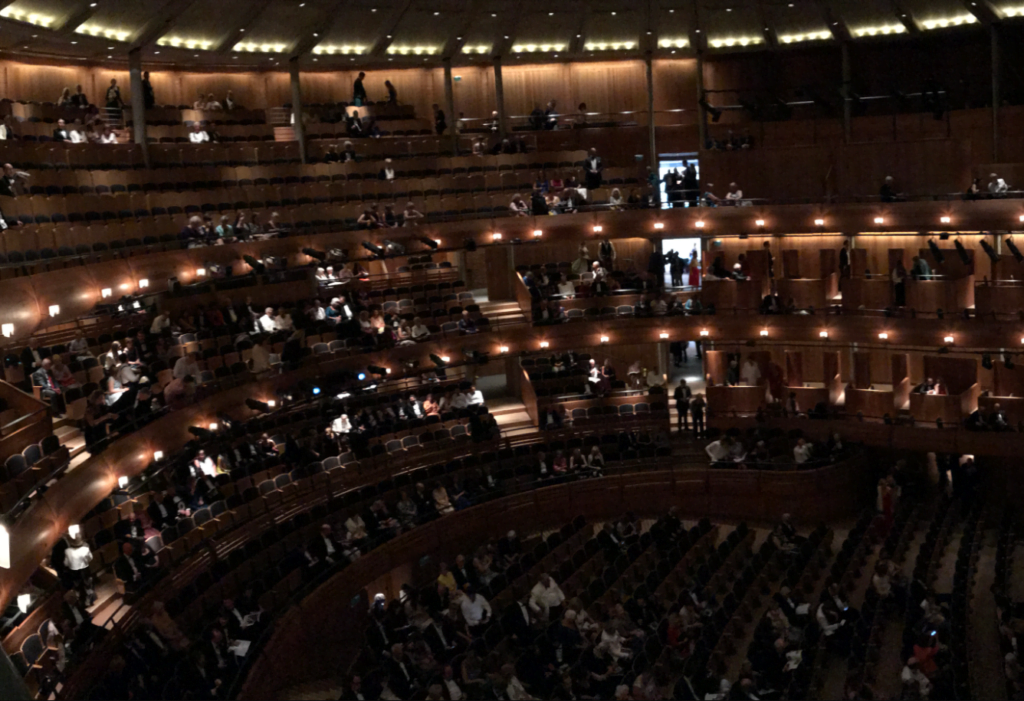
Dating back more than 80 years, Glyndebourne opera attracts thousands of opera-lovers from London and further afield, especially for its Mozart, Handel and Janácek, staged in the acoustically brilliant, modern auditorium that opened in 1994.
Landowner John Christie, who inherited the historic country house (probably 16th-century), and his opera-singer wife Audrey Mildmay originally set up the festival as a showcase for small-scale productions of Mozart operas in 1934.
Encouraged by his wife (“If you’re going to spend all that money, John, for God’s sake do the thing properly!”), John Christie created an auditorium that could seat 300, and launched his first opera season with a repertory that initially focused almost exclusively on the works of Mozart, before gradually expanding to include operas by Britten, Verdi, Rossini, Handel and many others.
From the outset, the standard of operatic performance was unimpeachably high, and opera-lovers were gratified by the beauty of the downland setting and the exquisite gardens, both of which could be enjoyed during the long interval breaks. Far from being a rich man’s folly, Glyndebourne rapidly became a much-admired international institution.
By the 1990s it was clear that Glyndebourne needed an even larger auditorium so in 1994 a new multi-million pound opera house was built to seat 1,200, opening with a performance of Mozart's Le nozze di Figaro, a fitting tribute to the Festival’s origins.
Performances commence in the late afternoon and are punctuated by a lengthy 90-minute interval during which dinner can be taken on the extensive lawns, in the form of a picnic, or in one of the restaurants within the grounds. The operas all finish between 9.30–10pm, allowing opera-goers plenty of time to return to London by train from Lewes station. There is a ten, five and three-minute warning bell before curtain–up and at the end of the long interval. Latecomers are not admitted into the auditorium.
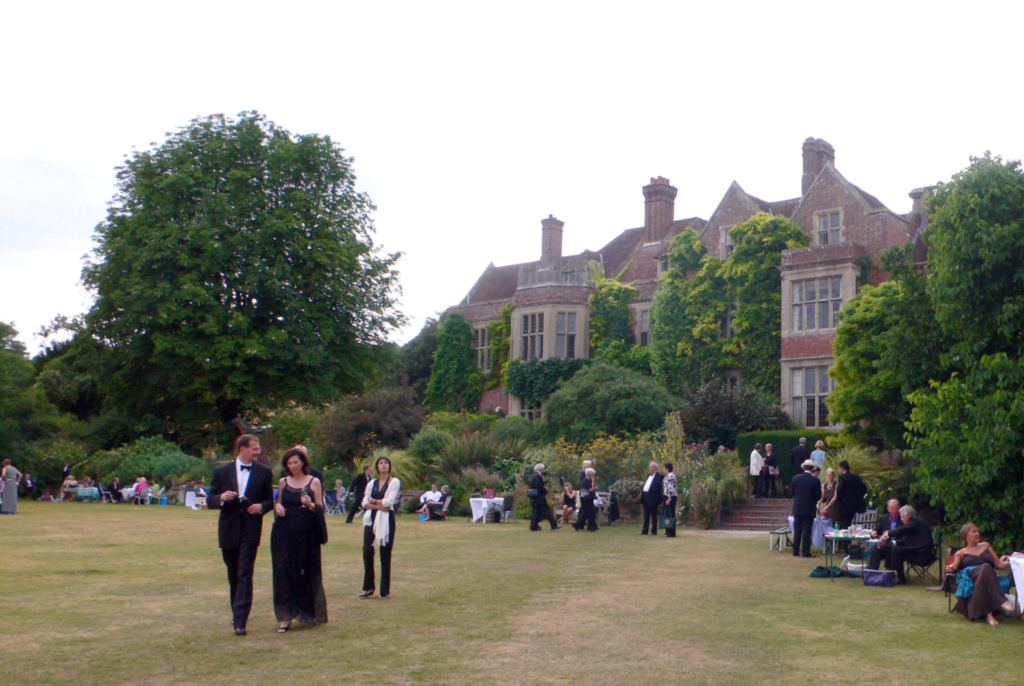
Dress Code
Evening dress (dinner jackets) is customary but not compulsory. There are changing facilities in the Plashett Building at the foot of the car park. It is advisable to bring a shawl, wrap or pashmina, as rural English summer evenings can be very chilly. Ladies may do well to devise evening outfits that include lightweight summer coats to ward off the chill.
Although there is no formal dress code, jeans, trainers, shorts and flip-flops will be frowned upon.
Traditional Picnics
There is a tradition at Glyndebourne of picnicking in the gardens, and most visitors choose to do this. It is customary to set up before the performance – and enjoy a glass or two with a canapé – ready to start the picnic dinner in the 90-minute interval. Arrive early to secure a good spot in the gardens; if it is windy, make sure everything is well-battened down. Picnic rugs are easiest to transport to and from the car but more formally dressed opera-goers will probably prefer the decorum of lightweight folding tables and chairs.
If the weather looks changeable, grab an undercover spot in the covered balconies of the Circle and Upper Circle levels, or in the marquee next to the Archive Gallery.
Glyndebourne is a special occasion, and opera-goers reflect the spirit of the evening with reasonably grand picnics. British summer classics, such as smoked salmon, asparagus and strawberries, are popular choices; real cutlery, linen napkins and glasses are the norm, along with a bottle of chilled bubbly. Awnings and gazebos are not permitted.
It is sensible to pack-up picnicware before the end of the long interval and leave it near the auditorium, allowing for a speedy exit at the end of the performance. Make sure you include a bag for your rubbish.
Opera Etiquette
• Arrive on time; most opera houses won’t let you in after the opera has begun and you will have to wait until the interval for admittance.
• Don’t ruin the drama by whispering, coughing or rustling sweet papers.
• Ensure that your mobile is turned off during the performance – ringing tones during a famous aria are a capital offence!
• It is customary to applaud only when the conductor takes to the podium, after the overture, at the end of an act, after an impressive aria and at the final bows.
• ‘Bravo’ is shouted during the applause; ‘bravo’ is exclaimed for a male performer and ‘brava’ for a female performer.
• Surtitles, also called ‘supertitles’, provide an electronic rolling text of a summary translation above the stage to help the audience keep up with the plot.
Gossiping is universal. Throughout history, gossip has been a human survival tool, an excellent way of communicating opportunities and dangers. Gossip is also an invaluable way of establishing social norms of behaviour – discussing our fellow humans’ behaviour gives us insights into what is socially acceptable and what is considered beyond the pale.
At its most basic definition, gossip is talking about someone who isn’t present, and that of course is not inevitably negative. Humans are impelled to share information about each other – perhaps they need to alert a group to a mutual friend’s predicament, or spread good news about a birth, marriage, or new job.
Gossiping is undeniably enjoyable – for many people it is an effective way of forming bonds with a group, especially when people are thrown together in the workplace and are outside their normal comfort zone of friends and family. Discreetly handled, gossip can also be a good way of letting off steam and venting aggression, without ever venturing into real conflict or confrontation.
But this essentially benign chit-chat seems a long way from the thrill of betraying confidences and relaying other people’s secrets or spreading unsubstantiated rumours, and enjoying the frisson of turning speculation into fact and watching it spread like wildfire through your social network, accumulating new twists and turns as it goes. This process has given gossip a bad name, and to call someone a ‘real gossip’ is to condemn them for being indiscreet and salacious.
The main perpetrators of gossip may see their never-ending fount of rumours and speculations as a fast track to popularity – other people will always be keen to listen, and they may well mistake a malicious hunger for new rumour-mill fodder as social endorsement.
However, rumours are about real people, who may feel they are being maligned and persecuted. Confidences are betrayed, facts are twisted, reputations are damaged. At its worst, gossip can feel like a targeted act of aggression, designed to be exquisitely humiliating and shaming, and can cause very real distress to the victim. Professionally, malicious gossip can do real harm, altering colleagues’ perceptions of the victim’s honesty, probity and conduct. This insidious poison is very hard to pin down; victims may be only dimly aware of the source of their distress, and unable to find ways of preventing it.
Needless to say, social media has vastly exaggerated the negative impact of gossip. Nowadays the most egregious rumour-mongers find themselves provided with an avid online audience, ever ready to consume and disseminate their lies to an ever-wider circle of followers. It is small wonder that the targets of this online torture feel victimised and hounded.
If you are a target of gossip you have a number of options. If you feel enough righteous indignation you can directly address the perpetrator and explain how the gossip has made you feel and the impact it has had on you. You can even do this in public for maximum effect. For many people, this confrontational approach is a step too far, and they may feel inclined to let the gossip play itself out – all gossip is transitory and once it is out there the currency is immediately devalued. The final option is to approach the gossip through the back door; identify the main culprit, then signal out some of their clique and outline the damage that has been done and the effect it has had on you. You may succeed in shaming them into silence.
If you indulge in gossip yourself, there is a risk you will be overheard spilling secrets about someone or something. If you’re gossiping digitally, you may even make the fatal error of sending a message to the wrong person, or including them in an incriminating chat. Clearly, the right thing to do in these circumstances is to immediately acknowledge the fault and apologise, though this option is not for the faint-hearted. A more insidious choice is to bluff it out and pretend you never knew the information you were spreading was top-secret or incriminating.
Bearing all this in mind, remember the old adage “If you have nothing nice to say, don’t say anything at all.” It is unlikely that many of us will be able to adhere to this advice all the time, but it is good to keep it in mind when a juicy nugget of gossip comes our way.
The Order of Precedence in the UK is the long-established hierarchy of members of the royal family, clergy, peers of the realm, officers of state, holders of Crown honours, and professionals that underpins British society. It has existed for centuries, and long been formalised into Tables of Precedence, which are used when planning formal events, such as state banquets, guild dinners and diplomatic functions. The simple idea is that a person’s status in society is always acknowledged, and that status is reflected in table plans, formal lists of names and so on.
In the past, the Tables of Precedence were rigidly observed, leading to many anomalous situations where an inherited title or marital status automatically trumped age and experience. Whereas in some situations social rank may still be deemed to be of the utmost importance, at the majority of functions nowadays considerations such as professional status and age are now treated as equally determining factors. The nature of the occasion provides the most telling guide and should offer indications as to the relative significance of guests. Clearly, a guest of honour must be seated so as to reflect his or her status, and, by way of example, the chairman of a host company, the MP of the constituency in which a function is held, a foreign dignitary whose country is being honoured, or a benefactor at a charitable event should all be recognised and seated appropriately.
Royal Guests
The Sovereign of the United Kingdom is always first in the Order of Precedence and there are clear guidelines to be observed when The Queen or a member of the royal family is to attend an official function. Efficient liaison between the host’s office and Buckingham Palace is essential.
The precedence of all others is the Sovereign’s prerogative. Even the precedence of those who appear in the official Tables of Precedence varies from time to time. Moreover, it not infrequently happens that, in the relationship between host and guests, the requirements of courtesy and hospitality override any strict order of precedence.
Precedence: Top Table
Ministers of the Crown and Privy Counsellors should be placed at the top table on formal occasions. Important dignitaries of the established church are placed high among the guests. High dignitaries of other churches should, as a courtesy, be accorded status immediately after those of the same rank from the established church.
When a function takes place within premises belonging to a specific organisation, a senior representative of that organisation should be invited and placed high amongst the guests.
Ambassadors, High Commissioners and Chargés d’Affaires should be placed at the top table, their relative precedence being strictly observed (The London Diplomatic List, published at two-monthly intervals by HMSO, gives a roll of the heads of diplomatic missions in London in order of precedence).
As a general rule diplomatic representatives from countries that do not enjoy diplomatic relations with each other should not be invited to the same function. When, as sometime happens, it is necessary to invite them, care should be taken to avoid placing them near each other.
Seating Plans
The principal guest is placed on the host’s right. Traditionally the principal guest’s wife would be placed on the host’s left, the host’s wife being placed on the right of the principal guest. If wives are present, the second most important guest would be placed on the host’s left.
It is now as likely for the host, or the principal guest, to be a woman, in which case the same basic principles may be applied, with any necessary adaptations employed to achieve the desired balance.
At an official function important members of the governing body should be interspersed among the principal guests. Guests’ partners should be placed according to the precedence of the guest invited in their own right. It is up to the host to decide whether husbands and wives are to be seated together or apart. The former is easier to arrange, but the latter (which is always followed at private functions) gives both husband and wife a chance to meet new people.



