By Celestria Noel
The word debutante literally means beginner. It described the first steps of a young woman into society, usually, in England at least, at the age of seventeen or eighteen. The process of emerging from education into adulthood was also known as coming out – that is out of the schoolroom and into the ballroom. It was also a signal that a young lady was ready for marriage and matches were made. The idea was for her to meet other people from her own stratum of society but outside the immediate family circle, by attending a series of balls and parties of all kinds. In London, where families would come up from their country houses for the Season, girls from aristocratic backgrounds were presented at Court, that is to the king and queen. You had to be presented by someone who had themselves been presented. This would usually be your mother or another family member.
Readers of Pride and Prejudice by Jane Austen get a good idea of what it was like for the Bennett sisters at the beginning of the 19th century, and things did not change all that much for the following 150 years. At the time the book is set, Queen Charlotte, wife of King George III, was still alive. In 1809 she gave her patronage to a maternity hospital in London, which was named after her and still exists, although on a different site and now part of the NHS. Queen Charlotte also celebrated her birthday every year from 1780 with a ball featuring an enormous cake.
Amazingly Queen Charlotte’s Ball itself still exists, although it has been through many incarnations and is very different not only to the event hosted by Queen Charlotte more than 200 years ago but to the event I attended aged 17 in 1971. Indeed Queen Charlotte’s Ball had become more important after presentation at court came to an end in 1958, when Queen Elizabeth II stopped it. She was advised, largely by her sister Princess Margaret, that it had become a racket and ‘every tart in London’ was paying comparative strangers to present them, while the Duke of Edinburgh called deb dances ‘daft’. It was thought that the deb season might come to an end, but it survived the 1960s, even without royal approval.
Queen Charlotte’s ball traditionally marked the beginning of the deb season in early May and most of that year’s girls would attend, in white dresses. Our mothers, most of whom had been debs, would ask if we wanted to do a season and offer to host a dance or party. Some of my contemporaries said no they would rather travel or study. The dates were co-ordinated by Mrs Betty Kenward, who was social editor of Harpers & Queen magazine.
Queen Charlotte’s itself took place in the huge Great Room in the basement of the Grosvenor House Hotel in London’s Park Lane. Debs and their families were invited but had to buy tickets as the ball was a fundraiser for the hospital. From May until July the other deb dances would be private parties given by parents for their daughters, often two or even three families joining forces. Apart from the parties, girls might accompany their parents to Royal Ascot and might be invited to a garden party at Buckingham Palace but were less likely to attend what are now the Season’s main events such as Henley and Wimbledon.
By the 1970s the Season was already considered passé by many, and the Queen Charlotte’s Ball itself was mocked as being pompous and outdated. My beautiful elder sister had sailed through it five years earlier and even had a trendy disco, Juliana’s, named after her, but in 1968 my more rebellious middle sister wore blue jeans under her white dress and escaped to a nightclub as soon as the dancing began after dinner. The following year someone let out some white mice for a joke. My year was uneventful but a few years later there were streakers and then it was invaded by gatecrashers and stopped altogether. It was revived in the late 1980s by the wife of a doctor at the hospital but again ran out of steam and was not held for twelve years until 2009. The ball is now run on a different basis with older girls from several countries taking part.
In my year there were about 120 debs who went to Queen Charlotte’s, but six of us, including my great friend Lady Jane Grosvenor, daughter of the Duke of Westminster, were chosen by the ball president, Miss Sylvia Darley, to escort the birthday cake. Miss Darley was a formidable spinster, from a rich family of brewers, who ruled the girls with a rod of iron. We six were placed at her table and had to behave. As the daughters of a duke and an earl respectively we were chosen for that reason, not looks or merit, though Jane was and is a great beauty.
The cake was enormous, a metre high and the same across and just made from cardboard. It was on a trolley with wheels, which we steered to the end of the vast room, watched by 400 guests seated at round tables on the edge of the room. Other spectators peered down from the upstairs balcony. The cake’s progress was accompanied by Handel’s Music for the Royal Fireworks, which was played at all Queen Charlotte’s own birthday balls in the 18th century. The girls not on escort duty lined up at the end of the room. Once we had the cake in place, all the debs curtsied, not to the cake, as is often claimed, but to the guest of honour, Lady Howard de Walden, president of Friends of the Hospital, who then faked cutting into the cardboard, while waiters scurried out with conveniently prepared slices to hand round at the tables. It was an honour to be chosen as an escort, and reported afterwards not only in magazines such as Harpers & Queen, but in the Court Circular of The Times. I still have the cuttings and telegrams congratulating me.
Although an honour it was not entirely a pleasure. My escort, chosen by my parents, and the son of some country neighbours, was a reluctant participant. A rugby player of six foot five, his face grew redder and redder above the stiff collar of his white tie and he refused to dance with me at all. Luckily I was not short of other friends and partners. In fact I went on to enjoy my time as a deb very much, driving myself in my trendy purple Mini Cooper to a cocktail party or two and then a dance every weekday night in London and to balls at beautiful historic houses all over the country on Fridays and Saturdays. It worked for me because I love people and parties and also knew it was only for a few weeks before university. I did not take it very seriously. I had no intention of marrying a ‘deb’s delight’ as we called the young men who came to the parties, but made some lifelong friends and had fun. In fact one of the reasons the Season stopped working well was that ‘nice’ young men were increasingly reluctant to take part and were off on gap years or at university, not in London. Those who did hang round the deb scene and got themselves asked to parties were sometimes not what the parents of the young ladies were looking for. I remember one telling me proudly that he never had to buy and food or take a girl to a restaurant as he went to a party every night. His only expense was keeping his dinner jacket clean.
The main season ended in July but there were a few autumn parties (known as the Little Season) and then in the December of my deb year Lady Jane Grosvenor and I were invited to represent England at the International Debutante Ball, held at the Waldorf Astoria hotel in New York. We were beautifully looked after by the charming organiser and enjoyed a whole week of fun culminating in the ball itself, to which girls came from all over the USA as well as Europe. My escort Frank has kept in touch with me ever since. Thirty-five years on I was invited back as a guest of honour by the niece of the original organiser and asked to bring my daughter. She turned it down as not for her but I took my niece, who was studying chemistry at Imperial College, and had to be talked into it, and there was Frank, still anxious to look after me.
From the late 1970s the deb season as I had known it really ceased to exist but in 1992 when I started working for Harpers & Queen as social editor I was contacted by Ophelia Renouard, a French public relations executive, who was starting an event at the famous Hotel Crillon in Paris. Her idea was to get ‘debs’ from all over the world to attend, the French aspect being that they would model couture gowns. The first year there was not even any dancing and it was more of a catwalk show, but over the years the event has developed and become very glamorous, with participants such as Lauren Bush, Bee Shaffer, daughter of American Vogue’s Anna Wintour, and President Gorbachev’s granddaughter.
Queen Charlotte’s in my day was not so glamorous. We did our own hair and wore very little make up. Our dresses were far from being couture. Mine came from Valerie Goad, a shop where my elder sister worked in the Fulham Road, where we all got our things, and cost £29. Not a lot even then. Naturally I wore it again for the ball in America. Who needed two white dresses? We would have thought it extravagant.
Being a ‘deb’ today is a matter of attending one event rather than spending a whole Season partying. It is not part of the programme for most young English girls – none of the young British princesses have been debs, for example. The modern eighteen-year-old is in work or education, or might travel before university and a career. She chooses her own husband, or not, at a much later age. Three months full time partying is not an option. However, the fun element is being rediscovered by girls who enjoy dressing up and a change from their everyday jeans. When wearing jeans is no longer rebellious, perhaps being a deb in a white dress is cool, in an ironic way?
The last two years have seen an enforced change in British behaviour. We have been intermittently confined to our homes and forbidden, or actively discouraged, from socialising with our fellow human beings. We have been advised to ‘keep our distance’. So it is scarcely surprising that, while the lifting of restrictions has propelled us into the social world again and we are once again enjoying rubbing shoulders with other people, our public manners have got a bit rusty.
We’ve become so used to isolation and individualism that our finely tuned social antennae, which pick up on the myriad signals sent out by other people, are not functioning as well as they should be. We’ve forgotten how to comport ourselves in shared social spaces, as instances of loud, boisterous, boorish and oblivious behaviour testify. So here are a few reminders:
People seem to have become increasingly disinhibited about mobile phone use. For many years now we have been forced to listen to one-sided conversations that are shockingly intimate. Now we find ourselves listening to full-disclosure two-sided conversations, as people are switching their phones on to speaker or conducting video calls in public spaces. This tendency shows a troubling disregard for social boundaries and a baffling disdain for other people. It may be the result of occupying our own space for so much of the last two years, and failing to make the necessary adjustments. But it is imperative that you are aware of people around you when using mobile phones.
This admonition also applies to the increasing numbers of people who watch videos or play games on their mobiles without headphones when they are out and about, most notably on public transport. While you are not revealing your deepest secrets to strangers, you are invading their space with noise pollution. Always use headphones or ear buds to minimise noise.
During the pandemic we naturally spaced ourselves out on buses and trains, doing our best to create our own cordon sanitaire. This tendency was greatly facilitated by the comparative emptiness of public transport. But now most people have gone back to work (for some of the week at least) and transport is filling up. It is therefore unacceptable to mark out your own space by dumping bags on adjacent seats, especially if you do not remove them when you see people standing. You may feel at risk of infection from your fellow-travellers, but you have made the decision to use public transport and you must accept the consequences. That means stowing bags away and occupying only one seat. People should never be forced to ask you to move your bags.
Remember that a train is a public space and you’re not at home, putting your feet up on the sofa. Keep your feet on the ground, not on the opposite seat. Resist eating extremely smelly fried food that will suffuse the whole carriage – you don’t want to nauseate your neighbours…
Everyone has been overjoyed to be socialising in restaurants and pubs again, and convivial gatherings are the order of the day. But don’t let your excitement carry you away. Remember that you are sharing a public space with fellow-diners and if your group gets really raucous, with deafening chatter and baying laughter, you’re likely to be disturbing people at nearby tables, who won’t be able to enjoy their own conversation.
Flushed with wine and good fellowship, it’s very easy to let your children do their own thing when eating out. This might involve wandering around the restaurant, tripping up waiters and accosting strangers, or playing rambunctious and noisy games near diners in the pub garden. Of course, you want them to have fun too, but it really is imperative that you keep an eye on feral children and ensure that they’re not spoiling other people’s enjoyment.
That said, nobody should expect eating out in restaurants and pubs to be a serene experience of cathedral-like calm. You may have got used to the peace and solitude of your own home, but eating out is a communal experience and there’s no point going out if you’re not prepared to show some tolerance towards other people and their children. If people are making an obvious effort to control and marshal recalcitrant children, acknowledge their efforts with a smile – giving harassed parents the evil eye is just going to add to their stress levels.
The end of pandemic restrictions has unleashed a great wave of socialising – parties, dinners, celebrations and, inevitably, weddings. Many couples were forced to defer long-planned weddings because of legal limitations and are now eagerly anticipating their big day.
So now is the time to think about wedding invitations, which are usually sent out at least 12 weeks before the wedding date. These are all-important because they perform a number of functions. Most obviously, they alert your guests to the date, or at least remind them (you will probably have already sent save the date cards). They also inform guests of the location and time, and their RSVPs will form the basis of your numbers calculations and wedding planning. More subtly, they will give your guests an idea about the nature and style of the day and – along with additional information sent out with the invitation – will help your guests to make informed decisions about what to wear, wedding gifts, overnight accommodation and so on.
Some basic factors will dictate the look and feel of the invitation: size and shape, colour, material and typeface. Finishing touches may include a lined envelope and ribbons, and possibly an additional ‘device’ – for example a personalised monogram.
The style and formality of the invitation should reflect that of the wedding. The smartest and most traditional (and expensive) invitations are engraved. An elaborate copperplate typeface will reinforce the traditional style. A more classical serif typeface (such as Baskerville or Garamond) or a modern sans serif typeface (such as Futura or Helvetica) will each signal degrees of departure from strictly traditional form.
Flat printing and thermography are alternatives; if opting for thermography a matt ink surface is a better replica of engraving. Artistic, original invitations, which may be letterpress printed or handmade, are also popular for wedding invitations. You may wish to introduce a theme to reflect the general look and feel of the wedding. Invitations can include photographs or illustrations, or blind embossing. They may also be printed on unusual materials, such as vinyl, perspex or fabric.
A calligrapher may be hired to address the invitations and envelopes. A more practical option may be to enlist the help of a friend or family member who has attractive handwriting.
A traditional wedding invitation is made of card and measures 8 x 6 inches (20.3 x 15.2cm) folded in half with the text on the first (outer) page. This would usually be in black copperplate script, on a cream or white matt background. The name of the guest is handwritten in ink in the top left-hand corner.
On formal invitations, guests should be addressed by their full title, for example, Mr and Mrs Aaron Williams, Miss Eleanor Copcutt, the Lady Alice Torstenson (for less formal invitations it is acceptable to use only first names).
The traditional format for a wedding invitation where both parents are married is as follows:
Mr and Mrs John Standish request the pleasure of your company at the marriage of their daughter Caroline to Mr Christopher John Herbert At St Paul’s Church, Knightsbridge On Saturday 24th September 2022 at 3 o’clock and afterwards at The Hyde Park Hotel, London SW1
There is nothing to say that more contemporary styles and wording cannot be used – there are no set rules and no ‘right’ or ‘wrong’ styles.
It is also important to bear in mind that many families, and weddings, will not fit into the traditional format above. The bride and groom may be hosting themselves, rather than their parents; stepfathers and stepmothers may be hosts; divorced parents may also be hosting, singly or together. All these variations, and several more, can be accommodated and should not be a cause of anxiety. (See our detailed guidance https://debretts.com/etiquette/wedding/engagements-invitations-2/)
A separate sheet giving practical information can be included with the invitation; it is fine to print these at home, as long as a good printer and quality paper are used. The following information typically appears within these enclosures:
A subject of perennial fascination and enquiry, the British peerage is a hierarchy of hereditary titles, along with associated ranks and privileges, that dates back to feudal times, when peers were vassals of the monarch who swore an oath of loyalty to the Crown in exchange for protection or a fief (a grant of land or money).
This tightly knit group of powerful nobles, inter-related by blood and marriage, jealously guarded their land and rights and became the backbone of the British aristocracy. The peerage was always growing and changing: successive monarchs created new peerages, as well as imprisoning and suppressing noblemen who opposed them. The last hereditary peerage titles granted to commoners were: Duke of Westminster (1874), Marquess of Reading (1926), Earl of Stockton (1984), Viscount Macmillan of Overton (1984), Baron Margadale (1965).
In 1958 the Life Peerages Act swelled the ranks of the peerage and life (non-hereditary) peerages (always the rank of baron or baroness) were granted in growing numbers.
Here is a short guide to the intricacies of the Peerage:
There are five ranks of the hereditary peerage, organised in descending order of seniority: duke, marquess, earl, viscount, baron.
A new, lower, degree was added to the nobility by King James I when he created the hereditary orders of baronets in 1611. This was, in effect, a hereditary knighthood (with the title of ‘Sir’). Baronets were separate from the peerage and never held seats in the House of Lords. The last baronet to be created was Denis Thatcher in 1990.
Precedence is sorted by level of title (Duke, Marquess, Earl, Viscount, Baron) then country (England, Scotland, Great Britain, Ireland, United Kingdom), then in order of year the title was created.
In 1337 Edward III created the first English dukedom for his eldest son, probably in imitation of the French king, who had created his elder son a duke in 1332. Since then a number of dukedoms have been conferred on close relatives of the sovereign.
Royal titles take precedence over all other peers. The Duchy of Lancaster is held by the Crown and the current Duke of Lancaster (not Duchess) is the Queen.
A title is automatically inherited by the heir on the death of the last holder of the title – he (or in some cases she) might thereafter have to prove his succession in order to be entered on the Roll of the Peerage or the Baronetage, but as a matter of law he is the peer or baronet from the date of the death of the predecessor.
The Lord Chancellor and the Secretary of State for Justice hold the Roll of the Peerage. The Standing Council of the Baronets publish an Official Roll of Baronets. Peers and baronets are not accorded precedence or addressed by their title until their name appears on the relevant roll.
Royal titles return to the crown if there is no male heir or if the titleholder succeeds to the throne, as will be the case when the Prince of Wales becomes king.
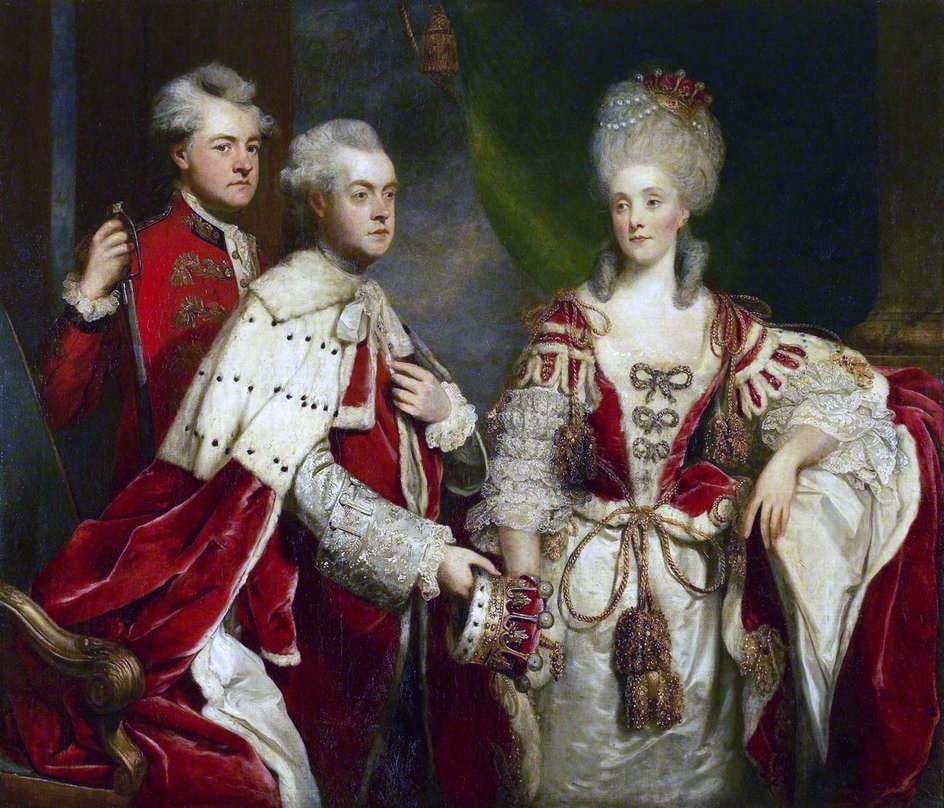
Some peers have two or more titles. For example, an Earl can also be a Baron and a Baronet.
A courtesy title is a title such as Lord, Lady or The Hon, which is usually borne by the sons, daughters, daughters-in-law, brothers, sisters and sisters-in-law of a peer.
The son and heir apparent of a duke, marquess or earl is addressed as “Lord” before his forename and surname, but may also use one of his father’s peerage titles by courtesy, providing it is of a lesser grade than that used by his father. So the heir of the Duke of Norfolk is known as the Earl of Arundel and Surrey by courtesy.
The younger sons of a duke or marquess have the courtesy style of “Lord” before their forename and surname.
The younger sons of an earl, and all sons of a viscount or baron and daughters of a viscount or baron have the courtesy style of “The Hon” before their forename and surname.
The daughters of a duke, marquess or earl have the courtesy title of “Lady” before their forename and surname.
Although the great majority of hereditary peerage titles may descend only in the male line, there is a small number that may also be inherited by a female heir, and may pass down in the female line, if no males are available.
Women married to peers and baronets are allowed to use the feminine version of the title – Duchess, Marchioness, Countess, Viscountess, Baroness, Lady – there is no such courtesy for those men whose wives are peers in their own right, or for those peers in same-sex marriages.
Young ladies of the Regency era were inundated with advice and conduct books, which overflowed with prohibitions, threats and denunciations, all delivered with a high moral tone. It must have been hard work for a young lady, freshly launched into polite society, to navigate the myriad recommendations and comport herself with the appropriate demeanour.
One common theme in all the advice books is the importance of modesty; no young lady will shine in society if she is vain, foolish or self-indulgent. Introducing her best-selling guide, The Mirror of the Graces (1811), the anonymous author, ‘A Lady of Distinction’ opines: “Much is said in the body of this work on the attractive grace and powerful charm of modesty. … Unlimited indulgence in any of the pleasures of sense produces satiety, robs imagination of her power and her charms, and destroys the spring of our enjoyments.”
Thomas Gisborne, who wrote An Enquiry into the Duties of the Female Sex in 1793, is scathing on the perils of female vanity, which he feels is greatly encouraged by the tendency to ‘launch’ young ladies into the glamour of the beau monde where they can expect to be the objects of eager attention and flattery (especially if they can offer a substantial dowry):
“Pains are taken, as it were to contrive, that when the dazzled stranger shall step from the nursery and the lecture-room, she shall plunge at once into a flood of vanity and dissipation. Mewed up from every prying gaze, taught to believe that her first appearance is the subject of universal expectation… she burns with impatience for the hour of displaying her perfections; till at length, intoxicated beforehand with anticipated flatteries, she is launched…and from that time forward thinks by day and dreams by night of amusements, and of dress, and of compliments, and of admirers.”
Dress
The ‘Lady of Distinction’ has some firm opinions on the subject of dress. Needless to say, she is very disapproving of the fashion of revealing too much flesh, which she fears leaves nothing to the onlooker’s imagination. She also repudiates the fashionable folly of going out underdressed in cold weather – a very modern concern, familiar to the parents of teenagers.
She is also extremely dismissive of the tendency to dress ostentatiously, and to overload the person with gewgaws and trinkets: “The best chosen dress is that which so harmonises with the figure as to make the raiment pass unobserved.”
“To the exposure of the bosom and back, as some ladies display those parts of their person, what shall we say: This mode (like every other which is carried to excess and indiscriminately followed) is not only repugnant to decency, but most exceedingly disadvantageous to the charms of nine women out of ten….”
“Fine taste in apparel I have ever seen the companion of pure morals, while a licentious style of dress is as certainly the token of the like laxity in manners and conduct”.
“Elegant dressing is not found in expense; money without judgement may load, but never can adorn. …you may cover a neck with pearls, a head with jewels, hands and arms with rings bracelets and trinkets , and yet produce no effect, but having emptied some merchant’s counter upon your person.”
“To wear gossamer dresses, with bare necks and naked arms, in a hard frost, has been the mode in this country… the utter wretchedness of them who, so arraying their youth, lay themselves open to the untimely ravages of rheumatisms, palsies, consumptions and death.”
Demeanour
Young ladies are repeatedly reminded that beauty and fine dress are not enough for them to succeed in society. They must also display high moral sense, a fine mind and a graceful demeanour.
The ‘Lady of Distinction’ opines that “It is perfection of fine breeding to know your place, to be acquainted with that of others; and to fall gracefully into your station accordingly.”
In A Father’s Legacy to his Daughters (1797) Dr Gregory hands out plentiful advice about how ladies should conduct themselves in conversation, which is a fine balancing act. They should display humour (though never indelicacy), which will make them likeable, but be cautious of wit, which may well create enemies. They should also be careful about displaying their cleverness in society, as it will be looked upon with jealousy and suspicion. Here are some of his recommendations:
“Wit is the most dangerous talent you can possess. It must be guarded with great discretion and good-nature, otherwise it will create you many enemies… Wit is so flattering to vanity, that they who possess it become intoxicated, and lose all self-command.”
“Humour is a different quality. It will make your company much solicited; but be cautious how you indulge it…It may sometimes gain you applause, but will never procure you respect.”
“Be ever cautious in displaying your good sense. It will be thought you assume a superiority over the rest of the company. But if you happen to have any learning, keep it a profound secret, especially from the men, who generally look with a jealous and malignant eye on a woman of great parts, and a cultivated understanding.”
“Consider every species of indelicacy in conversation, as shameful in itself…The dissoluteness of men’s education allows them to be diverted with a kind of wit, which yet they have delicacy enough to be shocked at, when it comes from your mouths, or even when you hear it without pain and contempt.”
Courtship
Ladies must steer a careful pathway through the complexities of courtship. They must be friendly towards gentlemen, but not too familiar – the ‘Lady of Distinction’ is very shocked by the tendency towards over-familiarity: “The present familiarity between the sexes is both shocking to delicacy and to the interests of women. Woman is now treated by the generality of men with a freedom that levels her with the commonest and most vulgar objects of their amusements.”
While ladies should not appear cold or unapproachable, they must also be careful not to distribute their favours too freely – no gentleman will be enamoured of a lady who has already dallied with his fellow-suitors.
A lady must never lead any non-favoured suitor up the garden path – she must treat him “honourably and humanely” and put him out of his misery. If, on the other hand, she should look favourably upon him, it behoves her to make pragmatic enquiries as to his character, fortune and reputation, before making any commitment to him. Dr Gregory has the last words:
“There is a native dignity in ingenuous modesty to be expected in your sex, which is your natural protection from the familiarities of the men…. The many nameless charms and endearments of beauty should be reserved to bless the arms of the happy man to whom you give your heart, but who, if he has the least delicacy, will despise them if he knows that they have been prostituted to fifty men before him.”
“A man of taste and delicacy marries a woman because he loves her more than any other. A woman of equal taste and delicacy marries him because she esteems him, and because he gives her that preference.”
“If you see evident proofs of a gentleman’s attachment, and are determined to shut your heart against him... treat him honourably and humanely. Do not let him linger in a miserable suspense, but be anxious to let him know your sentiments with regard to him.”
“If a gentleman makes his addresses to you, or gives you reason to believe he will do so, before you allow your affections to be engaged, endeavour, in the most prudent and secret manner, to procure from your friends every necessary piece of information concerning him; such as his character for sense, his morals, his temper, fortune, and family; whether it is distinguished for parts and worth, or for folly, knavery, and loathsome hereditary diseases.”
“Etiquette – There is no living well in society without submitting to, and falling in with, the forms of it, absurd as many of them may be…” A System of Etiquette by the Rev. Dr. John Trusler, 1805
Dr John Trusler’s best-selling guide clearly set out the fundamentals of good behaviour for young gentlemen in the Regency era. It would have been indispensable for the young bucks of the beau monde, who frequented the great London houses and grand country estates, gambled and caroused at gentleman’s clubs, flirted with eligible young ladies at lavish balls. He has some strong words on the vexed subjects of debt, gambling and duelling.
He spells out in no uncertain terms the system of precedence in British society, which minutely delineates the comparative social standing of members of the aristocracy and upper classes. Sometimes this rigid system of rank and privilege creates frustrating anomalies, as he points out: “Custom, though I know not for any good reason has established that a giddy girl of sixteen, if married, should have a degree of respect superior to a single woman of twice her age; she shall among her equals in rank, walk first into the room, be offered the first place at table, receive the first attentions of the company be selected out first to dance at a ball &c.”
Socialising with Superiors
In the social minefield of Regency society it was imperative that the status of the different ranks of the peerage was recognised, and that age and wisdom were respected. Certain marks of respect, such as ‘giving the wall’ (walking on the outside of the path or pavement nearest the road) and nodding politely were de rigueur (greeting with a handshake was not the done thing at this time). There is a great deal of emphasis on punctiliousness: leaving visiting cards, returning visits promptly, ensuring that visits are kept short and there is no overstaying.
Acts of politeness from superiors were seen as marks of ‘condescension’, which in Regency times meant a willingness to lay aside the privileges of rank and mix with social inferiors – it was, in fact, a compliment. All these courtesies were seen as both considerate and deferential, oiling the wheels of stately social intercourse.
“[By superiors I mean men of greater rank, men advanced in life, or of superior knowledge.] If you meet an acquaintance of this character… it is your place to make the first salute; and if going the same way, either to accompany him or not, as you find it most agreeable to him, and not to leave him at any time whilst he seems disposed to hold converse with you. It is a proper mark of respect to give him the wall. This polite attention is more particularly due to ladies, and a man is a blockhead, if he omits to pay it.”
“If a superior or a lady pay you a visit, on their departure it is a mark of respect to accompany them out, waiting at the door till the carriage draws up, bowing as it goes.”
“If a superior condescend to pay you the first morning visit, as it will sometimes happen, from you residing in his neighbourhood, and wishing to be acquainted with you; return that visit as soon as possible; within a day or two.”
“On paying visits of ceremony, care should be taken not to make them too long, nor too frequent; a quarter of an hour or twenty minutes, is sufficient time to exchange compliments, or run over the topics of the day.”
Being a Good Guest
Many of Trusler’s recommendations to dinner guests will reverberate with us today, though we will be surprised by his suggestion that you call for any wine of your choosing, since the expectation is that your host will have it available – this practice is not recommended at 21st-century dinner parties. Nobody would argue, however, with his reminder that invitations must be promptly answered, and guests must be punctual (after making due allowance for their journey time).
The formality of greetings on arrival, and especially the deference paid first and foremost to the lady of the house, is more unfamiliar to modern readers. Young men are told very firmly that no gentleman should salute a lady with a kiss in public, even if they are relations or intimate acquaintances. The dignified, formal bow was the standard Regency greeting.
Gentlemen who have to leave a dinner party early are advised to do so surreptitiously and with the minimum of fuss, so as not to break up proceedings (a very modern piece of advice). This practice was known as ‘taking French leave’.
“On receiving an invitation in writing, never omit to return an answer in writing, and that as soon as possible.”
“When invited to dinner make a point of always being there in proper time, not to make the company wait; fifteen minutes at least before the appointed hour, and to prevent mistakes, see that your watch goes right, and make a proper allowance for the time going.”
“On your entering the room where the company is address yourself first to the lady of the house, by approaching her, bowing respectfully and then retiring. No saluting ladies now, by kissing them, as formerly, unless they be relations or very intimate friends whom you have not seen for some time, and even then not in company with others. Your next address is to the master of the house, and afterwards to the rest to whom you are introduced by a respectful bow to each.”
“Wiping a plate with your napkin is rude, the whole service of the table amongst the opulent is naturally clean; if a plate accidentally be otherwise, call to a servant for another.”
“Call for any wine you please, without waiting to be asked; in some houses, the master announces to his company, the different sorts of wine on the sideboard; in great houses, where this be not done, all common wines are supposed to be present.”
“If you wish to depart before the rest of the company, never take out your watch to see the hour, as this would seem to remind others of the time, nor take any leave…steal off as unnoticed as possible, for if you chuse to go, it is not necessary that you drag others with you.”
Conversation and Courtship
There is much emphasis on the gentlemanly art of conversation: it is understood that a great conversationalist is an attentive listener, who is not overbearing and domineering and never interrupts. Since a young gentleman owed deference to his superiors, both social and intellectual, he was expected to give them his undivided attention and graciously yield to them if they chose to interrupt him when he was speaking. Self-assertiveness was not considered a desirable trait.
Talking to young ladies was a precarious business. It was expected that ‘gallantry’ should be displayed, but this could very easily stray into flirtation. In a society where unmarried women – and their eagle-eyed mothers – were seeking potential suitors this could be dangerous. The social codes of the day dictated that paying a young lady particular attention was tantamount to making a declaration of love – light-hearted dalliance could easily turn into entanglement. Any attempt to extricate himself or deny that he had singled out a young lady would tarnish a gentleman with the taint of dishonour and do irreparable damage to his reputation.
“The young man in company with his superiors must not be loud, boisterous, dogmatical, or dictatorial; but modest, diffident, and unassuming; not giving the lead in conversation, but taking it up as he finds it; not speaking till another has done, but even stopping short, if a man or more intelligence, experience and knowledge of the subject, shall presume to interrupt him.”
“If gallantry to the ladies, be considered as part of the accomplishments of a gentleman, it is that only which consists in a respectful and lively attention, perhaps addressed to their vanity, their beauty, or their good sense.”
“Steer clear of giving any particular lady to understand, that you are more attached to her than others; unless the case be really so, and you mean to pursue it up with honour. Such misrepresentations on your part, and misconception on hers, may lead to entanglements, attended with ruinous consequences.”
The final part of the fourth season of Bridgerton releases this Friday, once again taking place against the background of the English social season. The Season was a whirlwind six months of parties, dances and special events which took place every year from May–July and October–December, following the formal launching of well-bred girls into society. The Season, effectively a marriage market for the upper echelons of society, was ruled by a complex set of customs that governed correspondence, invitations, visiting cards, table manners, introductions, chaperones and proposals.
Tracing its roots back to the Restoration of the monarchy in 1660, the English social season evolved as a reflection of the importance of the court and Royal Family in English social life.
The season was defined by the movements of the Royal Family, who were in residence in the capital from April to July and from October until Christmas. During these months, the aristocracy and members of the ruling classes made it their custom to reside in London.
By 1780, the custom of returning to the capital at the end of the hunting season was well-established, and George III held a May ball, which was launched to raise money for a new maternity hospital, named after his wife Queen Charlotte. It became an annual event, and the fulcrum of the social season.
Well-bred girls were launched into society at the age of 17 or 18 with a formal introduction to the monarch and a debut at the high-profile ball. The parties and special events of the ensuing months showcased the debutantes’ charms to potential suitors.
The day on which a young girl was formally presented to the sovereign was considered one of the most important in her life.
Application to present a girl to the sovereign could only be made by someone – usually her mother, but not necessarily a relative – who had herself been presented to the sovereign.
The procedure was quite complex. At the end of each year an announcement was made by the Lord Chamberlain of Their Majesties’ intention to hold Courts on specified dates in the following year.
Those who desired to make presentations sent in applications on 1 January, or as soon as possible thereafter, simply stating that ‘Lady so and so desires Their Majesties’ gracious permission to attend one of the Courts and present her daughter.’
If the request was granted, a Summons card was sent out about three weeks before the Court stating ‘the Lord Chamberlain is commanded by their Majesties to summon the Marchioness of so and so to the Court on such and such a date.’ Presentations were always held at 10 pm.
Summons from the Sovereigns were considered to be Royal commands, and therefore had to be obeyed unless extreme circumstances – such as illness or death – intervened.
On presentation, the debutante and her mother were ushered into the Royal presence, and announced. The debutante stepped forward and made a low curtsy to both the King and Queen, who each bowed in acknowledgment. She was then expected to exit, walking backwards, from the Royal Presence.
By the end of the Second World War, society was becoming more egalitarian, and the strict social parameters that the Season defined were being eroded. For a time Queen Elizabeth, who had ended formal Court presentations, continued the practice of debutante introductions at Royal garden parties. But in 1957, she terminated the archaic practice of Court presentations altogether.
Despite this, the debutante season survived because of the persistence of the former social editor of the Tatler, the late Peter Townend, whose famous little black book was filled with the names and addresses of ‘suitable’ girls. These debutantes were invited to a range of parties, which continued to act as a social focus for the upper classes.
However, with Peter Townend’s death, and the demise of society gossip Jennifer (Betty Kenward) who kept the world appraised of debs’ doings in the Society pages of Harpers & Queen, the formal framework of the Season has dissolved.
What is left, however, is a series of high profile events, from balls and concerts to sporting events and horse-racing that traditionally form the backbone of the English social scene in the spring and early summer.
The 21st century is a time of social fluidity, when spontaneity has replaced strictly codified behaviour and the events that are still associated with the traditional Season are – with very few exceptions – open to all. Some social conventions, especially those associated with dress codes, persist, but in general these events represent a democratic and eclectic appetite for communal enjoyment, rather than a reinforcement of the traditional, rigid barriers of class, age and gender.
If you would like to learn more about the nation's titled families and the history of the aristocracy, consider subscribing to the Peerage. Debrett's have been the recognised authority on the British peerage for over 250 years and our dedicated team of experts are updating the online database to this day. Subscribe today to access the definitive record of the aristocracy.
“A loud voice is both disagreeable and vulgar. It is better to err by the use of too low than too loud a tone.”
“When you cannot agree with the propositions advanced in general conversation, be silent. If pressed for your opinion, give it with modesty. Never defend your own views too warmly.”
Routledge’s Manual of Etiquette, 1860
Victorian etiquette dictated that a civilised gentleman rarely loses his temper and never in public. They did not even countenance the possibility that a lady might do so.
In the 21st century this advice seems quaint and old-fashioned as we have all become less inhibited about expressing our emotions. There are so many potential provocations: a heated argument, an off-colour remark, a joke in poor taste, a personal insult.
It is all too easy to see red – to shout, to swear even to lash out – especially if you find yourself defending someone you love who has been insulted. But consider the fact that an intemperate or aggressive reaction might be worse than the original insult. It will take what might have been a throwaway or ill-judged remark and place it centre-stage, magnifying the original insult and focusing everyone’s attention upon it.
A caustic rejoinder, quietly-spoken reproach or acerbic dismissal will all be much more effective weapons in your armoury. Your aim is to wrong-foot the offender, ideally to embarrass them and to extract an apology. You will find yourself happily occupying the moral high ground.
However, if you lose your temper you will turn the offender into a victim of your over-harsh riposte. The original provocation will be forgotten and sympathy will swing in entirely the wrong direction.
Traditional strictures against losing your temper, or even raising your voice, in public were an effective way of maintaining harmonious relations. It meant that unseemly scenes were avoided, and everybody was able to save face. It also meant that people became skilled at witty putdowns, adept at using well-chosen words to devastating effect.
Since the pandemic we’ve all got used to working away from the office. For some of us this means setting up a home office, and we may well have made the transition to hybrid working. But many of us will not find home the ideal workplace environment for a number of reasons including lack of a dedicated workspace, constant interruptions, dodgy WiFi, or a sense of isolation. So we have picked up our laptops and walked – to the nearest obliging café. Ideally, this is a mutually beneficial arrangement for the customer (a congenial place to work) and the café (a captive customer who will buy their wares), but you will need to follow some basic rules to ensure that you are not abusing the café’s hospitality.
•If you’re planning to work in a café, choose with care. You will need to find somewhere that is quiet and spacious, where there is plenty of room and table space is not at a premium. If other people are already working on their laptops, this is a good sign as it indicates that itinerant workers are tolerated. If not, ask the manager politely if it’s alright to work and use the café’s power outlets and WiFi. If there is any hesitation, don’t argue, just relocate.
•Cafés need turnover to make a profit, so you must not turn into a table-hogger, who nurses a single cup of coffee while other customers come and go. If you’re settling in for the long haul, order food and drink at regular intervals.
•If you’re working in a café you need to be observant and sensitive to what is happening around you. Don’t become so absorbed in your laptop that you neglect to notice queues building up at the counter and people waiting for tables. If that happens, you should pack up and leave – a crowded café is not a suitable working environment.
•Accept that the primary purpose of a café is to host customers who are meeting friends for a cup of coffee and a chat. You must never look askance at your near neighbours because their animated conversation or crying baby is playing havoc with your concentration. That is your problem, not theirs.
•If your work involves anything that emits sound (looking at videos for example) you must always wear headphones or ear buds. It is never acceptable to inflict your sound effects on other people, especially as the general background noise will probably force you to turn up the volume.
•When it comes to using your phone for making work-related calls, you will need to look around you and judge what is appropriate. If you are in a noisy café, with lots of customers chatting, then making a phone call is not going to be particularly disturbing to your neighbours, though bear in mind that the person at the other end may well be frustrated by the background racket. If, on the other hand, you are in a café that is frequented by dedicated laptop-users, who work in a library-like hush, then it would be inappropriate to make calls within their earshot.
•You should avoid video calls or conferences when you are working in a café, as you will look unprofessional – you don’t want colleagues or clients to get the impression that you are casual about your work commitments. If circumstances arise where you have no choice and have to join a video call, explain where you are and apologise for your backdrop. When you are not speaking always remember to mute the sound, otherwise you will deafen your colleagues with clattering coffee cups and chattering customers.
Mother’s Day is a family celebration that dates back to the Middle Ages, when families would reunite on the fourth Sunday in Lent and assemble at their ‘mother church’, attend the service there, and eat delicious simnel cake.
Our 21st-century version has come a long way since this simple celebration. It is now heavily commercialised, providing booming business for lunch venues, florists and greetings cards manufacturers. From late February we are bombarded with messages about Mother’s Day, and we are all encouraged to enjoy a day of family bonding and a celebration of familial relationships.
But one size doesn’t fit all, and Mother’s Day can be a painful reminder of loss and failure for people who are bereaved, separated or divorced. If that's the case for you or a friend or loved one, we've put together some advice for surviving the day.
Divorced and Separated Mothers
If your divorce has been amicable and you are on good terms with your partner, then flexibility and compromise is the order of the day. Plan ahead, and if Mother’s Day falls on a weekend when you don’t have the children, negotiate with your partner and ask if you can swap the weekend – you can always promise to do the same on Father’s Day.
If, on the other hand, you do not have the children on the crucial weekend, and there is no question of negotiating or working around it, then you must have recourse to a new set of survival tools. Firstly, don’t allow yourself to be terrorised by a date: you can explain to your kids that you won’t be around for ‘ordinary’ Mother’s Day, but that you will all be able to celebrate a ‘special’ Mother’s Day the following weekend (or as soon as possible). Plan an exciting outing, bake an elaborate cake, cook an indulgent meal, and make the day memorable – it might become an annual ritual.
Next, you will need to find ways of navigating the actual day itself, without your kids. This is when you need to enlist the help of friends and family. Be explicit about the Mother’s Day burden, and ask them to come and make your day bearable – invite them round to a slap-up lunch, or plan a beautiful country walk. You could even gather some of your best female friends together and indulge in a luxurious spa day. Avoid going to pubs and restaurants, which will be packed with happy families.
Finally, avoid social media on the day itself. People will inevitably post about get-togethers and celebrations, and you will find yourself overwhelmed with images of family groups, convivial meals, happy couples, excited children. This really is not going to help you get through a challenging day, so try to block it out.
Bereaved People
Mother’s Day – with its flowers, celebrations and happy family parties – can be deeply painful for people who have lost their mother, especially if the bereavement is raw and recent.
How you choose to cope with this challenge is very much a personal decision. Some people simply find it easier to switch off – no television, no social media, no outings to family restaurants. Instead, they might plan a distracting and absorbing activity, a blitz on the garden, an exhausting cycle ride, a baking bonanza or a spring clean.
Other people may choose to look outwards. They may, of course, have their own children, who demand all their love and attention. Or they might choose to mark the day by sending a card to another mother they admire – an aunt, sister, close friend. Alternatively, they can acknowledge the difficulties of the day and choose to spend it with close friends.
Finally, some people will take the day as an annual reminder of their loss, and will choose to actively remember their mother – this can be by doing something as simple as looking through old photographs or watching one of her favourite movies, or cooking one of her old recipes. Alternatively, you might plan a get-together with her close friends or family, so you can reminisce together.
Be Aware
Remember that not everyone who wants to have a child is able to do so, and many women are contemplating, or undergoing, the arduous process of assisted conception. Bear in mind, therefore, that people in this category are not likely to be enraptured by the glorification of Mother’s Day. Undoubtedly, they accept that this is a difficult day that has to be got through, but it will help anyone struggling to become a mother, or reconciling themselves with childlessness, if you are sensitive to the issue, and don’t thoughtlessly promote the perfection of your family on social media.
If you are fortunate enough to have a close and bonded family, devoted children and a doting mother, then no doubt you will be looking forward to Mother’s Day. But spare a thought for the large numbers of people who dread the day and find it difficult. Be observant and empathetic. Think about your separated or bereaved friends, take the trouble to ask them how they are going to spend the day, and enquire if you can help or participate in any way.
You may find your own Mother’s Day celebrations a delightful endorsement of your own good luck and judgement, but don’t rub it in. Think before you post, and avoid any glimmers of gloating or self-satisfaction. Universal celebrations are great fun when you are happy and prospering, but can be peculiarly painful when things have gone wrong.



