From tomorrow, mask-wearing is mandatory once again in shops and on public transport. This response to the new Omicron variant will be met with mixed reactions. For the more nervous, Covid-conscious amongst us, it will be a welcome return to certainty – the guidelines are unambiguous and the case for wearing a mask appears unassailable. These are people who will have found the confused messaging and free-for-all response of the last few months distressing.
Inevitably, however, there are many people who will regard the return of masks with dismay, and who will feel deeply resistant to the return of government-imposed constraints on our behaviour. They will moan about the discomfort, the muffled semi-inaudible voices, the steamed-up glasses, and the fact that our streets look like they are populated by extras from a sinister medical drama.
Whatever our feelings, masks are back, and it is only considerate for us to comply with the new guidelines. Good manners are about doing out utmost to make our fellow human beings feel comfortable, and we therefore must accept that – at a time when many people are feeling nervous about the Covid threat – wearing a mask will help to allay some of that anxiety.
Inevitably, there will be people who do not comply and feel that it is their right to make a stand against this kind of behavioural control. As a mask-wearer, this might make you feel angry or extremely nervous. But remember, non-mask wearers may well be exempt and therefore entirely justified in their non-compliance.
Think carefully before confronting people. If it is at all possible to move away, and put a safe social distance between you, then do so – in instances like this, discretion is the better part of valour, and you will want to avoid unpleasant confrontations. If you are really stuck next to a non-mask-wearer and feel you have no choice, have a quiet word with the offender (no grandstanding or public denunciations). You can simply say, ‘I’m sorry, I feel very uncomfortable when I have to stand near people who aren’t wearing masks. Would you mind wearing one?’.
Remember that mask-wearing means mask-wearing – no mask is going to serve its function if it is cradling your chin, or sitting pointlessly underneath your nose. Many people will find your insouciance about planting your mask in these unhelpful positions deeply provocative.
Ensure that when you remove single-use masks they are disposed of safely – that means in a closed bin, if possible. Never contribute to the litter problem in our streets by simply dropping used masks on the ground.
Accept that, for the time being, mask-wearing is a fact of life. The more automatic it becomes, and the less you obsess about it, the more comfortable you will find it.
Whether an office is a pleasant or disagreeable place to work depends on everyone in it. In that way, it is a true democracy.
Building teams, working cooperatively, and appreciating and acknowledging your colleagues are the foundation stones of office culture. This is constructed from a myriad of small actions, from sharing the office tea round to sharing praise at the end of a big project.
Nothing undermines a team more than the tendency not to share credit when something is going right, which is of course matched by a tendency to blame others when things go wrong.
Functioning teams will always be appreciative of the demands being made on their members. Quite frequently a subordinate will have to reschedule all his or her work to meet the demands of a senior. The logistics may be unavoidable; the assumption that the assistant needs no special thanks or appreciation isn't, however.
For a team to work well, everyone needs to be broadly aware of what everyone else is doing. Regular team meetings are a way of keeping colleagues appraised of ongoing projects, deadlines, and crises. This means that, in extremis, colleagues are ready and available to step in and help fellow team-members when things go wrong or become pressurised.
It is generally a sign that a team is not cohering when people keep very quiet when volunteers are called for to contribute to a work effort or even to organise a social occasion.
Pretty speeches and mass emails have limited effectiveness in assembling a team. Personal example is what is needed:
Once the team is assembled it has to be constantly nourished, the more so since its composition may regularly change. Good managers keep a mental or written checklist of what they should do to provide this nourishment. Failure to give people a chance to talk about their work will almost invariably lead to their feeling a lack of appreciation, however lofty their position in the hierarchy of the company.
Whatever your own position in the office, you should be ready to thank anyone who takes a phone call on your behalf or who stayed behind to deal with an extra workload. Be grateful to colleagues who show concern when they can see that something is wrong. Always acknowledge people who remember something that you’ve forgotten.
And don’t forget to thank people who lend you things, who clear up your rubbish, and who even offer to make you the occasional cup of tea!
Job-hunting can feel like a marathon. Responding to adverts is a major undertaking, requiring assiduous research, self-examination and self-promotion. But getting your CV to stand out will only get your foot in the door; the job interview is the decisive hurdle.
While there are some factors that may be out of your control when you interview for a new job (a favoured internal candidate, an irrational prejudice against you on the part of the interviewer), there are several elements of your performance that you can improve:
The first thing for any candidate to do is to respond to the invitation to the interview – ie to let the recruiter know whether or not he or she will attend. Candidates should research the company before attending interviews: a lot of information can be gleaned from websites, especially the ‘About us’ section
The next priority is to present yourself to your best advantage. Obviously you should never turn up looking crumpled or ill-dressed. Given the great range of office environments in the 21st century, it might be wise to do some research before the interview to ensure that you are ‘reading’ the company correctly. Wearing a city-smart suit (and tie for men), with polished shoes or your best heels, to an interview at a company where everyone wears jeans, sweatshirts and trainers might seem uncomfortably anomalous. While you may not want to completely mirror the super-casual style, it might be wise to downplay your clothes and go for something more understated.
On the day of the interview it is vital to arrive at the right place at the right time. Research the route to the office and the public transport options before your interview day. The trouble is the trains are often late, roads are often blocked, buses don’t materialise – so none of these excuses for being late is impressive and none of them brings any real sympathy. Simply having recourse to your mobile and texting a message that you’ve been delayed wins points for communication but the fact that you haven’t been able to arrive at the interview on time may well count against you. Many people are increasingly frustrated that text updates are being used as a substitute for punctuality.
Of course, if something disastrous happens, something way beyond your control, and you know you are going to be late, then you should communicate this information as soon and as politely as possible.
When you arrive at the interview you should take notice of who and what is around you. Smiling at the receptionist, doorman, and any staff who greet you always helps. You might leave a favourable impression with a colleague of your interviewer, which will help your case.
At the interview itself it’s wise to assume that you should adopt the tone of the panel or interviewer. Be wary of over-familiarity – it might be a test. It’s best to be polite, but not ingratiatingly so. If you are nervous that may well be apparent. In extremis you can always acknowledge that you are feeling nervous.
Questions should be answered as directly as possible – experienced panels and interviewers have a built-in radar for recognising waffle. If you don’t understand the question, say so, and ask for it to be repeated, or rephrased or explained. Take your time. A deliberate pause when you are asked a question will not be detrimental – it shows that you are thinking about your answer.
Save your own questions for the end of the interview unless invited to state them earlier. It’s quite permissible to ask about the salary, conditions of employment, whether there is a staff canteen, etc etc. It isn’t a good idea to ask if you can have the first two weeks off in June before you’ve even been offered the job. When it’s clear that the interview is over, thank the panel generally, and the chairperson in particular, or the sole interviewer, and then take your leave.
If they don’t tell you when and how you will hear the results of the interview, it does no harm to ask.
Even before the pandemic introduced major upheavals to working life, the days of a rigid adherence to the 9–5 working day, and a career that spanned an entire adult life and ended with retirement, were long gone.
Some of us may have chosen the more conventional institutions of working life, opting for security, predictability and certainty, and will be happy to return to the office routine.
Many of us, however, are now embarking on a more adventurous and haphazard journey, and are working from home. While some of us may have willingly chosen this option, many of us have been forced to do so because of changes in working structures, some of them brought about by pandemic lockdowns. Many employers are adopting new practices, and relying less on permanent staff members and more on consultants, freelance employees, part-time workers, job-sharers, or people who are working on zero-hours contracts.
Home working is becoming increasingly acceptable. Mobile phones and WiFi have expedited the change, meaning that employees are available (sometimes 24/7), communication is easy, and video calls and conferencing can be deployed to maintain contact. Some home-workers mix and match their working styles; for example, basing themselves mainly at home but consenting to attend an office once a week for meetings and consultancy.
While working from home has many advantages, both for the employer and employee, there are many factors to be taken into consideration. If you are thinking about making home working available for your employees, consider the following:
If you are thinking of working from home, bear in mind the following:
When the right conditions are met, home working can be highly effective. It gives employees flexibility and independence, and they may find themselves much more efficient and productive in a quiet home study than in a noisy office.
If you are sure that you can run a home working operation on a laptop balanced on your knees while you’re lounging on your bed, think again.
Of course, there are many practical difficulties involved in trying to work in a space that was designed for another purpose. Whether it is a bedroom or a dining room, you will inevitably find yourself having to clear away clutter. You will have nowhere to spread out papers or possessions and you will be forced to clear them up at the end of every day. Psychologically, this will imbue you with a sense of insecurity and impermanence. You will begin to find your concentration lapsing, and this can irrevocably lead to mistakes, which will dent your self-confidence. Your colleagues will notice if you start to become distrait, and your confidence will decline further.
You need to think seriously about a dedicated workspace, no matter how modest, where you can shut a door, leave out papers and files, hold private conversations. You will also need to ensure that the rest of your household, or family, understand and respect these parameters. Even behind closed doors, sounds of a family row or over-excited children will still be audible on a Zoom call, and will convey an atmosphere of barely-contained chaos, rather than calm competence.
Inevitably, importunate pets or small children are magnetically drawn to computers during Zoom calls, so try and find a way of ensuring this doesn’t happen. Your colleagues may find them charming at first, but will soon get frustrated if they sense that you are not fully focussed on the business in hand.
And remember, if you are forced to share your working space with the rest of your family, or if you find the boundaries between family and working life a little too porous, you can always use the flexibility of home working to ensure that you get some time to yourself (an early start or a late night catch-up).
What you need in your home office at the bare minimum:
•A desk, or sturdy table
•A chair, preferably an ergonomic office chair, to ensure you don’t end up with back problems
•An anglepoise light, which will help you to avoid eye strain
•A shelf, or drawer, or even a storage box in which you can keep papers or files
•Most importantly of all, a reliable WiFi connection, which works in your office (if your hub is several rooms away, and especially if your house has thick walls, invest in a signal booster)
Remember that, in these days of video calls, you may well be observed in your home office, so ensure that you have a non-distracting backdrop. A bare wall is the safest choice of all, though you might feel that this is unacceptably bland; if you have bookshelves, ensure that they are neat and tidy. Try to avoid too much personal clutter – the people you work with will be distracted by your possessions, and will enjoy speculating about what they say about your private life.
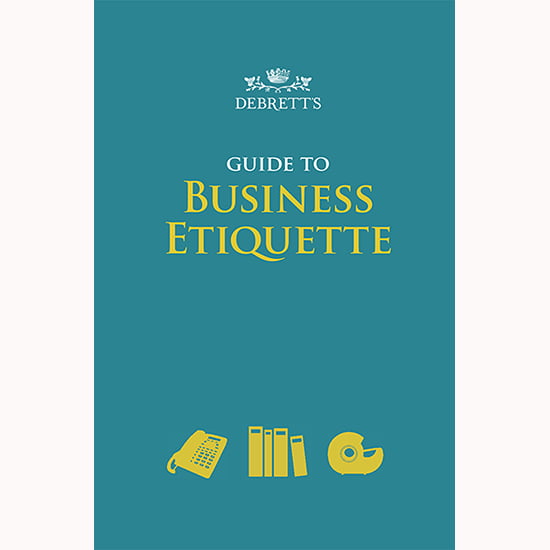
To celebrate the launch of our new Guide to Business Etiquette, we're asking you to tell us about your most mortifying experience at a job interview. Wardrobe malfunction? Inappropriate answers? Drawing a total blank? Now's the time to share...
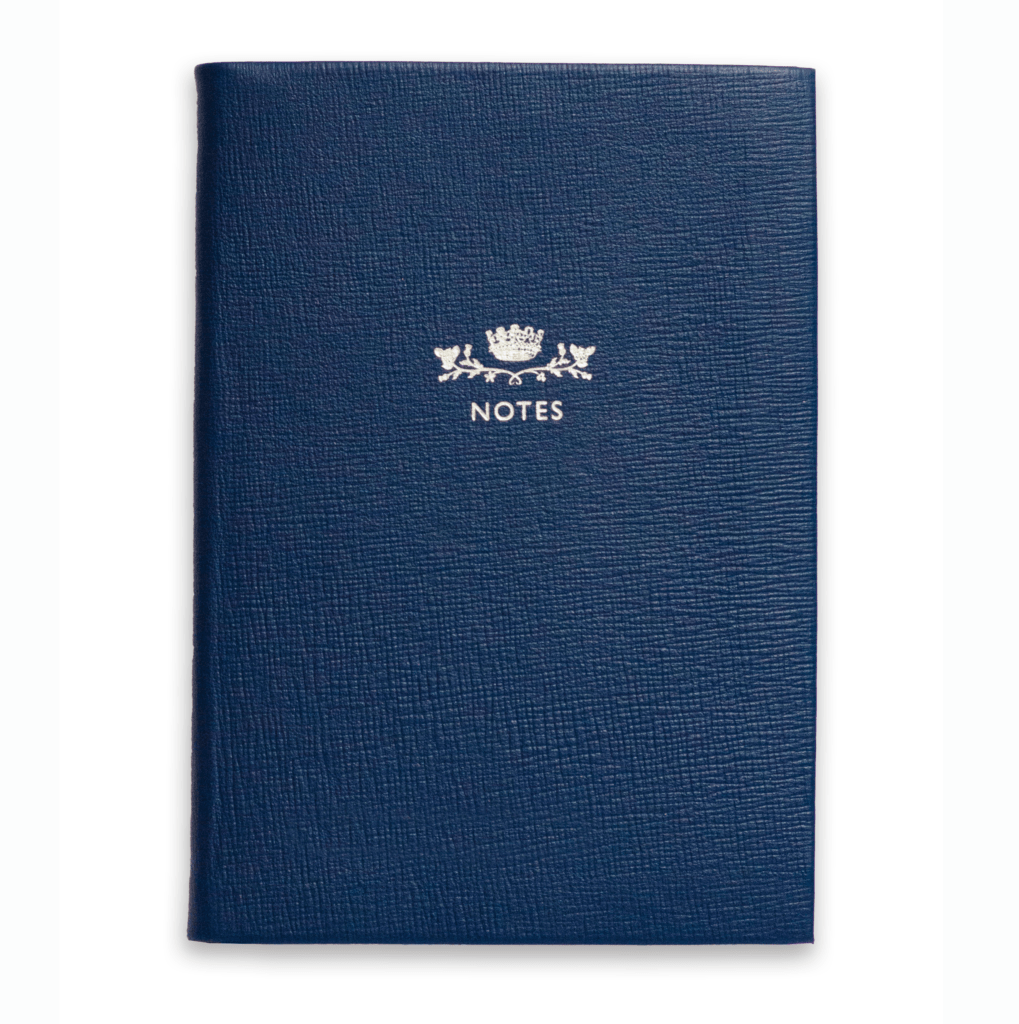
The winning entry (judged by our panel of experts) will receive a copy of the book and an A5 leatherbound notebook in a colour of your choice.
2 runners up will each receive a copy of the book.
Competition closes at midnight on 30th November. Entrants must be over the age of 18. Multiple entries are not permitted. All entries will remain anonymous and the winning entrants will be notified by email.
At this time of the year, red poppies are proliferating on lapels everywhere. These enduring symbols of remembrance actually emerged in the early 1920s in the wake of the devastation of World War I, inspired by the resilience of the poppies that continued to grow on the blasted battlefields of the western front. They became symbols of hope and regeneration.
When Lieutenant Colonel John McCrae, a Canadian doctor, saw these bright little flowers growing on the battlefields of Belgium, he wrote the poem ‘In Flanders Fields’: ‘In Flanders field the poppies blow /Between the crosses row on row…’ The crosses he referred to were the simple wooden markers planted in the ground to commemorate the fallen. His poem, published in Punch magazine in December 1915, became instantly popular, and was cited at many funerals and memorials. Moina Michael, a professor at Georgia University, was inspired by the imagery of the poem and decided to craft silk poppies as an act of remembrance and to raise money for veterans. In 1920 the poppy was adopted as a symbol of soldiers lost in warfare in the US, and other countries adopted the practice, though they chose to commemorate the victims of war in different ways and on different days.
In Britain we have worn red poppies since 1921 on Remembrance Day, which commemorates the anniversary of the 11 November 1918 armistice – the guns finally fell silent on the 11th hour of the 11th day of the 11th month. As the years have gone by, the poppy has become a symbol of military personnel who have died in subsequent wars as well as the First World War. Proceeds from sales of over 40 million poppies a year go to the Royal British Legion Poppy Appeal, which supports all the armed services.
Remembrance Sunday always falls on the second Sunday in November, so this year it takes place on 14 November. The Royal Family lead the nation in a ceremony at the Cenotaph in Whitehall, where they lay wreaths of poppies, the Last Post is sounded by buglers of the Royal Marines, church services are held throughout the country and a two-minute silence is observed at 11am.
It is November, and all over the country men are supporting the Movember Foundation, growing moustaches to raise awareness of men’s health issues, such as prostate cancer and testicular cancer.
The upper lip has played a stirring role in British history. Indeed, the British Empire was built on the stiff upper lip, a term used to describe British imperturbability and sang-froid. There are numerous apocryphal tales of the phlegmatic reactions of Britons to disaster and their refusal to react histrionically (or at all) to national disasters, crises and tragedies.
But when was the stiff upper lip adorned by the moustache? Hirsute upper lips have ebbed and flowed with fashion. They can be traced back to Celtic hill warriors and pharaohs and have intermittently appeared on the faces of British monarchs, perhaps reaching their apogee in the extravagant Restoration beard and upswept moustache sported by King Charles II.
However, by the time of the Napoleonic Wars, when Britain was poised on the brink of its imperial adventure, moustaches were decidedly out of fashion. They were associated with outlaws and pirates, and our great military heroes, such as Admiral Nelson and the Duke of Wellington, were clean-shaven and upstanding. When smooth-faced British troops first arrived in India, they were looked upon with incredulity. The Indians associated moustaches with bravery and masculinity and wrongly dismissed clean-shaven British soldiers as effete and ineffective.
This all changed when soldiers began to return from the Crimean War in 1856. They had withstood over two years of hard campaigning and rough living, and had dispensed with their razors. Sporting bristling moustaches, bushy sideburns and luxuriant beards, these conquering heroes exuded machismo, and facial hair instantly became de rigueur for Victorian gentleman, who sported an array of extravagant moustaches and beards. The Army even made moustaches compulsory: King’s Regulation No 1695 states that ‘the chin and under lip will be shaved, but not the upper lip’. The stiff upper lips of British empire-builders were now inevitably topped by moustaches.
This began to change in World War I, however, when it was found that facial hair prevented gas masks from forming an airtight seal on the wearer’s face. Moustache-wearing ceased to become compulsory in the British army in 1916 and began to go into decline. In the 1930s movie idols like Errol Flynn and Clark Gable wore dashing pencil moustaches, and some debonair gentlemen followed suit. But for the most part, in the depression-era 1920s and 1930s moustaches were either seen as a gentlemanly fad, or associated with vaudeville notions of villainy and ‘spivs’ – twirling the ends of the moustache was a universally recognised code for untrustworthiness.
Toothbrush moustaches did not survive World War II, for obvious reasons. But this conflict saw the resurrection of the flamboyant handlebar moustache, with waxed tips. Once again the moustache had become synonymous with courage and derring-do, and handlebars were much in vogue amongst fighter pilots.
Since then the fashion wheel has turned again and again. The hirsute 1970s and 1980s were a golden period for all manner of moustaches; clean shaven upper lips were the order of the day in the minimalist 1990s. The last decade has seen a new generation exploring the potential of facial hair, often with exuberant and eccentric results. The sun may have set on the British Empire, and our stiff upper lips may have become more wobbly, but they will certainly be adorned by a fantastic array of moustaches this November.
•Wield a trimmer to maintain the shape of your moustache
•Use small moustache scissors to snip away stray hairs.
•Use moustache wax to maintain shape.
•Tidy up stray hairs with a small moustache comb.
•Wash your moustache using a gentle cleanser.
Bonfire Night is a long-standing and traditional autumn celebration, commemorating the foiling of a Catholic plot in 1605 to blow up the Houses of Parliament.
The conspirator Robert Catesby organised the Gunpowder Plot, which involved 13 English Catholics who plotted to overthrow the resolutely Protestant monarch, King James I. The conspirators stored 36 barrels of gunpowder in a cellar under the House of Lords, and Guy Fawkes was selected to detonate the gunpowder during the State Opening of Parliament, with the aim of destroying the country’s entire political leadership, including the king. But the conspirators were betrayed by one of their number, and captured by the King’s troops on 5th November. They were all executed. That date has become enshrined in the English calendar – a time for bonfires and fireworks, and burning effigies of Guy Fawkes.
Preparations for Bonfire Night celebrations traditionally included making a dummy of Guy Fawkes, ‘the Guy’. Children used to walk the streets, carrying their own Guy, and begging passersby for “a penny for the Guy”; money collected was spent on fireworks. Parental concerns about their children’s safety make this an increasingly rare sight. On the night itself, the Guy is placed on top of the bonfire, which is then set alight; and fireworks displays fill the sky.
The extent of the celebrations and the size of the bonfire varies from one community to the next. The villages and towns of East Sussex are famous for their Bonfire Societies, which fundraise all year to layon gala Bonfire Night celebrations and festivities. At Lewes, which holds the biggest street party, there is inevitably much speculation each year about which public figure or politician is going to be the inspiration for the effigy that is burned on top of the bonfire.
Many people feel inclined to leave the pyrotechnics to the professionals, restricting themselves – and their kids – to the comparatively tame pleasures of sparklers.
But if you’re going to eschew the laid-on entertainment of professional displays, and feel inclined to recapture those thrilling November evenings of childhood, follow a few simple rules.
•Remember that fireworks are noisy. Warn your neighbours - especially if they are pet-owners or have small children - and preferably invite them to firework parties. You can also consider using silent and low-noise fireworks.
•Position bonfires downwind from your neighbours’ houses, and as far away as possible. This will ensure that they are not engulfed in acrid smoke.
•Designate one person (preferably the host) to be in charge of the bonfire, and don’t let any pyromaniacs take control – in no time you will find yourself struggling to restrain rampaging flames.
•Prepare your fireworks carefully (eg nail the Catherine wheels to a tree, position the rockets in bottles or flowerbeds etc.) well before the guests arrive.
•Ensure that there is a safe buffer zone between fireworks and guests, especially small children.
•Lay on plenty of sparklers; they'll keep children busy during hiatuses in the display - but do keep an eye on them and ensure that spent sparklers are disposed of quickly and safely; glowing sticks can pose a safety threat.
•Appoint one of the adults as a children’s lookout, who can keep an eye open for over-excited behaviour, for example letting off bangers near your guests, or straying into the ‘exclusion zone’.
•Keep the firework display contained to a certain timeframe (e.g. 7.30-8pm). Sporadic bursts punctuating the evening may irritate neighbours and disrupt the flow of the evening.
It goes without saying that grilled sausages and baked potatoes will provide excellent sustenance for guests who are standing around on a cold autumn evening. You can also offer other traditional treats: warming mulled wine for adults and toffee apples for children.
Mulled wine
Put a bottle of red wine in a saucepan with one halved orange, 60g of Demerara sugar, a bay leaf, a cinnamon stick and some grated nutmeg. Heat gently until the sugar has dissolved. Taste to see if you want the wine sweeter, and add more sugar to taste. Once you have taken the pan off the hear stir in 60ml of damson or sloe gin. Strain into heatproof glasses and serve at once.
Toffee apples
Dunk eight Granny Smith apples in a large bowl of boiling water to remove waxy coating. Dry thoroughly and pierce the stalk end with a wooden skewer. Tip 400g of caster sugar into a pan with 100ml of water and cook until the sugar dissolves. Then stir in a tablespoon of vinegar and 4 tablespoons of golden syrup. Boil the mixture until it is brittle and easy to break (140°C). Dip the apples in the hot toffee and place on a baking sheet to harden.
Poised between the Autumn and Winter, Halloween is a time of celebration and superstition. As the nights drawn in and the leaves wither and die, it is an atmospheric time to indulge in the spine-chilling pleasures of ghost stories and enjoy some thoroughly spooky festivities.
The origins of Halloween are often associated with the ancient Celtic festival of Samhain, although there is little evidence that the Gaelic festivals held in the Autumn were ceremonies for the dead. It is more probable, therefore, that perceptions of Halloween as a time when the veil between the living and the dead is lifted and ghosts wander the earth, is linked the Christian festivals of All Saints and All Souls. In fact Hallows is an archaic English word for saint – hence All Hallows Eve, the last night of October.
In the Middle Ages it was a commonly held belief that those who died unabsolved of their sins would be condemned to wait in Purgatory, and that living friends and relatives could release them from this state by praying, collecting alms, attending mass. On All Souls Day torchlit processions were held, bonfires were lit and church bells were rung to comfort lost souls.
By the 14th century the custom of ‘souling’ had developed in England. Poor supplicants would go from house to house on All Hallows Eve asking for soul cakes. Small cakes or loaves were exchanged in exchange for prayers for dead relatives (the origins of trick or treating).
During the Protestant Reformation these customs and observances were driven underground. It was not long before the festival had taken on more occult and demonic associations, which were disapproved of by the Church of England.
The widespread adoption of Halloween customs in the USA did not really take place until the 20th century, and at first trick or treating was seen as ritualised begging. It did not become a widely accepted until after the 1950s. Since then, aided by Hollywood and US television, Halloween has become an increasingly popular ritual in many countries worldwide.
‘Tis now the very witching time of night,
When churchyards yawn and hell itself breathes out
Contagion to this world.
William Shakespeare, Macbeth
The legend of the jack o' lantern originated in Ireland. Stingy Jack, who double crossed the devil and was condemned, on his death, to become an eternal wanderer, was given a burning coal by the devil for light. Stingy Jack carried the coal in a carved out turnip and has since been wandering the world.
In Ireland and Scotland, people began to make their own versions of Jack’s lanterns by carving scary faces into turnips or potatoes and placing them into windows or near doors to frighten away Stingy Jack and other wandering evil spirits. In England, large beets are used. Immigrants from these countries brought this tradition with them when they came to the United States. They soon found that pumpkins, a fruit native to America, make perfect jack o’lanterns.
•Bear in mind that many people have become increasingly antisocial as a result of the pandemic, and may be genuinely alarmed by strangers knocking on their door. Explain this to your children and curb over-enthusiastic knocking and commotion
•Only allow children to go trick or treating in your own neighbourhood. Make absolutely sure that they don’t stray beyond agreed boundaries and wander into streets where they are knocking on strangers’ doors.
•Remind the children not to be too greedy – if they are offered a basket of sweets tell them to help themselves to just one, unless invited to take more.
•“Trick or treat?” should be used as an ice-breaking formula, not a real threat. If a treat is not forthcoming and the householder is not welcoming, then you should advise your children to beat a hasty retreat. Pranks are not recommended.
•Trick or treating is fine for small kids (though very young children should be accompanied by an older sibling). But as children become gangling teenagers their antics might be viewed with unfriendliness and suspicion. Discourage older teens from terrorising (however innocently) the neighbourhood.
•If you don’t like the idea of being besieged by a succession of over-excited children you’re probably well-advised to turn out the lights and go out for the evening.
•If you don’t mind giving out treats, but would prefer not to have visitors, leave some sweets or chocolate on your front door step and let trick or treaters help themselves.
•If you’re at home on Halloween night, you can advertise your readiness to accept callers by switching on a porch light, leaving out a Jack o' Lantern, or even illuminating your garden.
•Make sure that hazards are removed from pathways, and keep noisy dogs behind closed doors.
•If you’re providing treats, you can buy special Halloween confectionery, complete with ghoulish wrapping). These will be universally popular with children, who might turn their noses up at your home-baked goodies.
Are you about to start a new job? Or maybe you were hired during the pandemic and only now are able to contemplate actually going to the office and meeting your new colleagues in the flesh.
Whatever your situation, the first week at work can be a daunting prospect. You will have to attend closely to work requirements, new technology and unfamiliar protocols. You will have to make the acquaintance of new colleagues, put names to faces (and remember them) and project a positive and amiable demeanour. On a more subtle level you will need to read the situation, understand the office culture and calibrate your behaviour accordingly.
We have compiled some advice to help new recruits navigate their first days at work.
The First Week at Work Survival Guide:
1.) Ask for Help when You Need It
Your first few days in an office are not a test to see how you perform under pressure. So if you feel confused by office procedures, puzzled by the photocopiers, and completely outwitted by the computer system, don’t just sit tight, trying to tough it out. You will be judged not by the mistakes you make, but how quickly you learn from them.
Single out a kind, helpful person – very possibly the colleague who was given the task of welcoming you – and indicate that you need some help. It’s best to do this diplomatically, perhaps saying ‘When you’ve got a moment, I wonder if you could help? I’m a bit stuck…’, rather than marching up to their desk and saying ‘I don’t know how to unjam the photocopier…’
2.) Respect Territorial Boundaries
Don’t assume that, just because some action doesn’t bother you, it won’t annoy others – leaving caps off pens, leaving untidy piles of papers on a desk, not putting things back in drawers, etc. Ask politely before you borrow anything and make sure you return it, and leave your desk neat and tidy at the end of the day. Your aim in these first few days should be to project a discreet and inoffensive persona. As you become more comfortable and more familiar with the office culture you will be able to reveal more about your individuality and character.
3.) Take Your Turn
Office life can throw all sorts of incompatible people together in close proximity and it is important that everyone finds ways of rubbing along together and getting the job done. Demonstrate from the outset that you are a team player – make tea and coffee for your colleagues, take your turn to do the washing up in the staff kitchen, offer to pick up sandwiches for other people if you are going out at lunchtime.
4.) When in Rome…
You will need to very observant in the first few days, so that you can fully understand the office culture. If the general tone of the office is quiet and reserved, then boisterously friendly overtures on the part of the newcomer may be out of place and unwelcome. If the general impression is that staff in the office keep themselves very much to themselves, then this has to be respected, even if it doesn’t seem the right way to work.
Similarly, if the office buzzes with chatter and banter, then an unyieldingly frigid response to every overture of friendship isn’t appropriate. Most workplaces have a detectable culture, covering such diverse questions as informal socialising after-hours and willingly stepping in to alleviate a colleague’s workload. The newcomer ignores this at his or her peril.
5.) Treat Gossip with Circumspection
There will be those who wish to initiate the new recruit into the office gossip, and they should be treated with extreme caution. Over-eagerness to find out about the gossip and even join in might mean that you fall foul of important people; gossip is particularly dangerous for the uninitiated. Remain polite but make your excuses and leave.
6.) Be cautious about criticism
A newcomer may be bursting to communicate how much better he or she handled matters at a previous workplace. There are few things worse than the daily frustration of knowing that it’s possible to work faster and more efficiently but not being allowed to do so. But your new colleagues may find a newcomer’s criticisms presumptuous so tact is needed here: bide your time and settle in before finding the right person to talk to, and if you do have a conversation, use the subtle power of tentative and positive suggestion, rather than bludgeoning them with hard facts.



