The State Visit of King Charles III to the United States in April 2026 is one of the most diplomatically significant moments of his reign. Timed to coincide with the 250th anniversary of the United States Declaration of Independence, it is at once commemorative and contemporary - an exercise in both memory and statecraft.
Their Majesties arrived at Joint Base Andrews before being formally received at the White House by President Donald Trump and the First Lady, marking the ceremonial opening of a four-day visit spanning Washington, New York and Virginia. The early programme struck a distinctly modern tone: afternoon tea in the White House, a tour of its gardens, and a garden party at the British Embassy attended by hundreds of guests and featuring carefully crafted British fare.
Yet beneath these gestures of hospitality lies a more serious purpose. This is not a State Visit conducted in wholly settled circumstances. Relations between London and Washington have, in recent months, been subject to strain - over differing positions on international conflicts, trade tensions and the tone of political discourse. Commentators across major outlets have observed that the King arrives not only as a guest, but as a figure expected to lend steadiness to a relationship under pressure.
In this context, the planned address to a joint session of Congress assumes particular importance. It will be only the second such address by a British monarch, following that of Queen Elizabeth II in 1991, and is expected to emphasise the enduring alliance between the two nations. The themes are familiar, but no less relevant for that: shared democratic values, economic partnership and collective responsibility for global security.
There is also an undeniable historical symmetry to the visit. That a British sovereign, the direct successor of King George III, should mark the anniversary of American independence on American soil would once have been unthinkable. Today, it is entirely natural. The passage from conflict to cooperation is not merely acknowledged here; it is embodied by the visit itself.
Subsequent engagements reinforce this narrative. A visit to the September 11 Memorial in New York, meetings with business and cultural leaders, and environmental engagements in Virginia all speak to the breadth of the modern relationship: one that extends well beyond diplomacy into shared experience, commerce and culture.
It would be naïve, though, to regard the occasion as purely ceremonial. The visit proceeds in the shadow of recent events, including a security incident in Washington and broader geopolitical tensions which have required careful adjustment to planning and protocol. These elements reflect the three defining features of all State Visits: the ceremonial, the diplomatic and political, and the regional and cultural.
It is precisely in such circumstances, however, that a visit of this nature acquires its greatest relevance. The sovereign, as a figure above politics, is uniquely placed to sustain relationships that may prove more fragile at governmental level. As one observer noted, the King is required to walk a tightrope — balancing symbolism with sensitivity, and continuity with change.
The enduring significance of this visit lies not in any single speech or engagement, but in its cumulative effect. It represents the quiet persistence of diplomacy conducted through presence rather than negotiation; through history acknowledged rather than history contested.
Two hundred and fifty years after independence was declared, the United Kingdom and the United States meet not as adversaries, nor even merely as allies, but as partners shaped and strengthened by the passage of time.
For over 250 years, Debrett's has published the definitive catalogue of the British nobility and provided authoritative guidance on social and professional conduct for every occasion.
Debrett's membership opens the door to our complete library - from the nuances of the British social season and correct forms of address, to business etiquette and social protocol. Free membership is available to all, with immediate access to the full breadth of our content. Paid members also enjoy access to the Debrett's Peerage database.
Debrett's Coaching offers entirely tailored programmes crafted around individual client goals. Drawing on centuries of tradition, our coaching spans Luxury Service, Executive Coaching, Business Etiquette, Social Etiquette & Protocol, and Diplomacy — enabling clients to proceed with clarity, confidence and certainty.
The Queen has sat for countless formal portraits and photographs, and her image is world-famous. However, most people’s familiarity with her image is rooted in the portrait heads that bedeck British coins, banknotes and stamps. These mundane and indispensable items have been to used create an evocative narrative of the seven decades of her long reign.
The Queen’s successive jubilees have been the pretext for the launch of a plethora of collectible and commemorative items bearing her image, ranging from exquisite bone china tea sets to garish tea towels. The British are currently on a Jubilee shopping spree and the Queen’s image is ubiquitous.
The Queen’s head has adorned British and Commonwealth money and stamps since her coronation. From British shillings and pence to Canadian cents and Australian dollars, her profile has literally been in the pockets of millions of people. And her face or silhouette has traversed the globe on the stamps of countless letters and parcels.
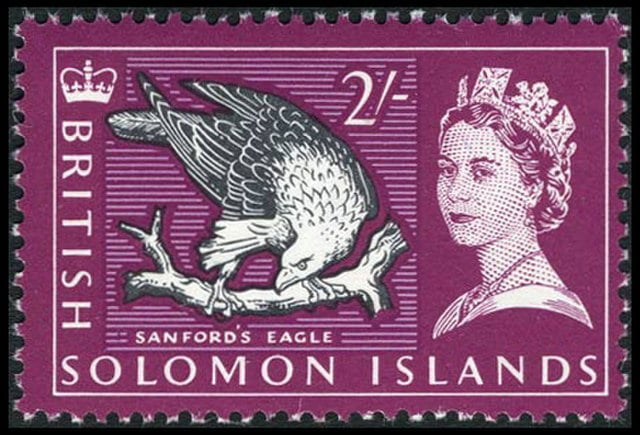
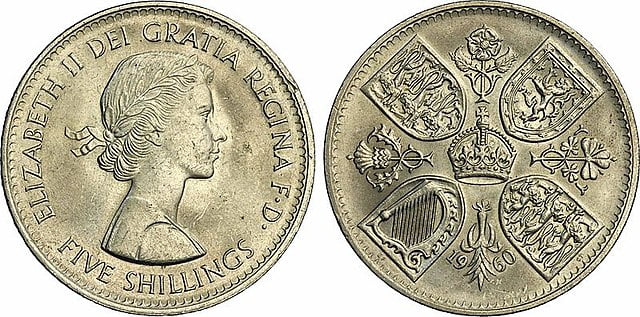
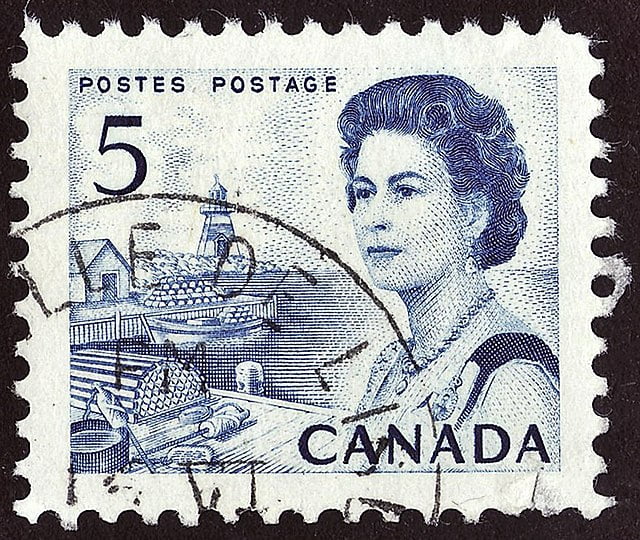
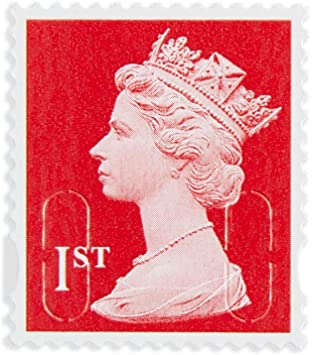
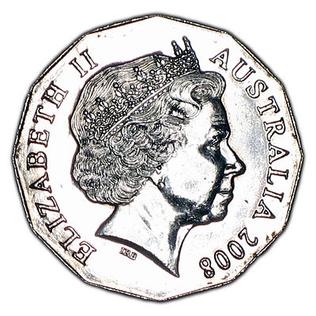
The history of monarchs’ heads appearing on coins in England goes back to Anglo-Saxon times and the likes of King Offa of Mercia and Alfred the Great. Since the 17th century the sovereign’s head has been shown in profile, and the direction it faces traditionally alternates with each successive reign. The Queen’s head always faces to the right and her successor’s will face the left.
When British coins received a complete facelift with the decimalisation of the currency in 1971, the Queen’s image appeared in a new design by the sculptor Arnold Machin. Updated depictions of her were introduced in 1985, 1998, 2007 and 2012. The coins carry a Latin inscription: ‘Elizabeth II Dei Gratia Regina Fidei Defensor’, which means ‘Elizabeth II, by the grace of God, Queen and Defender of the Faith.’
The Queen’s image can be found on banknotes too – there have been five different depictions of her during her reign. A one pound note, designed by Robert Austin and issued on 17 March 1960, was the first note to carry a portrait of the Queen. On banknotes the Queen’s head always faces left, but with a hidden watermark showing her looking to the right.
The Queen’s head also appears on British stamps – a tradition that started in 1840 when Queen Victoria’s head appeared on the Penny Black. The first image of Queen Elizabeth to appear on the corners of British letters was based on a photograph by Dorothy Wilding. The image lasted from 1952 to 1967, when a new profile created by Arnold Machin and usually set on a single colour, was introduced. The Machin series, as it is known, is still in use, and on its 40th anniversary in 2007, the Post Office issued a stamp featuring a photograph of Machin himself.
Eight stamps have been issued by the Royal Mail to celebrate the Queen’s 70-year reign. They feature photographs from each of the decades of her reign, portraying a hard-working monarch who smiles her way through state visits, walkabouts and Trooping the Colour.
Throughout her reign the Queen has inspired a veritable industry in memorabilia bearing her image. From mugs, plates, spoons and medals to figurines, tins and T-shirts, her face has launched a thousand souvenirs, especially during her jubilee years.
The production of royal souvenirs dates back to the 17th century, but manufacturers were allowed to use the monarch’s image on their products only after the coronation of George II in 1727. Memorabilia of the Queen herself began in earnest in 1953, when many local councils marked her coronation by commissioning potteries to make commemorative mugs to give away to local children. A wide range of items bearing the Queen’s image were mass-produced in the coronation year, ranging from tins of biscuits and tea caddies to handkerchiefs and flags.
In the same year, Wedgwood produced an elegant mug showing the Queen’s profile in blue relief on a white background, while Royal Doulton created a fine bone-china tankard with a photographic portrait of the Queen, semi-framed by an oak branch. This was the last commemorative item to come out of the Doulton factory in Lambeth, London, and has become a valuable collector’s item.
Producers of memorabilia were given another major shot in the arm with the Silver Jubilee in 1977. At the high end of the market, Royal Worcester produced a formal blue plate decorated in the centre by the royal coat of arms in gold on a white background. At the more commercial end, Cadbury’s brought out a handsome Milk Tray chocolates tin, with the portraits of the Queen and Prince Philip appearing on a rich mauve background. Carr’s sold an Assorted Biscuits tin, adorned with a photograph of a smiling Queen sitting on a gold-covered chair.
The Golden Jubilee in 2002 proved no different as a souvenir-spawner, and there was the usual range of goods. Royalists could eat their toast from a classic gold-and-blue Spode plate with a portrait of the Queen, or nibble on Walkers shortbread biscuits from a tin decorated with an image of the Queen superimposed on a gold-coloured map of the world and ringed with flags of the Commonwealth countries. They could pour their Earl Grey from a James Sadler teapot with its gold silhouette of the Queen, and stir in the milk with a Royal Mint silver teaspoon.
To celebrate the Queen’s diamond jubilee in 2012 ardent royalists could buy a tote bag from the National Portrait Gallery, bearing an image of the Queen by Chris Levine, as well as the usual range of mugs, china and biscuit tins bearing the Queen’s image. A solar-powered waving Queen figurine was certainly at the kitsch end of the spectrum. Fortunately Queen Elizabeth is said to have a good sense of humour!
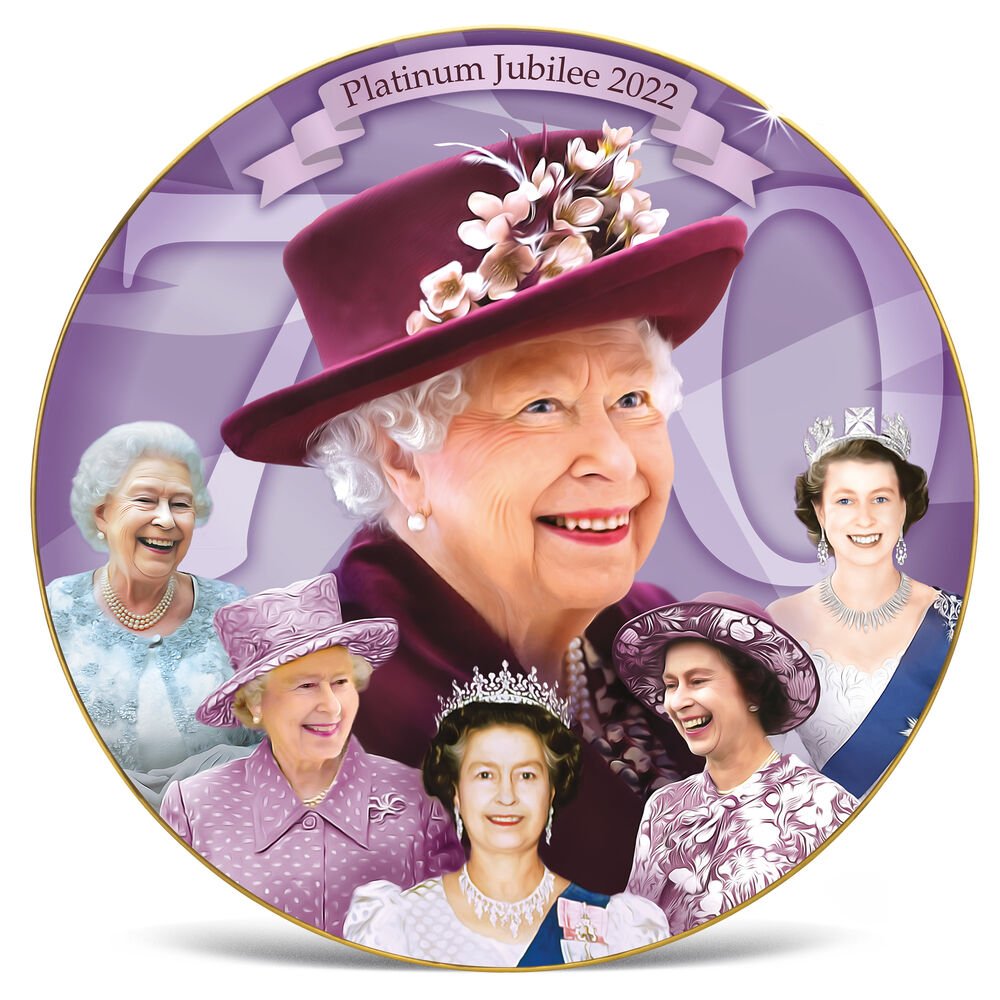
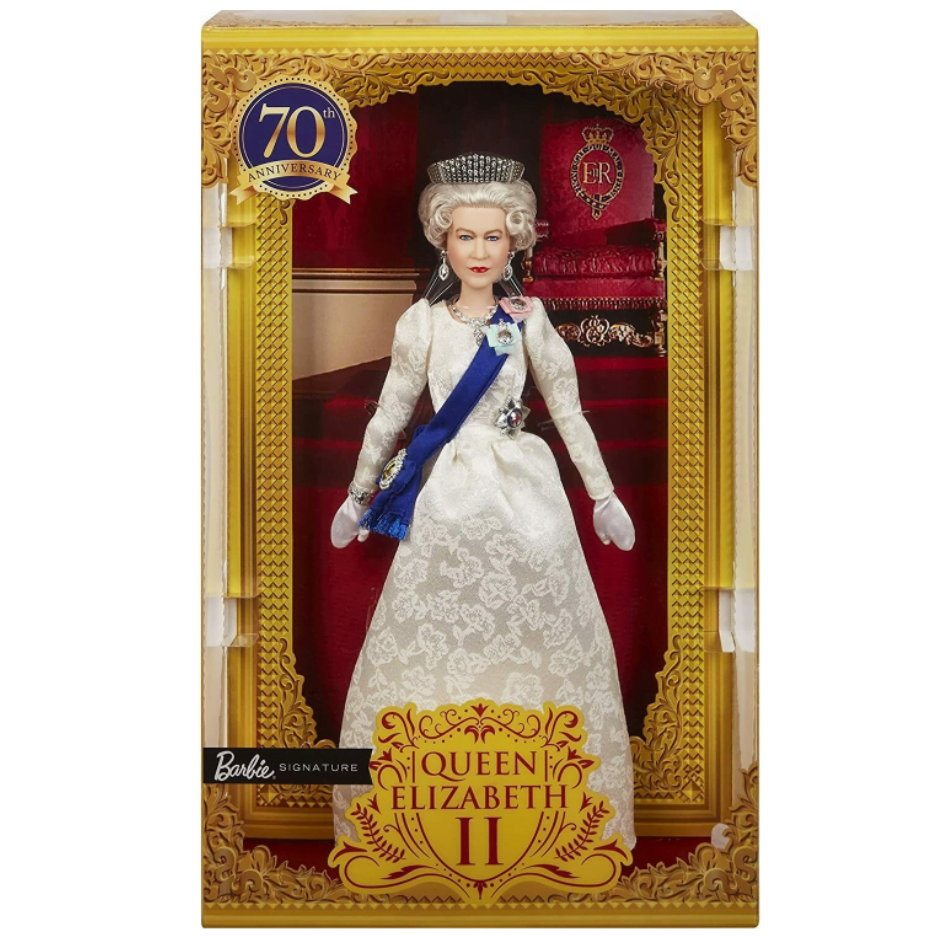
Unsurprisingly, 70 years on the throne is being marked with an unprecedented array of merchandise. At the conventional end of the spectrum, mugs, plate and bone china proudly displaying the Queen’s image are a popular choice. Elegant silk scarves, decorated with heraldic devices and national flowers, are a nod to the Queen’s own personal style. Themed biscuit tins and teapots cater to the British love of afternoon tea while paying tribute to the Queen. Picnic hampers and cool bags, decorated with a royal theme, are widely available, and will no doubt be in use at Jubilee picnics. The Queen’s famous corgis have even made their way on to cushions, tea towels and aprons. Sadly, a specially created Queen Barbie doll, released in April 2022, has sold out, and resold Barbies are now the most sought-after Platinum Jubilee memento.
Over the last two centuries jubilees have renewed enthusiasm for the monarchy, and sometimes provided distraction during troubled times. They have left a tangible legacy of royal bequests to the public, including bridges, public parks, law courts and hospitals.
Royal Jubilees must embrace dignified and stately ritual as well as offering the British people a chance to celebrate and have fun. They have evolved to comprise a number of elements: a royal service of thanksgiving, chains of beacons and spectacular fireworks, royal parades and processions, flypasts, royal tours and walkabouts, local parties and celebrations in towns and villages all over the country.
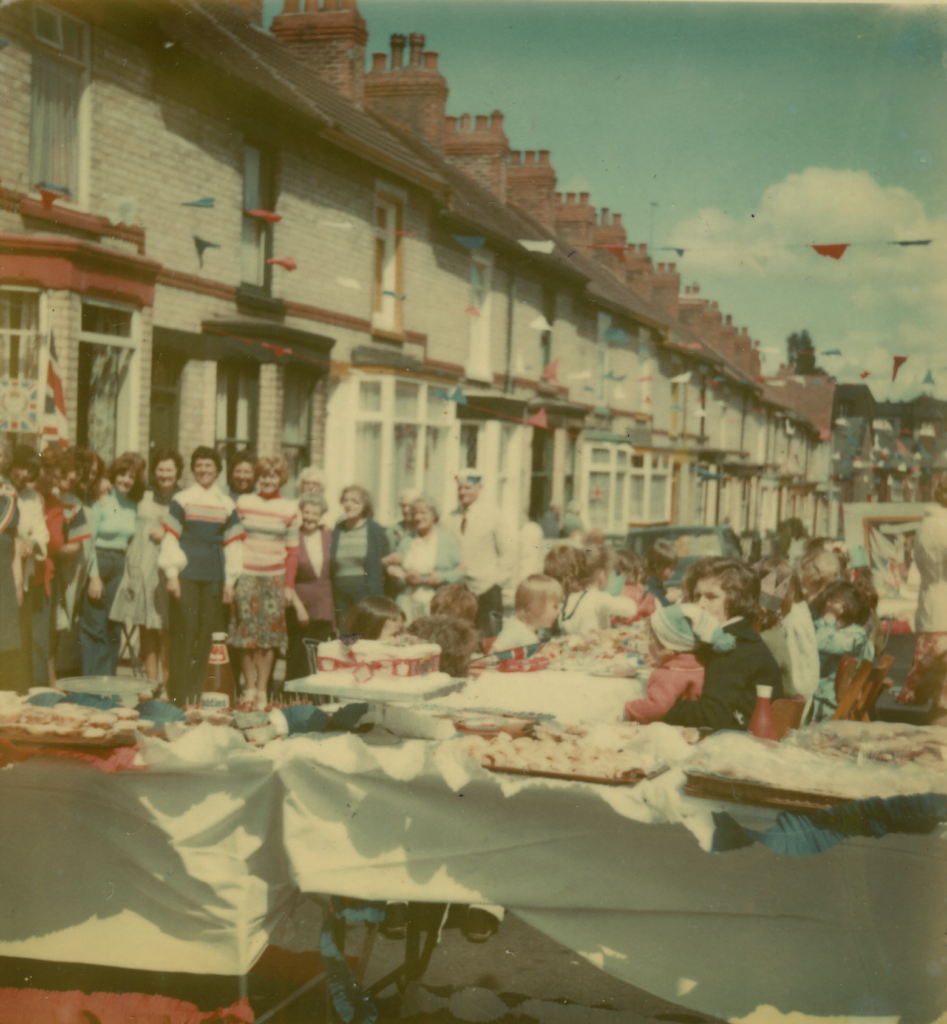
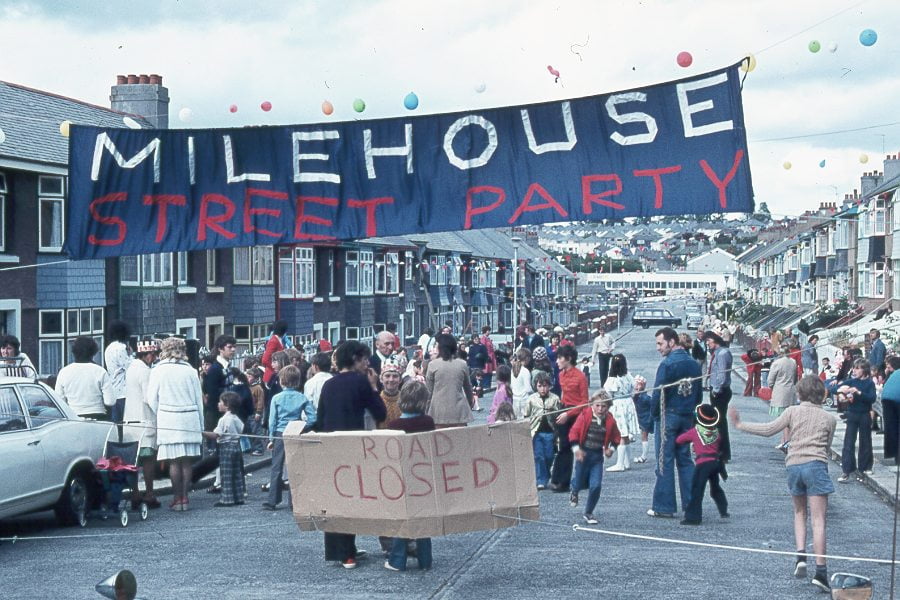
Jubilees go hand in hand with the great British tradition of street parties. These evolved from the more rustic celebrations of the 19th century into ‘peace teas’, which were held for children to mark the end of the First World War. Street parties, with their trestle tables, bunting and balloons, have continued to mark our national history: royal jubilees, VE and VJ day, the Coronation. The British love these informal communal affairs, where a democratic spirit prevails and everyone chips in and participates. Eating, drinking and socialising with neighbours is enlivened by traditional games such as sack races or street cricket and live music.
In 1809 celebrations were held for George III’s Golden Jubilee. The War of American Independence and the ongoing Napoleonic wars had taken their toll and the British people were ready for a party. On 25 October 1809 celebrations were held all over the land. The King and his family celebrated in Windsor, but apart from this there was no central organisation of the Jubilee; it sprang out of spontaneous local celebrations, and was a remarkable display of patriotism. In public spaces, towns and villages throughout the land, buildings were illuminated and spectacular firework displays lit up the night sky. People flocked to services of thanksgiving and sat down together to enjoy lavish feasts of ‘Old English Fare’, such as roast oxen and plum pudding.
The King marked the occasion with acts of benevolence: ‘all persons confined for military offences’ were granted an amnesty and released; in Newcastle-upon-Tyne, ten prisoners were released and given half a guinea with which to toast the King’s health.
In 1887 Queen Victoria celebrated her Golden Jubilee. It came at a time when there was significant republican sentiment in Britain – the Queen, lost in deep mourning, had become remote after the death of Prince Albert, and many working class people were struggling with unemployment, food shortages and unusually cold winters. There was much popular opposition to lavish celebrations – in the words of Matty Tate, the ‘Pitman Poet’:
“Why waste we our means
Over Kings and Queens
Though ever so good they may be?
Let the Duke and the Peer
With their thousands a year
Rejoice if they like, but
Oh dear, Oh dear
Save the poor from this Jubilee.”
Nevertheless, on 21 June a service of Thanksgiving was held in Westminster Abbey and the blue skies and warm sunshine were hailed as the ‘Queen’s weather’ in the popular press. As well as the usual plethora of fêtes, parties and parades, the Golden Jubilee was marked by a more material, and beneficial, legacy: an abundance of commemorative parks, statues, hospitals, libraries, water fountains.
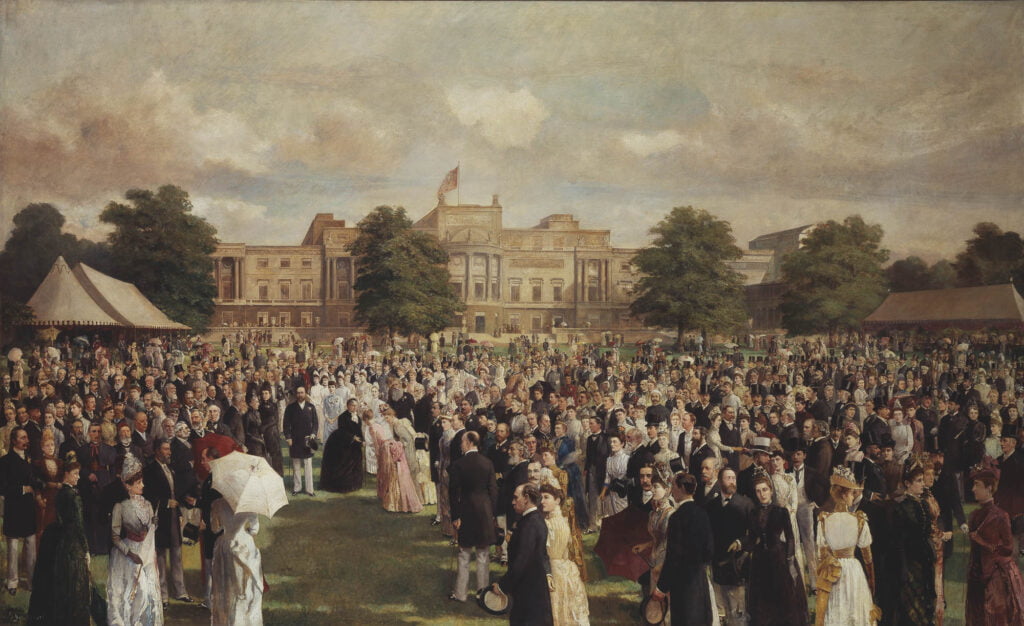
Ten years later, the Queen celebrated her Diamond Jubilee, the first British monarch to do so. Her Jubilee became a confident celebration of the might and power of the British Empire, and the prime ministers of all the self-governing dominions were invited to London. On 22 June 1897 a spectacular procession of 17 carriages, flanked by a military escort and carrying monarchs, maharajahs and chiefs from all around the world, wended its way along the six-mile processional route from Buckingham Palace to St Paul’s Cathedral, where a service of thanksgiving was to be held. The route, which was bedecked with flags, banners and bunting, crossed London Bridge to take in the poorer boroughs of Southwark and Blackfriars.
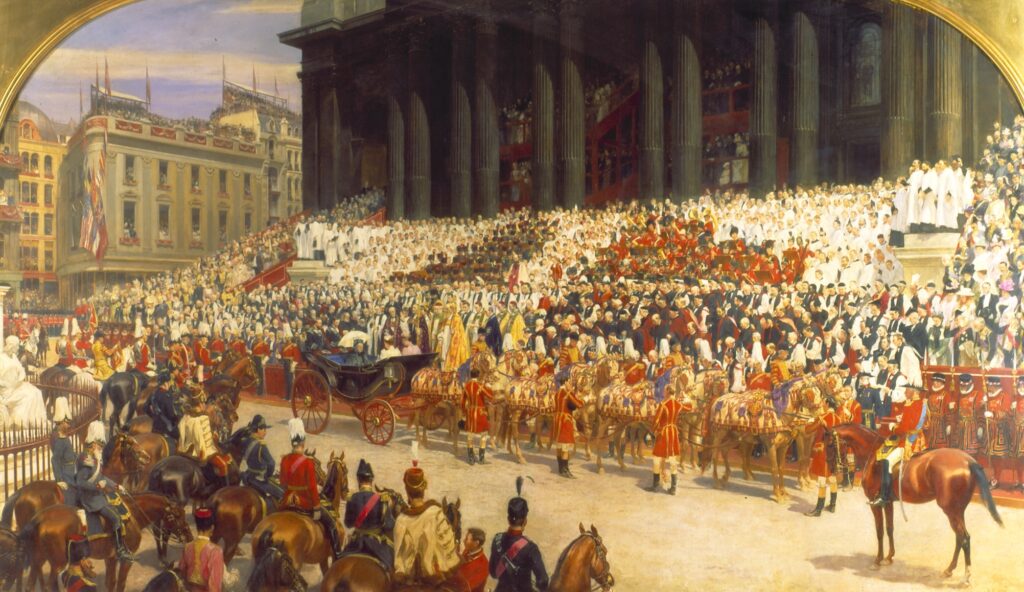
The Queen wrote in her journal: “No one ever, I believe, has met with such an ovation as was given to me, passing through those six miles of streets… The crowds were quite indescribable and their enthusiasm truly marvellous and deeply touching.”
The celebrations in 1935 marking the 25th anniversary of George V’s reign, the first time a silver jubilee had been celebrated, were very different. Britain was beset by high unemployment and locked deep in a depression, and the threat of another world war was looming. George V, who had gradually won support from moderate Labour party politicians, had remained popular through the First World War and the economic slump of the 1920s and 1930s – he had, for example, voluntarily offered to reduce the civil list in 1931. In his Jubilee broadcast to the nation he remarked: “In the midst of this day’s rejoicing I grieve to think of the numbers of my people who are still without work. We owe to them, and not least to those who are suffering from any form of disablement, all the sympathy and help that we can give.”
His Jubilee launched with a Thanksgiving service at St Paul’s Cathedral on 6 May, and he was astonished by the enthusiastic reception he received on the streets of London.
On 6 July 1935, he carried out his Silver Jubilee Review of the Royal Air Force at RAF Duxford and RAF Mildenhall, which included 200 aircraft on the ground and a flypast of 350 aircraft. This was the beginning of a new Jubilee tradition, which acknowledged and commemorated the importance of the Royal Air Force.
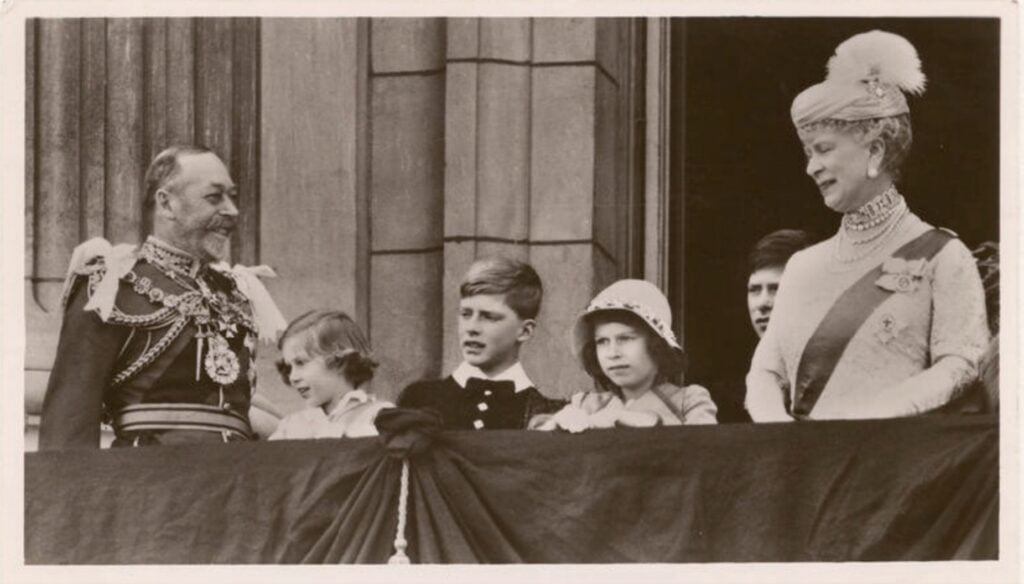
Over the summer of 1935 George V visited the more deprived areas of London, often with his granddaughters, Elizabeth and Margaret, in tow. He was received with great warmth, and remarked: “I’d no idea they felt like that about me…I am beginning to think they must really like me for myself.”
Once again the Queen’s Silver Jubilee, like her grandfather’s, took place during a time of economic problems and recession. There were some protests from the public, notably the Sex Pistols, whose ‘Stuff the Jubilee’ badges and punk classic ‘God Save the Queen’ expressed some of the feelings of public disquiet.
Although the Jubilee had started with a successful Commonwealth tour in Spring 1977, Jubilee Fever didn’t seem to be sparking back home. However, on 7 June a million people lined the route as the Queen drove by for the official celebration. An astonishing 100,000 street parties sought to recapture the spirit and optimism of the Coronation.
The Queen’s Golden Jubilee in 2002 arrived at a time when the monarchy was struggling: it had been severely shaken by the death of Princess Diana, and there had been some very bad press over royal expenses. In February, just three days before the anniversary of her accession, the Queen’s sister, Princess Margaret died, followed – at Easter – by the Queen Mother. But the Jubilee celebrations were not halted.
This time the Jubilee festivities emphasised accessibility and community, and to reinforce this message the Royal Family stepped down from the balcony and mingled with the crowds on the Mall. The Queen opened up the gardens of Buckingham Palace for a concert, which trumpeted the new era of Cool Britannia, and the building was illuminated with fireworks and lasers.
The Queen toured extensively, both globally and in the United Kingdom. By the end of her Jubilee year she had travelled 40,000 miles and conducted over 50 walkabouts in 70 cities in the UK.
The Diamond Jubilee in 2012 was launched on 3 June with a waterborne flotilla of some 1,000 boats on the River Thames, led by the Queen’s Royal Barge ‘Gloriana’. Thousands of beacons were lit across the Commonwealth on 4 June, and on that day the grounds of Buckingham Palace were opened to 10,000 ticket-holders, who enjoyed a picnic and evening concert. The following day the Queen travelled to the Jubilee service at St Paul’s by car, but made the journey back to Buckingham Palace in an open-topped carriage, to the delight of the general public.
The weekend ended with a balcony appearance by the Queen and senior members of the Royal Family, and a spectacular flypast, which included the last flying Lancaster bomber in Britain. Following the great British tradition, street parties took place across the country, many of them assisted by special lottery loans – the Jubilee Lottery Fund.
Now, ten years later, the Queen celebrates an unprecedented Platinum Jubilee. Once again the nation is preparing for another bonanza of beacons, parades, pageants and parties. It’s time to break out the bunting!
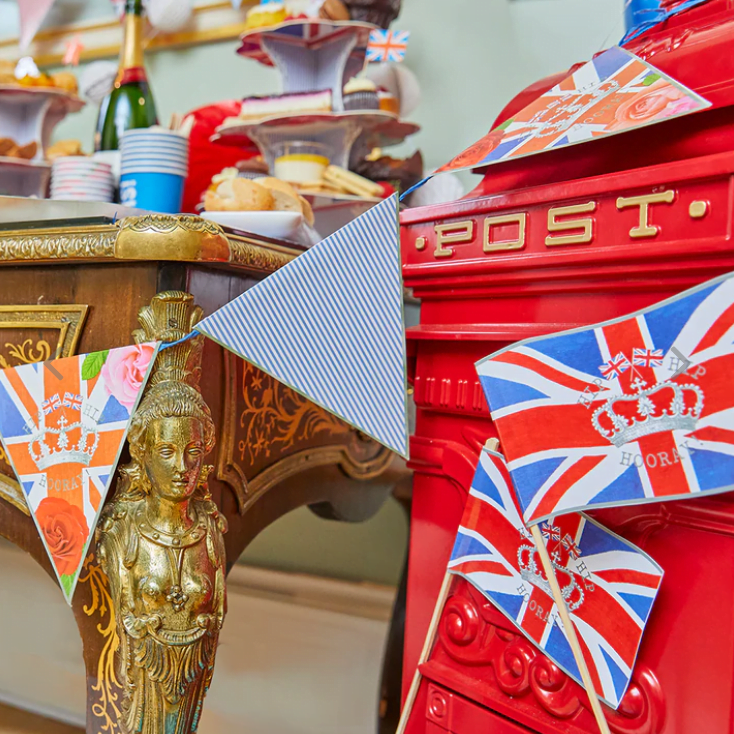
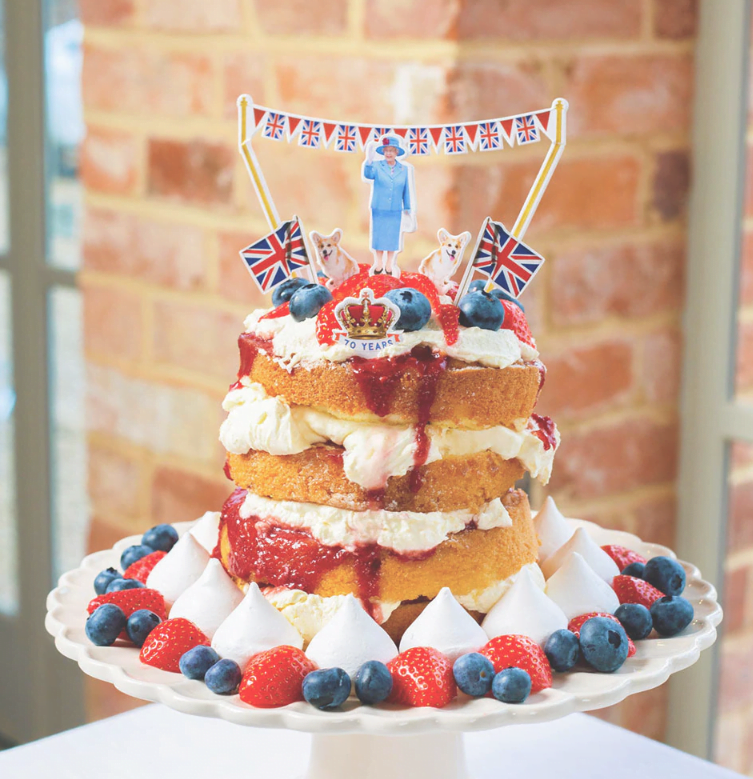
Planning a street party for the Jubilee weekend? We're delighted to be partnering with Party Pieces, which has launched a range of tableware and decorations to commemorate the Queen's 70 years on the throne. The eco-friendly collection, A Great British Party, includes bunting, balloons, cake stands and personalised cake toppers. Shop the range and get planning!