Our lives are increasingly lived online. Many of us work online, we rely on banking apps, use our phones for cashless purchases, shop online, communicate with our friends by WhatsApp and email, post on Twitter and Instagram and use online dating sites. We’ve become progressively more accustomed to communication without a human face: we fill in online forms, discuss our problems with chatbots and accept that help lines are hard to access. We’ve reached the point where we’re hesitant about impetuously picking up the phone and calling our friends; we text ahead to agree a mutually convenient time.
Most of us accept that simply conducting everyday life without the internet is impossible. We dread losing our phones, are paranoid about our WiFi connections, and compulsively monitor our screens throughout the day.
As a result we’re exposed to a vast information overload on a daily basis, and our attention span is getting shorter. We are over-stimulated by the digital universe and respond by skimming, moving on and forgetting. We are becoming human goldfish, which are famous for their short, 9-second attention spans.
Perhaps we should recognise that we have shackled ourselves to an online existence, which is over-stimulating us and at the same time depriving us of many of life’s slower pleasures, and experiment with living an offline life:
Navigate your way around town with a real map or ask a stranger for directions. Allow yourself plenty of time (no last minute phone calls explaining that you’re late) and look at the world around you. When you’re driving somewhere new, try looking at a map before you leave and memorising the route, rather than blindly following your satnav. You’ll find yourself much more alive to your surroundings if you take back responsibility for finding your own way.
Try reading a book, magazine or newspaper when you’re on a train or on holiday. Enjoy the tactile pleasure of turning the pages and breathe in the scent of print on paper. By consciously distancing the reading process from your online devices you might find that you regain your powers of concentration and lose yourself in the text.
The online world facilitates communication but keeps contact at a distance. Meeting in the flesh will open you up to a world of non-verbal communication, where body language, facial expression and gestures all speak volumes, allowing chemistry to flourish and intimacy to blossom. Talking to someone on the phone will remind you of the subtle nuances of the human voice, which are totally lost in the world of texts and emoticons.
Rediscover the satisfaction of the written word – you can experience the joys of choosing stationery, writing with a real fountain pen, and even strolling down to the post box. You can also feel confident that the recipient of your letter will be delighted to receive your missive, and will appreciate the effort you have put into writing.
Google hands you the world on a plate, but sometimes it’s good to look things up in books, make phone calls, or ask friends. It’s slower, but you might find it more satisfying, and you are more likely to uncover quirky and intriguing nuggets of information.
The internet has turned us all into control freaks, endlessly researching every option before we commit. Sometimes it’s much more fun just to follow your instincts when you’re out and about – you might stumble on a wonderful pub, restaurant or hotel by chance, and then you’ll experience the thrill of discovering something for yourself, rather than reading the reviews, assessing the ratings and following the herd.
The endless networking, blogging, tweeting and chatting can all continue without you. Sometimes it’s relaxing to just switch off the information deluge and spend some time with friends and family, or have a real-world adventure. You can hop back on to the internet merry-go-round at any point.
It’s easy to become a ‘personality’ online, constantly posting opinions, tweeting, blogging, instagramming. The online world gives users an endless forum for self-projection and self-promotion. But the real world isn’t like the internet. You will have to interact with other people, respond to them, adjust your behaviour to accommodate their needs, improvise in challenging situations, listen and empathise. Remember, this is the real you, not your carefully curated online persona.
The online world is infinitely distracting, and sometimes it’s better to actually cook a meal, go for a run, go to a film, visit a music festival, rather than just reading about it online. If all your conversation is based on facts/insights you’ve gleaned from the internet, people will suspect you of not having a life.
As the nation celebrates the Lionesses’ victory, we have been musing about schadenfreude – appropriately a German word for harm (Schaden) and joy (Freude), which denotes the delight we take in other people’s downfall.
On a par with emotions such as envy and spite, schadenfreude undoubtedly gives us a gleeful moment of guilty pleasure. It can come in several, subtly different, forms. It can be a group experience, when a community of people bond over the failure or downfall of people outside their group – this is manifestly the case when a much-resented sports team is finally defeated. It can also be driven by social comparison – you might feel resentful of your neighbour’s flamboyant, and expensive, new car; you might also feel a thrill of guilty pleasure when it is hit by a falling tree in a storm, and his social aspirations are, literally, crushed. On a less murky level, it is quite possible to feel unalloyed joy when somebody is brought to book – a conman is caught, a corrupt politician is ousted, a hypocritical preacher is caught stealing the church funds. You are still taking pleasure in their downfall, but you feel that justice is on your side.
Group schadenfreude is, naturally enough, a publicly shared emotion, which is intensified when it is shared and over-hyped. It is bonding to be part of an excited, emotional group who are all participating in the joy of victory. Such celebrations are to be expected – they are, after all, what competition is all about. But when they tip into gloating, or into jubilant delight in the defeated side’s dismay, they can turn nasty. That is why we are all taught from an early age to hide these socially undesirable feelings, and to be gracious to the vanquished. Theatrical triumphalism is nowhere near as impressive as humble winners and graceful losers.
When individuals experience schadenfreude based on social rivalry and competitiveness about status and success, they would do well to keep this shabby emotion to themselves. Social media has opened up a boastful world of super-wealth, celebrity and worldly success, which many of us can only gape at enviously. It is scarcely surprising that we have all enjoyed the spectacle of the super-arrogant and super-complacent getting their come-uppance at one time or another, but revealing our delight looks small-minded and embittered. Concealing our negative feelings behind a veneer of good manners and positivity is an important part of the socialisation process. This is particularly true when we experience these emotions about people who are close to us – friends who are more successful than ourselves, work rivals and so on. Any sign of schadenfreude reveals a petty lack of generosity that can be very destructive.
Feeling pleasure when offenders get their just deserts is another matter altogether. It can be very bonding to agree with each other over examples of reprehensible behaviour, and to enjoy the spectacle of justice being meted out. But you need to remember the primary reason for the downfall, and not allow yourself to get carried away by the unseemly display of degradation and humiliation and your own feelings of self-righteousness.
There’s no denying that humans are deeply competitive, and are always comparing themselves with each other. It is quite natural for us to want to see people who are more successful than ourselves taken down a peg or two, but this unsavoury emotion should be kept in check. If you feel yourself being drawn into a mood of relentless schadenfreude, try and locate your sense of empathy. This will allow you to attune yourself to other people’s suffering, rather than simply revelling in it. The more you are able to put yourself in other people’s shoes and feel their pain or discomfort, the less likely you are to revel in their failures.
Good manners are based on a sense of empathy, the notion that you always treat people in the way that you would want to be treated. So if you feel an urge to exult in other people’s misfortune, protect yourself behind a carapace of civility – and commiserate instead.
As we contemplate a new round of strikes shutting down much of the British rail network, we have been pondering how – when trains are actually running – journeys can be immeasurably improved by good manners.
Overcrowded, over-heated, running late, not running at all – the myriad deficiencies of public transport are undeniably a daily challenge to good manners. Packed as tight as a sardine in a can, scarcely audible announcements crackling overhead, your neighbour’s sharp-edged briefcase barking your shin, shrill mobile phones trilling in your ear – whose temper wouldn’t get frayed?
Acknowledge that you are sharing a cramped, frequently uncomfortable, space with the general public, and don’t treat a railway carriage like your own home. The list of don’ts is, unsurprisingly, extensive.
Behave well when boarding the train. You will be understandably anxious to secure a seat, but this doesn’t entitle you to barge aboard, jostling and shoving anyone who stands between you and your objective. Clearly the first rule is to stand back and let passengers off before you get on – all too often people who are disembarking find themselves swept back on the train by a stampede of grim-faced, single-minded new passengers. Make it a rule never to push a fellow-passenger in your bid for a seat – accept defeat with good grace, and just hope that your good manners are infectious.
Be aware that space is always at a premium, and stow away your belongings. Other passengers should not have to request you to behave considerately. Never load your luggage on to a spare seat – you haven’t paid for it, and fellow passengers who are forced to stand because of your tendency to overspill will be understandably annoyed. Don’t hog the aisle seat, forcing other passengers to climb over you or ask you to move over. If you’re sitting next to the aisle make sure that you don’t encroach on the aisle space, making it difficult for other passengers to move down the train.
If you’ve got large bags that you are unwilling or unable to stow away, tuck them under your seat if possible – your luggage should never impinge on the legroom of the person sitting opposite; you should be the only person who is inconvenienced by it.
It is courteous to help anyone struggling to put luggage on the overhead rack and to help them with cases (or pushchairs) when getting on and off trains. Any help should of course be recognised with a smile and thanks.
The days when a carriage-full of men leapt to their feet at the sight of a standing woman are long gone, but certain courtesies are still a minimum requirement. Whether you are a man or woman, you should offer your seat to older people, to people with walking sticks/legs in plaster and other obvious signs that standing is painful, to mothers with babes in arms and to the pregnant. The latter poses a dilemma, because it is clearly deeply offensive to an overweight woman to be mistaken for an expectant mother. So look carefully before you commit yourself. If you belong to one of these categories and someone offers you a seat, accept it with good grace; it is embarrassing to be turned down, and might make the good Samaritan hesitant about behaving courteously in the future.
Don’t treat a hushed carriage-full of commuters to a loud, banal or private call on your mobile. Keep your calls short and to the point; tell incoming callers that you’ll ring back when you’re off the train. If you’re listening to music on headphones, or watching movies on a laptop, ensure that your headphones are adequate to the task, and that you’re not bombarding your neighbour with a maddening barrage of percussive sound. Always use headphones – it is the worst sort of noise pollution to inflict your own private listening on other people.
If you’re travelling with companions keep your voices down; other people may be reading, working or dozing. Respect designated quiet carriages – these are intended for people who want to spend their journeys in serene contemplation or working on their laptops, and they won’t appreciate being forced to eavesdrop on loud conversations. Switch your phone to silent so that noisy alerts and ringtones don’t disturb the peace.
If you need to eat on your journey, don’t treat the entire carriage to the stench of fried chip fat and oily onions. Oppressive smells are a major hazard on long journeys, so choose inoffensive foods. If you want to open the window, ask your fellow passengers first. Don’t treat the carriage like your own sitting room – taking your shoes off, putting your feet up on the opposite seat, plucking your eyebrows, doing your make-up. A brief moment of cosmetic repair is acceptable after a journey (a glance in the mirror, a dash of lipstick), but a full make-up routine (involving tweezes, eyelash curlers, manicures and the full cosmetic armoury) should be a private communication between yourself and the mirror, and may make your neighbours uncomfortable.
Finally, when you disembark the train make sure to take all your rubbish with you (there are generally bins available in the carriage; if not, you should dispose of it in the station). You should leave no trace of your occupancy (this includes wiping down table tops if you’ve spilt drink or crumbs), so that your seat is pristine and ready for the next passenger.
The art of losing graciously has been inculcated in us since our childhood. Throwing our toys around the room, tearfully rushing to our mother for comfort, or howling blue murder are all enjoyable manifestations of childhood defeat. However, we are soon taught this behaviour is not acceptable, that our feelings of grief and outrage must be vigorously suppressed, and we must behave with dignity and ‘good grace’.
Even though adult defeats may still leave us with a quivering bottom lip and a feeling of murderous rage and vituperation towards our rivals, we must ‘lose graciously’. This may well be one of the greatest acting challenges that we encounter regularly in our adult lives, as it involves entirely concealing our real feelings under a smooth veneer of ‘good sportsmanship’, elegant self-deprecation and civilised appreciation of our opponent’s victory.
Here are the five steps to losing graciously:
1. Acknowledge that you have been defeated – no ‘ifs’ no ‘buts’. This means saying at the outset that your opponent’s victory is undisputed, and possibly even admitting that it was completely decisive or outstandingly impressive. You must, above all, convey respect.
2. Enthusiastically congratulate the winner. That means fully enunciating the nature of the win and trying to convey warmth and admiration towards your bête noire, even though you may be feeling murderously resentful. A vigorous handshake, or even an embrace, will help to convey warmth and will stop you looking stand-offish and bitter.
3. Don’t play the blame game, which is the universal indicator of a sore loser. So don’t temper your acknowledgement of defeat with remarks about ‘special circumstances’ or ‘unique challenges’. Most important of all, never offer excuses for your defeat, blame anyone else, or even proffer the slightest hint of criticism. A very major part of losing graciously is taking it on the chin and acting like a responsible adult.
4. Keep cool. Inside you may feel a volcanic geyser of emotion – rage, humiliation, resentment, fury. Your challenge is to present an absolutely calm, unruffled surface. Try to keep a warm smile on your face (cheesy rictus grins are to be avoided) and ensure that your body language is open and expansive – stand tall, with your shoulders back and your head held high. Stooping, looking at the floor, not engaging in eye contact (especially with interviewers or cameras) are all signs of dejection and defeat.
5. Project optimism. It is certainly true that, in many cases, you will live to fight another day after a defeat, and some people will be energised and spurred on to do better. But even if you feel like you have hit a brick wall and will never be able to pick yourself up and start again, do not let anyone see how you feel. Maybe you can inject a bit of self-deprecating humour into your concession speech, and it will certainly do no harm to project the message that you’re more than ready to launch yourself back into the ring. You must never look crushed or despondent.
It’s a sad day for everyone concerned when someone has to be made redundant, and it is even more distressing if these redundancies are made en masse.
News of dismissal or redundancy should be conveyed in person, and only by note or letter (never by email, phone call or text) if it is absolutely impossible to find somebody to deliver the news. It’s bad manners to give someone notice of their imminent departure in this surreptitious way, and dismissing someone in person means that you can verify that they have fully understood what has happened.
Making large numbers of people redundant by a group video call smacks of the heartless world of Big Brother. Employees who have given years of loyal service are entitled to be treated with decency and respect. They should be given the privacy to digest and absorb the news, and should never be subjected to impersonal platitudes via video. This is an act of cowardice, designed to shield management from the understandable resentment and pain of a shocked and uncomprehending workforce. It also eliminates the ability of a newly redundant workforce to ask questions or voice their distress.
It has increasingly become the practice to sack people or make them redundant and order them to clear their desks, or workstations, and be gone on the same day. In some cases management have deemed it necessary to have the person escorted from the premises, and we are all familiar with the spectacle of dismissed workers leaving the workplace, carrying poignant boxes of possessions.
This is a sad reflection of the new pragmatism: it is desirable to clear superfluous people out as soon as possible and to safeguard the company against the danger of mass protests, unflattering media coverage, or the danger that they will walk out with crucial information about clients and contracts. The tendency to insist on a peremptory departure, frequently crudely and insensitively stage-managed by security personnel, shows little regard for their dignity or appreciation of their worth.
The four-day Cheltenham festival 2022, from 15–18 March, is an eagerly awaited event on the National Hunt horse-racing calendar, attracting crowds of around 250,000 over the four-day period, with total prize money of £6.12 million. It features a total of 28 races, with over 500 horses participating, and includesh 14 Grade One competitions.
Cheltenham Festival 2022 opened on 15 March with the headline Unibet Champion Hurdle. The second day of the Festival is traditionally known as Ladies’ Day, with awards for the Best Dressed Lady, Best Accessories and Best Hat, and features the Betway Queen Mother Champion Chase.
Thursday is St Patrick’s Day, an excuse to celebrate all things Irish, especially amongst the very large numbers of Irish owners, trainers, jockeys and punters that flock to Cheltenham each year. The Ryanair Chase and Paddy Power Stayers’ Hurdle are the headline races.
The Festival culminates on Friday with the Boodles Cheltenham Gold Cup, the highlight of the Jump season, and the title that is universally coveted by jockeys and trainers alike.
There is no strict dress code at Cheltenham. Since it attracts the smart country set, and takes place in March when the weather is unpredictable, it is recommended to ensure that you are warm and comfortable, and that you wear shoes or boots that can cope with boggy ground and mud.
Ladies: Choose a cosy tweed coat and hat and chic accessories, such as a warm cashmere scarf or wrap and matching bag. You can team your coat with an elegant tweed skirt and country boots, or even a smart pair of jeans. Remember that you run the risk of getting bogged down in waterlogged ground, so opt for low or chunky heels, or classic flats.
Layer your outfit with warm merino or cashmere knitwear. Don’t make the mistake of thinking that you will look more glamorous in scanty summery clothes – you will be freezing cold and shivering and goose bumps are never a good look.
Stylish fedoras, trilbies, berets or faux fur hats are all good choices, and some striking feathers in the headband will add a touch of interest and glamour. However, hats are not de rigueur.
Men: The key item is the coat – choose a well-tailored tweed coat or traditional covert coat, with a warm wool or cashmere scarf. Alternatively, you can opt for a tweed suit in country shades of brown, khaki or green, and layer up with a cosy fine knit or cashmere sweater. Choose smart country boots or brogues, and top off your outfit with a tweed flat cap or Baker Boy hat.
Cheltenham is a very relaxed occasion, but there are a limited number of recommendations that you should be aware of before attending the Festival. You are not allowed to smoke or vape on the public balconies of the grandstand. Don’t bring your dog to the racecourse – only guide dogs are allowed. Be aware that you are not allowed to bring your own food into some enclosures, for example the Club and Tatts enclosure – you can eat at the many restaurants and food outlets provided.
The subject of money – whether our pay packets, our debts, or the value of our home – was long considered a conversational taboo. Yet at dinner parties across the country, civilised people are comparing their house prices, marvelling at the cost of each other’s cars and revealing their bonuses and salaries. It now seems acceptable to walk into someone’s house, point at something and say, “That sofa’s nice. How much was it?”
Whether in the red or in the black, our bank accounts now seem almost public property; where once an overdraft was a dirty little secret between us and our bank manager, now we feel free to discuss our debts openly, shamelessly. We live in the Age of Information, with transparency as the new buzzword, right down to colour-coded credit cards that blazon the bearer’s wealth.
We are fascinated by the power of money, by its capacity to buy influence, status and prestige. We faithfully follow the antics of the super-rich, ogling their playgrounds – replete with yachts, palaces and casinos – on countless television documentaries. We are equally entertained by the chutzpah, and inevitable downfall, of notoriously greedy hustlers and con artists. We are intrigued by celebrity divorces and lawsuits, our minds boggled by punitive damages and legal costs. Money truly makes our world go round.
But somewhere along the way, we’ve forgotten the reasons why discussing money never used to be the done thing – so let’s slow down for a minute and consider. We still live in a world of inequality, with large salaries or rewards conferred arbitrarily on a few while others with equal talents settle for considerably less.
There will always be Joneses to keep up with. So is it not a better, friendlier approach to keep such inequality as under wraps as possible? Bragging about your bonus or musing on your mortgage can make others feel inadequate and heightens the difference between your financial situation and that of the person you are talking to.
Money is the oil which greases the wheels of society but oil is filthy sticky stuff and we should clean our hands of it before coming out in polite society.
We have long been transfixed by the peculiarities of pronunciation of British surnames. If you have been puzzled by names such as Cholmondeley (‘Chum-ley’) or Londesborough (‘Londs-bro’) or Manwairing (‘Manner-ing’), you will find our list of surname pronunciations (below) fascinating.
The simplest explanation is that the pronunciation of words shortens over time – it is simply easier to downgrade the vowels in unstressed syllables and elide them rather than clearly enunciating every syllable in the word. In fact, English-speakers are quite prone to skipping syllables altogether in words like ‘family’ or ‘corporate’, which are frequently pronounced with two syllables, rather than three.
Many English surname spellings have been fixed at a certain point in their history; their spelling is etymological, rather than phonetic. Pronunciation is dynamic, changing radically over time, while spelling preserves forms of words that are no longer reflected in current speech. The word (and surname) ‘knight’, for example, would have originally been pronounced ‘k-nicht’.
Other names have preserved idiosyncratic pronunciation of vowels, which reflects historic speech patterns rather than contemporary speech. We hear the ghostly voices of our ancestors in the following: Raleigh (‘Raw-li’), Ponsonby (‘Punsunby’), Malpas (‘Mawl-pas’), Hotham ‘(Huth-am’).
Whatever the reasons, English surname pronunciation is a maze of unexpected, and surprising, anomalies. It goes without saying that it is good manners, and a mark of respect, to attempt to get names right. Confidently fixing on an incorrect pronunciation looks careless; if you are in any doubt about a name, it is always a good idea to be explicit about your uncertainty, and ask the person if you are pronouncing it correctly. This shows a laudable, and respectful, desire to get it right.
Alternatively, you could do your research beforehand, by referring to our comprehensive list (below):
| Surname | Pronunciation |
| Abercrombie | Aber-crum-by |
| Abergavenny | Aber-genny (title - town pronounced as spelt) |
| Abinger | Abin-jer |
| Acheson | Atchesson |
| Adye | Aydi |
| Aldous | All-dus |
| Alleyne | Alleen (sometimes pronounced as spelt) |
| Alnwick | Annick |
| Althorp | All-thorp (since 2000, previously All-trup) |
| Altrincham | Altringham |
| Alvingham | All-ving-am |
| Alman | Amman |
| Ampthill | Ampt-hill |
| Annesley | Anns-li |
| Apethorpe | App-thorp |
| Arbuthnot, Arbuthnott | A-buth-not |
| Ardee | A-dee |
| Arundel | Arun-del |
| Ashburnham | Ash-burn-am |
| Assheton | Ash-ton |
| Atholl | Uh-thol or Ah-thol |
| Auchinleck | Affleck or Ock-inleck |
| Audley | Awd-li |
| Ava | Ah-va |
| Ayscough | Askew |
| Babington | Babb-ington |
| Baden-Powell | Bayden-Poell |
| Bagot | Bag-ot |
| Balcarres | Bal-carris |
| Balogh | Balog (‘Bal’ as in ‘Hal’) |
| Bampfylde | Bam-fielda |
| Baring | Bear-ing |
| Barnardiston | Bar-nar-dis-ton |
| Barttelot | Bartlot |
| Basing | Bayzing |
| Bathurst | Bath-urst (‘a’ as in ‘cat’) |
| Bazalgette | Bazl-jet |
| Beauchamp | Beecham |
| Beauclerk | Bo-clare |
| Beaudesert | Bodezair |
| Beaufort | Bo-foot |
| Beaulieu | Bew-ley |
| Beaumont | Bo-mont |
| Becher | Beacher |
| Bechervaise | Besh-er-vayse |
| Bedingfeld | Beddingfield |
| Behrens | Barens |
| Belfast | Bel-fast |
| Bellew | Bell-ew |
| Bellingham | Bellingjam or Bellingum |
| Belvoir | Beevor |
| Bengough | Ben-goff |
| Beresford | Berris-fud |
| Berkeley | Barkli |
| Bertie | Barti |
| Betham | Bee-tham |
| Bethune | Beaton |
| Bicester | Bister |
| Blakiston | Blackiston |
| Bledisloe | Bledslow |
| Blenheim | Blen-im |
| Bligh | Bly |
| Blithfield | Bliffield |
| Blois | Bloyss |
| Blomefield | Bloomfield |
| Blount | Blunt |
| Blyth | Bly |
| Boevey | Boovey or Buvey (short ‘u’) |
| Boleyn | Bull-in |
| Bolingbroke | Bulling-brook |
| Boord | Board |
| Boreel | Borale |
| Borrowes | Burrows |
| Borwick | Borrick |
| Bosham | Bos-am |
| Bosanquet | Bozen-ket |
| Boscawen | Bos-cowen |
| Botetourt | Botti-tort |
| Boughey | Boey |
| Boughton | Bought-on (village pronounced ‘Bough-ton’) |
| Bourchier | Bough-cher |
| Bourke | Burke |
| Bourne | Boorn |
| Bowden | Bowden (as in ‘no’) |
| Bowes | Bose (to rhyme with ‘rose’) |
| Bowman | Boman |
| Bowyer | Bo-yer (as in ‘no’) |
| Brabazon | Brab-azon |
| Brabourne | Bray-burn |
| Breadalbane | Bread-auburn |
| Breitmeyer | Bright-mire |
| Brereton | Breer-ton |
| Brise | Brize |
| Brocas | Brockas |
| Broke | Brook (HMS Broke as spelt) |
| Bromhead | Brumhead |
| Brougham | Broom or Brooham |
| Broughton | Brawton |
| Broun | Brune |
| Bruntisfield | Bruntsfield |
| Brynkir | Brinkeer |
| Buccleuch | Bu-cloo |
| Bulkeley | Buckley |
| Burgh | Borough |
| Burghersh | Burg-ish |
| Burghley | Ber-li |
| Bury | Berry (England), Bure-y (Ireland) |
| Caccia | Catch-a |
| Cadogan | Ka-dugan |
| Caius | Keys (Cambridge college) |
| Caldecote | Call-di-cot |
| Calderon | Call-dron |
| Callaghan | Calla-han |
| Calver | Carver |
| Calverley | Car-verly or Calf-ley |
| Camoys | Cam-oyz |
| Capell | Cayple |
| Carew | As spelt (Cary has become archaic) |
| Calthorpe | Call-thorpe (Cal-trop has become archaic) |
| Carnegie | Car-neggie |
| Carteret | Carter-et |
| Cassilis | Cassels |
| Castlereagh | Castle-ray |
| Carthcart | Cath-cart |
| Cathie | Cay-thie |
| Cato | Kate-o |
| Cator | Cay-tor |
| Caulfield | Caw-field |
| Cavan | Cav-en (‘a’ as in ‘cat’) |
| Cavanagh | Cava-na |
| Cecil | Cicil |
| Chandos | Shandos |
| Charlemont | Shar-le-mont |
| Charteris | As spelt (Charters is archaic) |
| Chattan | Hattan |
| Chenevix | Sheenivix or Shennevy |
| Chernocke | Char-nock |
| Chetwode | Chetwood |
| Chetwynd | Chetwind |
| Cheylesmore | Chyles-more |
| Cheyne | Chain, Chainy or Cheen |
| Chichele | Chich-ley |
| Chisholm | Chis-um |
| Cholmeley, Cholmondeley | Chum-li |
| Cilcennin | Kil-kennin |
| Claverhouse | Clayvers |
| Clerk | Clark |
| Cloete | Clootie |
| Clough | Cluff |
| Clowes | Clues |
| Clwyd | Cloo-id |
| Cochrane | Coch-ran |
| Cockburn | Co-burn |
| Coghlan | Co-lan |
| Coke | Cook (sometimes as spelt) |
| Coleraine | Cole-rain |
| Colquhoun | Ca-hoon |
| Colville | Col-ville or Col-ville |
| Combe | Coom |
| Combermere | Cumber-mere |
| Compton | Cumpton |
| Conesford | Connis-ford |
| Conolly | Con-olly |
| Constable | Cunstable |
| Conyngham, Conynghame | Cunningham |
| Cosham | As spelt |
| Cottenham | Cot-nam |
| Cottesloe | Cots-low |
| Couchman | Cowchman |
| Courthope | Cort-hope |
| Cowper | Cooper |
| Cozens | Cuzzens |
| Cracroft | Cray-croft |
| Craigavon | Craig-avv-on |
| Craster | Crarster |
| Creagh | Cray |
| Creighton | Cryton |
| Crespigny | Crepp-ni |
| Crichton | Cryton |
| Cromartie | Crum-aty |
| Crombie | Crumbie |
| Culme | Cullum (Sometimes as spelt) |
| Cuming | Cumming |
| Cunynghame | Cunningham |
| D’Abrell | Dab-roo |
| Dacre | Dayker |
| Dalbiac | Dawl-biac |
| Dalhousie | Dal-howsi |
| Dalmeny | Dul-menny |
| Dalyell | Dee-el or Dayli-el |
| Dalzell | Dee-el or Dayli-el |
| Darcy de Knayth | Darcy de Nayth |
| Daresbury | Darsbury |
| Daubeney | Daub-ny |
| Daventry | As spelt (‘Daintry’ is archaic) |
| Davies | Davis |
| De Blacquiere | De Black-yer |
| De Burgh | De Burg |
| Decies | Deeshies |
| De Courcy | De Koursey |
| De Crespigny | De Crepp-ni |
| De Freyne | De Frain |
| De Hoghton | De Hawton |
| De la Warr | Della-ware |
| Delamere | Della-mare |
| De la Poer | De la Poor |
| De la Rue | Della-rue |
| De L’Isle | De Lyle |
| De Lotbiniere | De Lobin-yare |
| De Moleyns | Demo-lins |
| Dering | Deer-ing |
| De Ros | De Roos |
| Derwent | Darwent |
| De Salis | De Saals or De Sal-is |
| Devereux | Dev-rooks or Dever-oo |
| De Vesci | De Vessy |
| De Villiers | De Villers |
| Diomede | Di-o-meed |
| Dilhorne | Dill’n |
| Dominguez | Dum-ing-ez |
| Doneraile | Dunnaral |
| Donoughmore | Duno-more |
| Doune | Doun |
| Douro | Dur-o |
| Drogheda | Droyi-da |
| Drumalbyn | Drum-albin |
| Duchesnes | Du Karn(s) (sometimes French ‘Du-shayn’) |
| Ducie | Dew-si |
| Du Cros | Du Crow |
| Dukinfield | Duckin-field |
| Dumaresq | Du-merrick |
| Dunally | Dun-alley |
| Dundas | Dun-das |
| Dungarvan | Dun-gar-van |
| Dunglass | Dun-glass |
| Dunsany | Dun-saney |
| Duntze | Dunts |
| Du Plat | Du-Pla |
| Dupplin | Dupp-lin |
| Durand | Du-rand or Dur-rand |
| Dymoke | Dimmock |
| Dynevor | Dinny-yer |
| Dysart | Dy-z’t |
| Ebury | Ee-bri |
| Echlin | Eck-lin |
| Edwardes | Edwards |
| Egan | Ee-gan |
| Egerton | Edger-ton |
| Elcho | Elco |
| Elgin | El-gin (hard ‘g’) |
| Elibank | Elli-bank |
| Elphinstone | Elfin-ston |
| Elveden | Elve-den (Place ‘Elden’) |
| Elwes | El-wes |
| Erle | Earl |
| Ernle | Earnley |
| Erskine | Ers-kin |
| Eveleigh | Eve-ley |
| Eyre | Air |
| Every | As spelt |
| Eyton | I-tun |
| Falconer | Fawkner |
| Falkiner | Fawkner |
| Faringdon | Farringdon |
| Farquhar | Farkwar (Farker in Scotland) |
| Farquharson | Farkwerson (Farkerson in Scotland) |
| Fayrer | Fair-er |
| Featherstonhaugh | Fetherston-haugh or Fetherston |
| Feilding | Field-ing |
| Fenwick | Fenn-ick |
| Fergussen | Ferguson |
| Fermor | Farmer |
| Feversham | Fevver-sham (Place ‘Favversham’) |
| ffolliott | Foll-y-ot |
| ffolkes | Foaks |
| Fiennes | Fines |
| Fingall | Fin-gawl |
| Fitzhardinge | Fitzharding |
| Foljambe | Full-jum |
| Forestier | Forest-tier |
| Fortuin | Fortayne |
| Foulis | Fowls |
| Fowke | Foke |
| Fremantle | Free-mantle |
| Freyburg | Fry-burg |
| Froude | Frood |
| Furneaux | Fur-no |
| Gairdner | Gardner |
| Galston | Gaul-ston |
| Galway | Gaulway |
| Garioch | Gary (to rhyme with ‘Mary’ or Geary) |
| Garvagh | Gar-va |
| Gathorne | Gaythorn |
| Geoghegan | Gay-gan |
| Gerrard | Jerrard |
| Gervis | Jervis |
| Giffard | Jiffard |
| Gill | As spelt (hard ‘g’) |
| Gillespie | Gill-es-py (hard ‘g’) |
| Gilmour | Gillmoor (hard ‘g’) |
| Glamis | Glahms |
| Glasgow | Glass-go |
| Glenavy | Glen-avy (as in ‘day’) |
| Glerawly | Gler-awly |
| Gorges | Gorjes |
| Gormanstown | Gor-mans-ton |
| Goschen | Go-shen |
| Gough | Goff |
| Goulding | Goolding |
| Gower | Gore (place names as spelt) |
| Graeme | Grame (to rhyme with ‘frame’) |
| Grantham | Gran-tham |
| Greaves | Graves |
| Greig | Gregg |
| Grosvenor | Grove-nor |
| Guise | Gyze |
| Gwynedd | Gwinn-eth |
| Haden-Guest | Hayden-Gest (hard ‘g’) |
| Haldane | Hall-dane |
| Halsey | Hall-sey |
| Halsbury | Halls-bry |
| Hamond | Hammond |
| Harcourt | Har-cut |
| Hardinge | Harding |
| Harewood | Har-wood (village pronounced Hare-wood) |
| Harington | Harrington |
| Harwich | Harrich |
| Hawarden | Hay-warden |
| Haworth | Hay-worth (Harden for title is archaic) |
| Heathcoat | Heth-cut |
| Heathcote | Heth-cut |
| Heneage | Hennidge |
| Hepburn | Heb-b’n |
| Herschell | Her-shell |
| Hertford | Har-ford |
| Hervey | Harvey |
| Hever | Heaver |
| Heytesbury | Hetts-b’ry |
| Heywood | Haywood |
| Hindlip | Hynd-lip |
| Hippesley | Hips-ley |
| Hobart | Hubbard (city as spelt) |
| Hogan | Ho-gan |
| Holbech | Hole-beech |
| Home | Hume |
| Honywood | Honeywood |
| Hopetoun | Hopetown |
| Horsbrugh | Horsbro |
| Hotham | Huth-am |
| Housman | House-man |
| Howick | Hoyk |
| Hugessen | Hu-ges-son (hard ‘g’) |
| Huth | Hooth |
| Hylton | Hilton |
| Iddesleigh | Idd-sli |
| Ikerrin | I-kerrin |
| Iliffe | I-liffe |
| Inchiquin | Inch-quin |
| Inchrye | Inch-rye |
| Inchyra | Inch-eye-ra |
| Inge | Ing |
| Ingestre | Ingustry (like ‘industry’) |
| Inglis | Ingles or as spelt |
| Inigo | Inni-go |
| Innes | Inniss |
| Inveraray | Inver-air-a |
| Ionides | Ion-ee-diz |
| Isham | I-sham |
| Iveagh | I-va |
| Jervis | As spelt or Jarvis |
| Jervoise | Jervis |
| Jocelyn | Josslin |
| Jolliffe | Joll-iff |
| Kaberry | Kay-berry |
| Kavenagh | Kavan-a |
| Kekewich | Keck-which |
| Keighley | Keith-li |
| Kemeys | Kemmis |
| Kennard | Ken-ard |
| Kenyon | Ken-yon |
| Ker, Kerr | Car or Cur |
| Keynes | Kaynes |
| Killanin | Kil-lah-nin |
| Kilmorey | Kil-murray |
| Kingsale | King-sale |
| Kinnoull | Kin-ool |
| Kirkcudbright | Cuck-coo-bri |
| Knollys | Nowles |
| Kylsant | Kill-sant |
| Knyvett | Nivett |
| Lacon | Lay-kon |
| Laffan | Laf-fan |
| Lamplugh | Lamp-loo |
| Lascelles | Lass-ells |
| Lathom | Lay-thom |
| LaTouche | La Toosh |
| Latymer | Latimer |
| Laurie | Lorry |
| Layard | Laird |
| Leacock | Laycock or Leccock |
| Lechmere | Letchmere |
| Le Fanu | Leff-new |
| Lefevre | Le-fever |
| Legard | Le-jard |
| Legh | Lee |
| Leighton | Layton |
| Leinster | Linster |
| Leitrim | Leetrim |
| Le Mesurier | Le Mezz-erer |
| Leominster | Lemster |
| Leven | Lee-ven |
| Leverhulme | Leaver-hume |
| Leveson-Gower | Loosun-Gore |
| Levinge | As spelt (hard ‘g’) |
| Levy | Levvy or Levi |
| Ley | Lay or Lee |
| Leycester | Lester |
| Liardet | Lee-ardet |
| Liddell | Lid-el |
| Lisle | Lyle |
| Listowel | Lis-toe-ell |
| Lombe | Loam (sometimes Lumb) |
| Londesborough | Londs-bro’ |
| Londonderry | Londond’ry (city pronounced London-Derry) |
| Loudon | Loud-on |
| Loughborough | Luff-bro |
| Louth | ‘th’ as in ‘mouth’ (Ireland ‘th’ as in ‘breathe’) |
| Lovat | Luv-at |
| Lowson | Lo-son (‘lo’ as in ‘go’) |
| Lowther | Low-thr (‘low’ as in ‘now’) |
| Lycett | Lisset |
| Lygon | Liggon |
| Lyon | Lion |
| Lysaght | Ly-set |
| Lyveden | Live-den (as in ‘give’) |
| Macara | Mac-ara |
| Macbean | Mac-bain |
| McCorquodale | M’cork-o-dale |
| McCulloch | M’cull-och |
| McDonagh | Mac-Donna |
| McEvoy | Mac-evoy |
| McEwan | Mac-ewen |
| McFadzean | Mac-fadd-yen |
| McGillycuddy | Mac-li-cuddy |
| Machell | May-chell |
| McIvor | Mac-Ivor |
| McKay | M’Kye (as in ‘eye’) |
| McKie | Mack-ie (occasionally pronounced M’Kye) |
| Maclean | Mac-layne |
| Macleay | Mac-lay |
| Macleod | Mac-loud |
| McLachlan | Mac-lochlan |
| Macnaghten | Mac-nawton |
| Macmahon | Mac-mahn |
| Maelor | Myla |
| Magdala | Mag-dahla |
| Magdalen, Magdalene | Maudlin |
| Magrath | Ma-grah |
| Mahon | Mahn or Ma-han |
| Mahony | Mah-ni |
| Mainwaring | Manner-ing |
| Mais | Mayz |
| Majendic | Ma-jendy |
| Makgill | Mc-gill (hard ‘g’) |
| Malpas | Mawl-pas |
| Malet | Mallet |
| Malmsbury | Marms-bri |
| Mandeville | Mande-ville (first ‘e’ slightly inflected) |
| Mander | Mahnder |
| Mansergh | Manser |
| Margesson | Mar-jesson |
| Marjoribanks | Marchbanks |
| Marlborough | Maul-bro |
| Marquand | Mark-wand |
| Martineau | Martinowe |
| Masham | Mass-ham |
| Masserene | Mazereen |
| Mathias | Math-ias |
| Maughan | Mawm |
| Mauchline | Mauch (as in ‘loch’)-lynn |
| Maunsell | Man-sel |
| Maxse | Maxie |
| Meath | Meeth (‘th’ as in ‘breathe’) |
| Meiklejohn | Mickel-john |
| Melhuish | Mell-ish |
| Menteth | Men-teeth |
| Menzies | Ming-iz |
| Merioneth | Merry-on-eth |
| Mereworth | Merry-worth |
| Metcalfe | Met-calf |
| Methuen | Meth-wen |
| Meux | Mews |
| Meynell | Men-el |
| Meyrick | Merr-ick |
| Mitchelham | Mitch-lam |
| Michie | Micky |
| Midleton | Middle-ton |
| Millais | Mill-ay |
| Mocatta | Mow-catta |
| Molyneux | Mully-neux or Mully-nu |
| Monaco | Mon-aco |
| Monck | Munk |
| Monckton | Munkton |
| Monro | Mun-roe |
| Monson | Mun-sun |
| Montagu | Mon-tagu |
| Montgomery, Montgomerie | Mun-gum-eri |
| Monzie | M’nee |
| Moran | Moor-an |
| Moray | Murray |
| Mordaunt | Mor-dant |
| Mosicy | Mozeley |
| Mostyn | Moss-tin |
| Mottistone | Mottiston |
| Moulton | Mole-ton |
| Mountmorres | Mount-morris |
| Mowbray | Mo-bray |
| Mowll | Mole |
| Moynihan | Moy-ni-han |
| Munro | Mun-roe |
| Myddelton | Middle-ton |
| Mytton | Mitton |
| Naas | Nace |
| Naesmyth | Nay-smith |
| Nall | Nawl |
| Napier | Nay-pier |
| Nathan | Naythan |
| Nepean | Ne-peen |
| Newburgh | New-bro’ |
| Niven | Nivven |
| Northcote | North-cut |
| Nunburnholme | Nun-burnham |
| Ochterlony | Ochter-lony |
| Offaly | Off-aly |
| Ogilvie, Ogilvy | Ogle-vi |
| O’Hagan | O’Hay-gan |
| Olivier | O-livier |
| O’Loghlen | O’Loch-len |
| Ormonde | Or-mund |
| O’Rourke | O’Rork |
| Outram | Oot-ram |
| Pakington | Packington |
| Paget | Paj-it |
| Pakenham | Pack-en’um |
| Pasley | Pais-li |
| Paton | Payton |
| Paulet | Paul-et |
| Paunceforte, Pauncefote | Pawns-fort |
| Pechell | Peach-ell |
| Pennefather | Penn-ifither or Penny-feather |
| Pennycuick | Penny-cook |
| Pepys | Peppis (Peeps has become archaic, except for the diarist and the Pepys Cockerell family) |
| Perceval | Percival |
| Pery | Pairy |
| Peto | Peet-o |
| Petre | Peter |
| Petrie | Peet-rie |
| Peyton | Payton |
| Phayre | Fair |
| Pierpoint | Pierpont |
| Pleydell | Pleddel |
| Plowden | Ploughden |
| Plumtre | Plum-tri |
| Pole | Pole or Pool (see also Carew) |
| Poltimore | Pole-ti-more |
| Polwarth | Pol-worth |
| Pomeroy | Pom-roy |
| Pomfret | Pum-fret |
| Ponsonby | Punsunby |
| Poulett | Paul-et |
| Powell | Powell or Poell |
| Powerscourt | Poers-caut |
| Powis | Po-iss |
| Powlett | Paul-et |
| Powys | Po-iss (name) (place pronounced ‘Powiss’) |
| Praed | Praid |
| Prevost | Prev-o |
| Prideaux | Priddo |
| Puleston | Pill-ston |
| Purefuy | Pure-foy |
| Pytchley | Pietch-li |
| Quibell | Quy-bel (as in ‘high’) |
| Raleigh | Raw-li |
| Ranfurly | Ran-fully |
| Rankeillour | Rank-illour |
| Ratendone | Ratten-dun |
| Rathdonnell | Rath-donnell |
| Rea | Ree |
| Rearsby | Rears-bi |
| Reay | Ray |
| Redesdale | Reads-dale |
| Renwick | Renn-ick |
| Reresby | Rears-bi |
| Reuter | Roy-ter |
| Rhyl | Rill |
| Rhys | Rees or Rice |
| Riddell | Riddle |
| Rideau | Reed-owe |
| Roborough | Roe-bra’ |
| Roche | Roach or Rosh |
| Roden | Roe-den |
| Rolfe | Roaf (as in ‘loaf’) |
| Rolleston | Roll-ston |
| Romilly | Rum-illy |
| Romney | Rumney |
| Ronaldshay | Ron-alld-shay |
| Rotherwick | As spelt |
| Rothes | Roth-is |
| Rous, Rouse | Rowse (as in ‘grouse’) |
| Rowley | Roe-li |
| Roxburghe | Rox-bro |
| Ruabon | Ru-a-bon |
| Ruthin | Ruth-in |
| Ruthven | Rivven |
| Sacheverall | Sash-ever-al |
| Sacheverell | Sash-ev-rell |
| St Aubyn | S’nt Aw-bin |
| St Clair | Sinclair or as spelt |
| St Cyres | S’nt Sires (to rhyme with ‘fires’) |
| St John | Sin-jun |
| St Leger | Sill-inger or St Leger |
| St Levan | S’nt Leaven (as in ‘leaven’ for bread) |
| St Maur | S’nt More |
| Salisbury | Sawls-bri |
| Salkeld | Saul-keld |
| Saltoun | Salt-on |
| Salisbury | Sawls-bri |
| Sandbach | Sandbatch |
| Sandeman | Sandy-man |
| Sandys | Sands |
| Sanquhar | Sanker (Sanwer is historically correct) |
| Saumarez | Summer-ez or Saumer-ez |
| Sausmarez | Summer-ez or Saumer-ez |
| Savernake | Savver-nack |
| Savile | Saville |
| Saye and Sele | Say and Seal |
| Schilizzi | Skil-it-zy |
| Schuster | Shoo-ster |
| Sclater | Slater |
| Scone | Scoon |
| Scudamore | Scooda-more |
| Scrymgeour | Scrim-jer |
| Sedburgh | Sed-ber |
| Segal | Seagal |
| Segrave | Sea-grave |
| Sele | Seal |
| Sempill | Semple |
| Seton | Seaton |
| Seymour | Seamer or as spelt |
| Shakerley | Shackerley |
| Shaughnessy | Shawnessy |
| Sherborne | Shirb’n |
| Shrewsbury | Shrows-b’ry (town has alternative pronunciation of Shrewsb’ry) |
| Shuckburgh | Shuck-bro’ |
| Sieff | Seef |
| Simey | Symey |
| Skene | Skeen |
| Skrine | Screen |
| Smijth | Smyth |
| Smyth | Smith or Smythe |
| Smythe | Smythe |
| Sneyd | Sneed |
| Somers | Summers |
| Somerset | Summerset |
| Sotheby | Sutha-by |
| Soulbury | Sool-bri |
| Southwark | Suth-erk |
| Southwell | Suth-ell |
| Sowerby | Sour-by |
| Spottiswoode | Spotswood |
| Stanhope | Stannup |
| Staordale | Stav-erdale |
| Stonor | Stone-er |
| Stourton | Sturton |
| Strabane | Stra-bann |
| Strabolgi | Stra-bogie (hard ‘g’) |
| Strachan | Strawn |
| Straghan | Strawn |
| Strahan | Strawn |
| Strachi | Stray-chie |
| Stratheden | Strath-eden |
| Strathspey | Strath-spay |
| Stratfield | Stret-field |
| Stucley | Stewk-li |
| Suirdale | Sure-dale |
| Sysonby | Size-on-by |
| Synge | Sing |
| Talbot | Tall-bot |
| Tangye | Tang-y |
| Taverne | Tav-erne |
| Taylour | Taylor |
| Teignmouth | Tin-muth |
| Terregles | Terry-glaze |
| Teynham | Ten-’am |
| Thame | Tame |
| Thellusson | Tellus-son |
| Theobald | Tibbald or as spelt |
| Thesiger | Thesi-jer |
| Thorold | Thurrald |
| Thynne | Thin |
| Tichbourne | Titch-bourne |
| Tighe | Tie |
| Tollemache | Tol-mash (Tall-mash is archaic) |
| Torphichen | Tor-kken |
| Touchet | Touch-et |
| Tovey | Tuvvy |
| Trafalgar | Traffle-gar (title only) |
| Traquair | Tra-quare |
| Tredegar | Tre-deegar |
| Trefusis | Tre-fusis |
| Trevelyan | Tre-villian |
| Trimlestown | Trimmels-ton |
| Trowbridge | Troobridge |
| Tuchet | Touch-et |
| Tuite | Tute |
| Tullibardine | Tulli-bard-in |
| Turnour | Turner |
| Tuvey | Tuvvy |
| Twohy | Too-y |
| Twysden | Twis-den |
| Tynte | Tint |
| Tyrrell | Tirrell |
| Tyrwhitt | Tirrit |
| Tyzack | Tie-sack |
| Urquhart | Urk-ut |
| Uvedale | Youv-dale |
| Vachell | Vay-chell |
| Valentia | Val-en-shia |
| Valletort | Valley-tort |
| Van Straubenzee | Van Straw-ben-zie |
| Vaughan | Vawn |
| Vaux | Vokes |
| Vavasour | Vav-assur |
| Verschoyle | Ver-skoil |
| Vesey | Veezy |
| Vigor | Vygor |
| Villiers | Villers |
| Vyvyan | Vivian |
| Waechter | Vechter (guttural ‘ch’) |
| Wagner | As spelt |
| Waldegrave | Waldgrave or Wargrave |
| Waleran | Wall-ran |
| Walmer | Wall-mer |
| Walrond | Wall-rond |
| Walsingham | Wall-sing’m |
| Walwyn | Wall-wyn |
| Wathen | Wothen |
| Wauchope | Walk-up (‘ch’ as in ‘loch’) |
| Waugh | As spelt, to rhyme with ‘flaw’ |
| Wavell | Way-vell |
| Weighall | Wy-gall |
| Weighill | Wey-hill |
| Wellesley | Wells-li |
| Wemyss | Weems |
| Wernher | Werner |
| Westenra | Westen-ra |
| Westmeath | West-meath (‘th’ as in ‘breathe’) |
| Westmorland | West-morland |
| Wharton | Whor-ton |
| Wigoder | Wigg-oder |
| Wigram | Wigg-ram |
| Wilbraham | Will-bram |
| Willoughby de Eresby | Willow-bi deersby |
| Willoughby de Broke | Willow-bi de Brook |
| Winder | Winn-der |
| Woburn | Woo-burn |
| Wodehouse | Wood-house |
| Wollaston | Wool-aston |
| Wolley | Wooly |
| Wolmer | Wool-mer |
| Wolrige | Wool-ridge |
| Wolseley | Wool-sli |
| Wombwell | Woom-well |
| Wontner | Wantner |
| Worsley | Wers-li or Werz-li |
| Wortley | Wert-li |
| Wriothesley | Rottisli |
| Wrottesley | Rotts-li |
| Wykeham | Wick-am |
| Wyllie | Wy-lie |
| Wyndham | Wind-’am |
| Wynford | Win-fud |
| Wynyard | Win-yard |
| Wythenshaw | With-in-shaw |
| Yeatman | Yaytman |
| Yerburgh | Yar-bra’ |
| Yonge | Young |
| Zouch | Zooch |
:
We’ve been consulting our Victorian etiquette bible, Routledge’s Shilling Manual of Etiquette, published in 1875, on the subject of slang and swearing.
Women who use slang come in for a great deal of opprobrium:
“We know many ladies who pride themselves on the saucy chique with which they adopt certain Americanisms, and other cant phrases of the day. Such habits cannot be too severely reprehended. They lower the tone of society and the standard of thought. It is a great mistake to suppose that slang is in any way a substitute for wit.”
And the sanction also applies to gentlemen, who are advised “all ‘slang’ is vulgar. It has become of late unfortunately prevalent…”
We imagine the writers of this etiquette guide would be completely astonished by the infinite capacity of the English language to absorb new phrases and words – from anti-vaxxer, doom scroller, and eco-warrior to gig economy, sofa surfer and fat-shamer.
These neologisms reflect a rapidly changing and evolving society, where new ideas and innovative language is disseminated through all types of media, from streaming services and news sites to myriad social media outlets. In today’s world, it is very hard to follow Routledge’s advice and avoid slang altogether, but it is worth noting that a too-willing tendency to adopt every new phrase and word that is flying around the ether might indeed indicate a lowering of the ‘standard of thought’. Pause a little first, make sure that you know exactly what the word or phrase means and see if you can find a more creative alternative. You don’t want to be condemned as someone who talks in hackneyed phrases and clichés.
Routledge is censorious about slang, but it does not even broach the subject of swearing, presumably because swearing in society was a horrifying solecism, which would earn the perpetrator eternal condemnation.
How much has changed… Today, the line between a profane curse and an acceptable expletive has become blurred, and words like ‘damn’ and ‘bloody hell’ are seamlessly part of the argot where once they were fearsome expletives. Everyday speech is peppered with vivid swear words of the Anglo-Saxon variety, and the F word abounds on post-watershed television. Once shocking, it has now become a meaningless filler, comparable to ‘like’, ‘basically’ and ‘you know’. Increasingly, swearing has become a way of bonding with peers, and creating a group identity. It is often simply a habit, which is no longer used in extremis to ease physical pain or reduce stress levels.
Swearing has very little to do with good manners. Suppressing, or at the very least controlling, your worst language will have many benefits: you won’t cause offence to others, particularly members of the older generation, who may still be shocked by swearing; you will be a better example to your children; you may even dream up some more linguistically creative ways of expressing rage and so on. Be aware of your swearing and keep your worst insults for life’s most challenging situations – if every sentence is clogged with obscenities what will happen when you feel truly vituperative? Words will literally fail you…

Elwyn Gladstone is the founder and CEO of Biggar and Leith, the wine and spirit maker behind brands including Malfy Gin, Gladstone Axe whisky and Hotel Starlino vermouth. The great-great-grandson of William Gladstone, Elwyn grew up in the former prime minister's castle in Wales, studied viticulture after university and worked for a number of major drinks brands before setting up his own company. We caught up with Elwyn to talk entrepreneurship, leaps of faith, and why we should all be drinking more vermouth.
How did you first get started in the drinks industry?
While I was at Edinburgh University, I worked for Oddbins in my spare time, becoming very interested in wine and spirits and where they’re from. I then won a scholarship to the University of California Davis to do a viticulture degree. From there I moved back to England and went to work for Bulmer cider company where I helped to introduce new ideas and buffed up its cider brands. I then went to William Grant & Sons and worked on the launch of Hendricks Gin, which was fascinating. It was great to work on a launch that actually works – very few people get to do that. After Hendricks, I went to work for José Cuervo, the famous tequila company in the US, and helped launch new products including Kraken Rum, which became really big. That was where I thought ‘It can’t be that difficult to do this by yourself. Why do it for other people when you can do it yourself?’
What prompted you to set up your own company?
I always thought that it would be fun to work on my own and not have to worry about other people. And I simply made the decision to leave – and that’s what you have to do! I think there are some entrepreneurs who never work for big companies, and they’re often very successful. But there are a smaller number of people who work for big companies and then go on to do it themselves. Because big companies tend not to have entrepreneurial people in them. To me, the definition of entrepreneurship is that you take a risk with your own money. And people that work in big companies tend to not like taking risks with their own money – they prefer the security. I took the plunge – I was very clear with the company that I was going to leave by a certain date. I thought, ‘What’s the worst that could happen?’ And it’s really not that bad. If you can leave a job, you can probably get another job. If it all goes wrong, you can go back. And of course once you’re doing it, you can never go back - it becomes unthinkable.
What happened next?
Sitting alone, in my basement, I gradually figured out how to do it! I started a brand called Malfy Gin – found the distillery, created the packaging and set up the distribution. It became a big success and we sold it to Pernod Ricard in 2019. Since then we’ve created a portfolio of different spirits as well as some food brands including a hot sauce called Casa Firelli and maraschino cocktail cherries.
Tell us about the inspiration behind Glastone Axe
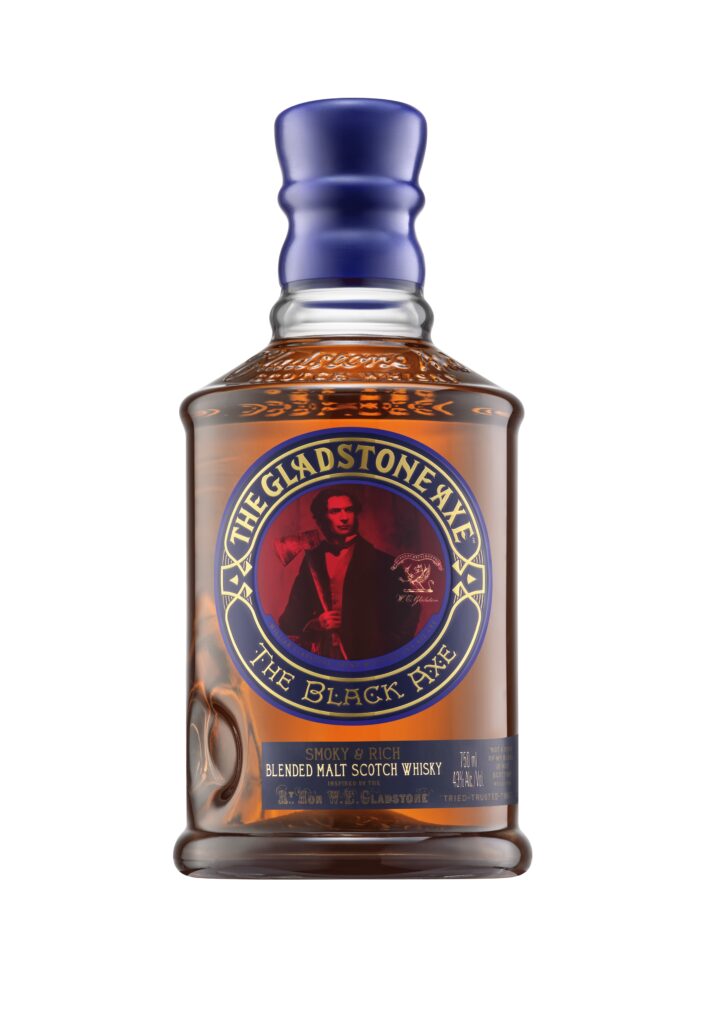
I’ve got lots of politics in my family. My great-great grandfather was William Gladstone, the UK prime minister. On the other side, my grandfather was Elwyn Jones, the Lord Chancellor and Attorney General. So I’ve always been interested in politics and I grew up in Hawarden Castle in North Wales, Gladstone’s former home. We also used to spend summers in Scotland, where Gladstone had a house at Fasque.
As chancellor of the exchequer, Gladstone signed the Spirits Act of 1860, which allowed for blending of Scotch whisky for the first time. There had previously been a lot of rules and regulations to prevent bootlegging, but Gladstone as a liberal thinker wanted to encourage the growth of Scotch whisky and changed the laws to allow for greater production by more people. The empire was big then and traders took Scotch all over the world.
Gladstone also had this amazing collection of axes and he used to chop trees for exercise. Thousands of people would come and watch and collect the chips to wear in their lapels. Whisky is aged in wooden barrels so there’s a connection there too.
You’re also interested in Vermouth and how we drink it in the UK – can you tell us a bit more about that?
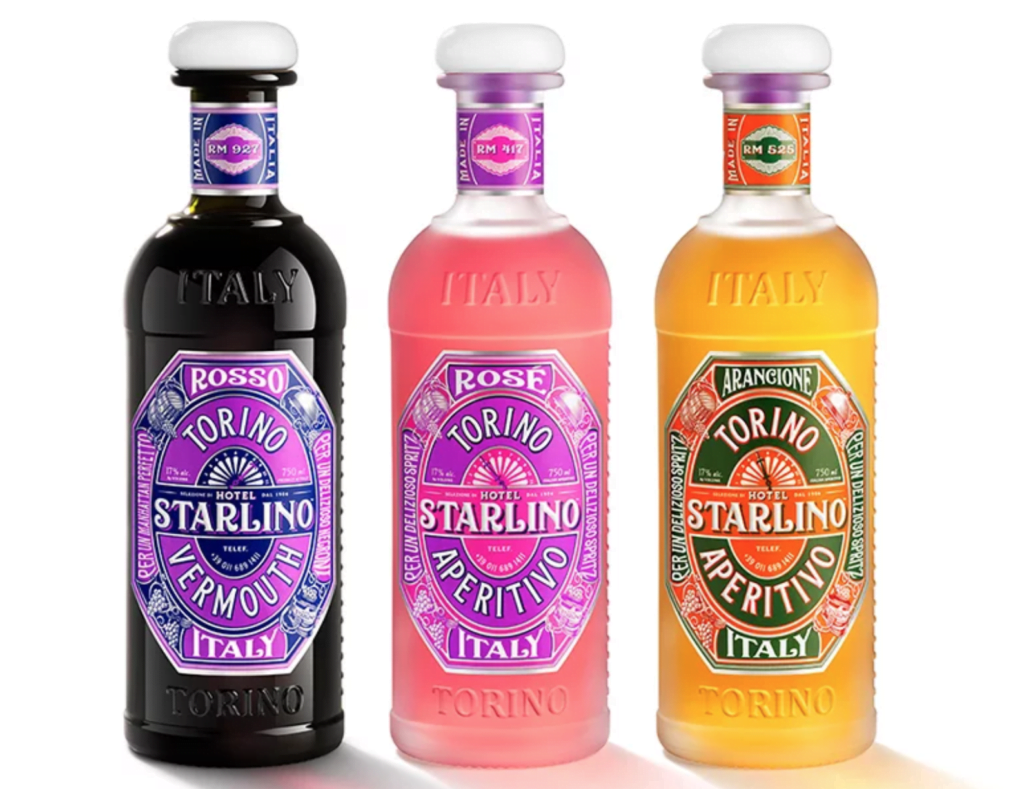
We were staying with a friend at Torino Distillati just outside Torino. Vermouth was invented in northern Italy and southern France, combining wine with wormwood and herbs and spices. Torino has an amazing culture of the cocktail, negronis and vermouth drinking – they have lots of vermouth bars. It’s a fascinating category and when you try it, it’s a great drinking experience– very sophisticated and delicious, and you don’t need to drink a lot of it. We were inspired to invent a vermouth aperitivo called Hotel Starlino– based on grand hotels from the past. We’re trying to invent a world around these turn-of-the-century hotels and their architecture and design. We have a classic red vermouth and a rosé aperitivo, as well as an elderflower variant. I think it could become quite popular in the UK– we love wine and we love gin and tonic here. There are so many gins now that the market is quite cluttered, so somewhere in between there’s space for wine-based aperitivo products. They’re delicious and complex, you can drink them with mixers and they’re beautifully packaged.
What key piece of advice would you give to an entrepreneur who was looking to set up their own business?
There are positive things about knowing a lot about something– if you work in an industry for a long time, like I did, it can be really useful. I was always trying to learn as much as I could from the different areas of the business (sales and production as well as marketing). When I left, I had a strong idea of what I had to do and how difficult it was. On the other hand, if you don’t know a lot about a category but you have a really interesting idea, you come to it very fresh and you don’t get turned around at every corner. So I think a bit of naiveté can really help because it allows for fresh thinking. It all comes down to the idea– which might sound obvious, but often entrepreneurs blame market conditions or distribution issues. I think that’s a bad mentality– you should come in with the thought that if your idea is amazing, it will work. It may not happen immediately, but it will happen eventually. Is your idea truly, truly different?
What do you look for in the people you work with?
We look for people who are entrepreneurial. We want people who can figure stuff out– none of the answers are there in front of them. We need people who don’t get disheartened by hitting brick walls, who take risks and who treat the business as if it were there own. We take care of people but we do expect people to think on their feet, take risks and act.
And finally, what is your tipple of choice?
I should probably say Scotch shouldn’t I? Scotch and soda.